Looking for the best easy treks in Nepal in autumn? Poon Hill, Australian Camp and Dhampus, Mardi Himal, Langtang Valley, and the Everest View Trek are among the best choices for first-time trekkers. They offer Himalayan views, comfortable teahouse stays, local culture, and well-established trails without requiring technical climbing.
Autumn, from September to November, is also one of the best times to trek in Nepal. After the monsoon, the skies become clearer, the trails are generally drier, and the mountain views can be spectacular.
But not every beginner trek is equally easy. A two-day Australian Camp trek is much easier than reaching Kyanjin Gompa in Langtang or higher viewpointsey on Mardi Himal. The right choice depends on your fitness, available time, preferred altitude, and how much walking you are comfortable doing.
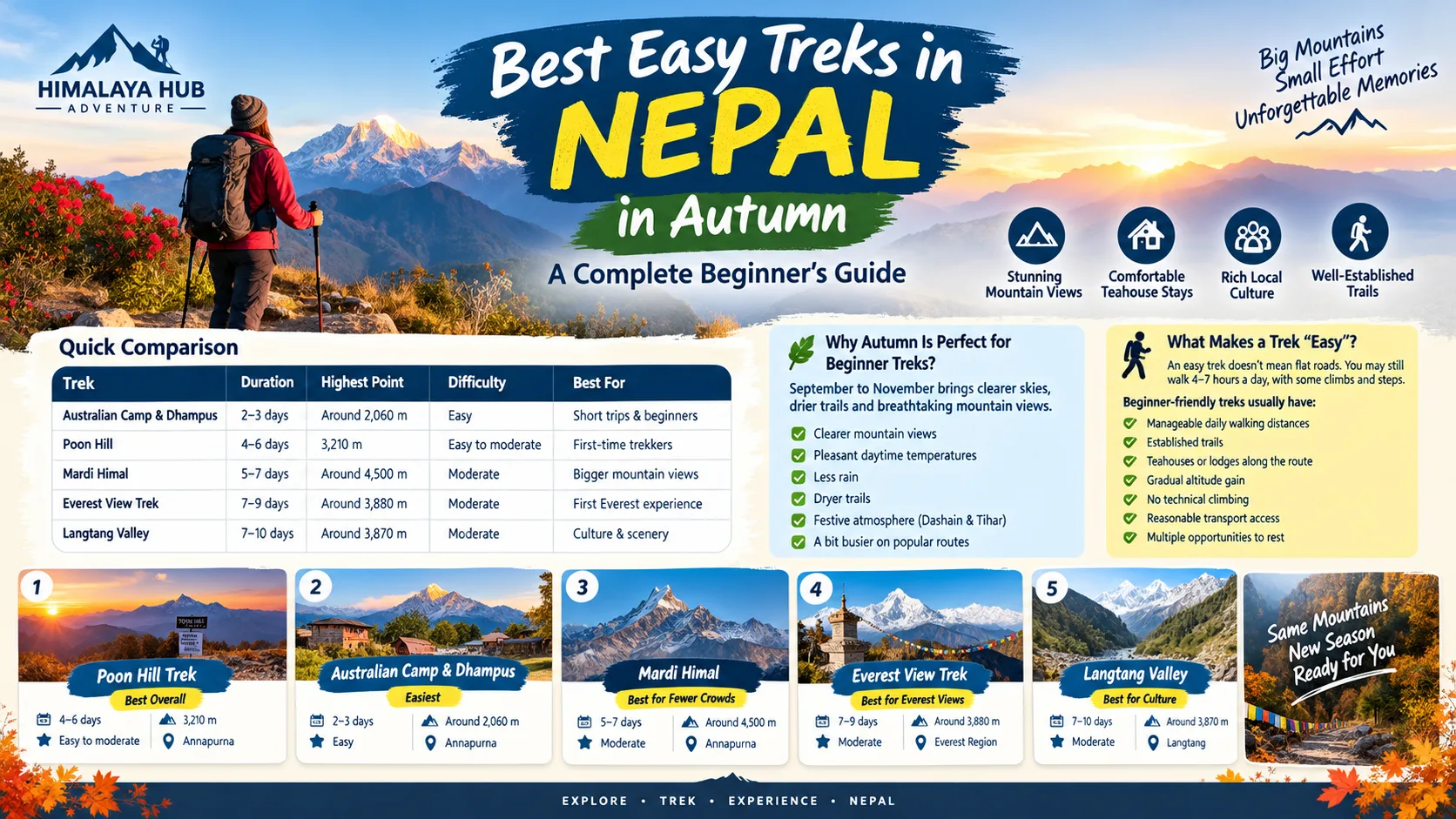
Quick Comparison: Best Easy Treks in Nepal in Autumn
TrekDurationHighest PointDifficultyBest ForAustralian Camp & Dhampus2–3 daysAround 2,060 mEasyShort trips and beginnersPoon Hill4–6 days3,210 mEasy to moderateFirst-time trekkersMardi Himal5–7 daysAround 4,500 m viewpointModerateBeginners wanting bigger viewsEverest View Trek7–9 daysAround 3,880 mModerateFirst Everest experienceLangtang Valley7–10 daysAround 3,870 m at KyanjinModerateCulture and mountain sceneryBest overall: Poon Hill
Easiest: Australian Camp & Dhampus
Best for fewer crowds: Mardi Himal
Best for culture: Langtang Valley
Best for Everest views: Everest View Trek
Why Autumn Is One of the Best Seasons for Beginner Treks
Autumn is Nepal's main trekking season for a reason.
The summer monsoon usually leaves behind cleaner air, greener forests, and improved visibility. As September progresses, trekking conditions generally become more favorable, while October and November are particularly popular for mountain trips.
What can you expect?
- Clearer mountain views: Post-monsoon conditions can provide excellent visibility.
- Comfortable daytime temperatures: Lower and middle elevations are usually pleasant for walking.
- Less rain: Rain becomes much less common than during the summer monsoon.
- Dryer trails: Most popular trekking routes become easier to walk.
- Festive atmosphere: Dashain and Tihar may bring celebrations to villages across Nepal.
- Busy trails: Because autumn is peak trekking season, popular teahouses and routes can be crowded.
September vs October vs November
September: The beginning of autumn can still have some rain, particularly early in the month. Conditions generally improve as the month progresses.
October: Usually the most popular month for trekking. You can expect cooler temperatures, clearer skies, and excellent Himalayan visibility.
November: Still an excellent trekking month, although mornings and nights become noticeably colder, especially at higher elevations.
For a first trek, October is often the safest choice for a balance of weather, views, and comfortable walking conditions.
What Makes a Trek "Easy" in Nepal?
An easy Nepal trek does not mean walking on flat roads.
You may still walk 4–7 hours a day, climb hundreds of stone steps, cross suspension bridges, and deal with uneven mountain trails.
A trek is considered beginner-friendly when it generally has:
- Manageable daily walking distances
- Established trails
- Teahouses or lodges along the route
- Gradual altitude gain
- No technical climbing
- Reasonable access to transport
- Multiple opportunities to rest
One important point: altitude changes everything.
A trek can feel physically easy at 2,000 meters but become much harder above 3,500 meters. That's why Poon Hill and Australian Camp are easier choices for complete beginners, while Mardi Himal, Langtang, and Everest View require more preparation.
1. Poon Hill Trek: Best Overall Easy Trek
Duration: 4–6 days
Highest point: Poon Hill, 3,210 m
Difficulty: Easy to moderate
Region: Annapurna
If you want one trek that gives you the best combination of short duration, Himalayan scenery, villages, and beginner-friendly trails, choose Poon Hill.
The route passes through beautiful rhododendron forests and traditional Gurung villages, including Ghandruk. The highlight is an early-morning hike to Poon Hill for sunrise.
From the viewpoint, you can see major Himalayan peaks including Dhaulagiri, Annapurna South, Annapurna I, and Machhapuchhre (Fishtail).
Why beginners love Poon Hill
- Short trekking duration
- Excellent mountain views
- Comfortable teahouses
- Beautiful villages
- No technical climbing
- Easy to combine with a Pokhara trip
One thing to remember
The famous sunrise hike requires an early start and includes a steep staircase section. So while the trek is beginner-friendly, you should still be comfortable with several hours of walking.
Best for: First-time trekkers, families, couples, photographers, and travelers with limited time.
2. Australian Camp & Dhampus: Easiest Short Trek
Duration: 2–3 days
Highest point: Around 2,060 m
Difficulty: Easy
Region: Annapurna/Pokhara
Have only a weekend?
Australian Camp and Dhampus are excellent choices.
Located close to Pokhara, this short trek provides surprisingly large Himalayan views without requiring a long trip into the mountains.
You can walk through forests and traditional villages while enjoying views toward Machhapuchhre, Annapurna South, Hiunchuli, and surrounding peaks.
Why choose Australian Camp?
- Very short
- Low altitude
- Close to Pokhara
- Suitable for beginners
- Great for weekend trips
- Comfortable lodge stays
- Excellent sunrise and sunset opportunities
It is particularly suitable for travelers who want to experience trekking in Nepal without committing to a week-long itinerary.
Best for: Complete beginners, families, busy professionals, expats, volunteers, and travelers with only 2–3 days.
3. Mardi Himal Trek: Best for a Quieter Adventure
Duration: 5–7 days
Highest point: Around 4,500 m at the upper viewpoint
Difficulty: Moderate
Region: Annapurna
Mardi Himal is often described as an easy alternative to longer Himalayan treks, but that description needs some context.
The lower section through the forest is relatively manageable. The higher section becomes more demanding because of steep trails, colder conditions, and altitude.
The reward is outstanding.
As you climb higher, the landscape opens toward Machhapuchhre and the Annapurna range, creating dramatic close-up mountain views.
Why beginners choose Mardi Himal
- Shorter than many high-altitude treks
- Beautiful forest trails
- Fewer crowds than Poon Hill in some periods
- Excellent mountain scenery
- Teahouse accommodation
- No technical climbing
Best for: Fit beginners who want a little more adventure and don't mind higher altitude.
4. Langtang Valley Trek: Best for Culture and Mountains
Duration: 7–10 days
Highest point: Around 3,870 m at Kyanjin Gompa
Difficulty: Moderate
Region: Langtang
Langtang Valley is one of the most rewarding trekking areas near Kathmandu.
The route passes through Tamang communities, forests, yak pastures, monasteries, and dramatic Himalayan valleys before reaching Kyanjin Gompa.
You can also take optional hikes to higher viewpoints such as Tserko Ri if you want a greater challenge.
Why Langtang is beginner-friendly
- Relatively short compared with major Himalayan treks
- Accessible from Kathmandu
- Strong cultural experience
- Beautiful mountain scenery
- Teahouses throughout much of the route
- No technical mountaineering required
However, don't choose Langtang simply because it is labeled an "easy trek." The altitude around Kyanjin means you need proper acclimatization and a sensible pace.
Best for: Beginners who want a longer Himalayan experience combining scenery and culture.
5. Everest View Trek: Best Easy Everest Experience
Duration: 7–9 days
Highest point: Around 3,880 m
Difficulty: Moderate
Region: Everest
Want to see Everest but don't want to walk all the way to Everest Base Camp?
The Everest View Trek is an excellent alternative.
After flying to Lukla, the route heads toward Namche Bazaar, the famous Sherpa trading town. From the area around Namche and the Everest View Hotel, you can enjoy views of Everest, Lhotse, Ama Dablam, and other Himalayan peaks.
The trek can also include Tengboche Monastery, one of the most famous monasteries in the Khumbu region.
Why choose this trek?
- Experience the Everest region
- Visit Namche Bazaar
- See famous Sherpa villages
- Enjoy spectacular mountain views
- Shorter than Everest Base Camp
- No technical climbing
The main challenge is altitude. Even though it is shorter than Everest Base Camp, you should take acclimatization seriously.
Best for: Bucket-list travelers who want the Everest region without committing to a full EBC trek.
Which Easy Trek in Nepal Is Best for You?
The best trek depends on your time and fitness.
Choose Australian Camp if:
- You have only 2–3 days.
- You are completely new to trekking.
- You are staying in Pokhara.
- You want a low-altitude introduction to Nepal.
Choose Poon Hill if:
- This is your first real Himalayan trek.
- You want sunrise mountain views.
- You have 4–6 days.
- You want a good balance of comfort and adventure.
Choose Mardi Himal if:
- You are reasonably fit.
- You want fewer crowds.
- You want more dramatic mountain scenery.
- You don't mind reaching higher altitude.
Choose Langtang if:
- You have around a week or more.
- You want Himalayan culture as well as scenery.
- You are comfortable with moderate walking and altitude.
Choose Everest View if:
- Seeing Everest is your priority.
- You want to experience Sherpa culture.
- You have around 7–9 days.
- You are prepared for higher altitude.
How Fit Do You Need to Be?
You don't need to be an athlete.
For most beginner treks, the most useful preparation is simply regular walking and stair training.
Start preparing around 4–8 weeks before your trip.
Try:
- 30–60 minutes of walking several times per week
- Regular stair climbing
- Weekend hikes
- Light strength training
- Longer walks while carrying a small backpack
The goal isn't to become extremely strong. The goal is to teach your body to walk for several hours on consecutive days.
Altitude: The Most Important Beginner Concern
Fitness alone does not protect you from altitude sickness.
As you climb higher, the air contains less available oxygen. Some trekkers can develop symptoms even when they are physically fit.
Watch for:
- Headache
- Dizziness
- Nausea
- Unusual tiredness
- Loss of appetite
- Shortness of breath
The best protection is gradual ascent, proper acclimatization, hydration, and listening to your body.
If symptoms become serious or get worse, don't continue climbing. Descending can be lifesaving.
For this reason, a route with a lower maximum altitude, such as Australian Camp or Poon Hill, is generally a better first choice for someone concerned about altitude.
What Is the Weather Like in Autumn?
Autumn weather varies by altitude.
At lower elevations, daytime conditions can still feel warm. Higher elevations become progressively colder, particularly after sunset.
You should be prepared for:
- Warm afternoons at lower elevations
- Cool mornings
- Cold nights
- Strong sun at altitude
- Occasional rain in September
- Freezing conditions at higher elevations later in autumn
Weather in the Himalayas can change quickly, so don't rely only on the forecast you saw before leaving Kathmandu.
What Should Beginners Pack?
You don't need an enormous backpack for an easy trek.
Clothing
- Moisture-wicking T-shirts
- Fleece or warm mid-layer
- Insulated jacket
- Waterproof rain shell
- Trekking trousers
- Thermal layers
- Warm hat and gloves
- Several pairs of hiking socks
Footwear
Use comfortable, broken-in hiking shoes or boots with good grip.
Don't bring brand-new boots directly onto a multi-day trek. Blisters can turn an enjoyable trip into a painful one.
Other essentials
- Daypack
- Water bottle
- Water purification method
- Sunglasses
- Sunscreen
- Headlamp
- Personal medicines
- Basic first-aid supplies
- Power bank
- Trekking poles if you prefer extra support
- Sleeping bag for colder higher-altitude routes
Pack according to your specific route. A two-day Australian Camp trek does not require the same equipment as a week-long high-altitude trek.
What Permits Do You Need?
Permit requirements depend on the trekking region and the current regulations.
Depending on your route, you may need permits such as:
- TIMS
- Annapurna Conservation Area Permit (ACAP)
- Sagarmatha National Park entry permit
- Langtang National Park entry permit
- Other local or regional permits where applicable
Requirements can change, so check the current rules before departure or have your trekking agency arrange the required permits.
For restricted trekking areas, additional rules and permits apply.
Do Beginners Need a Guide?
For many popular trekking areas, current rules require trekkers to use a licensed guide, while exact requirements can vary by route and area.
Even where regulations may differ, a local guide can be especially useful for first-time trekkers.
A good guide can help with:
- Route management
- Accommodation
- Permit arrangements
- Altitude awareness
- Weather changes
- Communication with teahouses
- Emergency situations
- Local culture and history
If you're new to Nepal, a guide can also take much of the logistical stress out of the trip.
How Much Does an Easy Trek in Nepal Cost?
The total cost depends on your route, trek duration, accommodation, transport, guide, porter, permits, food, and personal spending.
A budget trek generally costs less than a private or premium package.
Remember to budget for:
- Transportation
- Guide
- Porter, if required
- Accommodation
- Meals
- Permits
- Travel insurance
- Tips
- Snacks and drinks
- Extra nights caused by weather or transport delays
The cheapest package is not always the best option. For a first Himalayan trek, reliable transportation, an experienced guide, proper permits, and emergency support are worth paying for.
Easy Trekking Tips for First-Time Visitors
1. Start slowly
Don't race ahead on the first day. Save your energy for the entire trek.
2. Drink regularly
Keep water with you and drink throughout the day.
3. Don't ignore altitude symptoms
Feeling tired is normal. Serious or worsening altitude symptoms are not.
4. Start early
Morning often offers the best mountain visibility, and an early start gives you more time to reach your destination before afternoon weather changes.
5. Carry cash
Remote mountain villages may have limited ATM access or unreliable card payments.
6. Protect yourself from the sun
UV exposure becomes stronger at altitude. Sunglasses, sunscreen, and a hat are important.
7. Keep your backpack light
Carry what you actually need. If you want to travel lighter, consider using a porter.
8. Allow flexibility
Mountain weather and transportation can cause delays. Avoid planning your international flight immediately after your trek ends.
Are Easy Treks Suitable for Families?
Yes, several beginner-friendly routes can work well for families, but the right trek depends on the age and fitness of the children.
For younger children or travelers who are not used to long walks, Australian Camp and Dhampus may be a better starting point.
Families looking for a longer adventure can consider Poon Hill, provided everyone is comfortable with several hours of walking each day.
Higher-altitude routes such as Mardi Himal, Langtang, and Everest View require more careful planning.
Can You Do These Treks Solo?
Solo trekking rules in Nepal depend on the region and current government regulations.
Even when a route is physically manageable, solo travel adds extra responsibility for navigation, accommodation, emergencies, and altitude safety.
For a first trip to Nepal, traveling with a licensed local guide is often the simpler and safer choice.
When Should You Book an Autumn Trek?
If you're planning to trek during October or November, book ahead.
Autumn is Nepal's busiest trekking season, especially on popular routes such as Poon Hill and in the Everest region.
Early booking can help you secure:
- Preferred trekking dates
- Experienced guides
- Accommodation
- Domestic flights where needed
- Private rooms where available
- Suitable transportation
September can offer more flexibility, although early-season weather can still be less predictable.
Final Verdict: Which Easy Nepal Trek Should You Choose?
If this is your first trek in Nepal, don't choose a route simply because it has the word "easy" in its description. Think about your available time, fitness, altitude tolerance, and what you want to experience.
Choose Australian Camp & Dhampus for the easiest short escape.
Choose Poon Hill for the best overall beginner Himalayan experience.
Choose Mardi Himal if you are a fit beginner who wants bigger mountain scenery and a quieter trail.
Choose Langtang Valley if culture and Himalayan landscapes are equally important.
Choose Everest View Trek if seeing Everest is at the top of your bucket list.
For most first-time trekkers, Poon Hill in October is the safest all-around recommendation. You get the classic Nepal trekking experience without committing to a long, high-altitude expedition.
And if you discover that you love Himalayan trekking, you can always step up later to Annapurna Base Camp, Annapurna Circuit, Manaslu Circuit, or Everest Base Camp.
The best first trek isn't necessarily the hardest one. It's the one that leaves you wanting to come back for another.
Frequently Asked Questions
What is the easiest trek in Nepal for beginners?
Australian Camp and Dhampus is one of the easiest short trekking options. For a longer Himalayan experience, Poon Hill is one of the best choices for first-time trekkers.
Is October a good month for beginner trekking in Nepal?
Yes. October is one of the most popular months for trekking because conditions are generally dry and mountain visibility is often excellent. It is also peak season, so expect more trekkers.
Is Mardi Himal suitable for beginners?
Yes, fit beginners can complete Mardi Himal, but it is better described as moderate rather than truly easy because the route reaches high altitude and includes steeper sections.
Is Langtang Valley good for first-time trekkers?
Yes. Langtang is a strong choice for beginners who are comfortable with a longer trek and higher altitude. The route combines Himalayan scenery, Tamang culture, villages, and Kyanjin Gompa.
Can I see Everest on an easy trek?
Yes. The Everest View Trek allows you to experience the Khumbu region and see Everest without trekking all the way to Everest Base Camp.
Do I need previous trekking experience?
No. You don't need previous Himalayan trekking experience for most beginner-friendly routes. Basic fitness, preparation, appropriate gear, and a sensible pace are more important.
Is autumn crowded in Nepal?
Yes. Autumn is peak trekking season, particularly October. Popular trails and teahouses can be busy, so advance planning is useful.