If you've ever woken up sweaty in the middle of the night or found your pajamas scratchy by morning, the fabric — not the fit — is usually the problem. Picking the Best Fabric for Men's Pajama comes down to how your body regulates heat, your local climate, and how much upkeep you're willing to do. Below is a straight, no-fluff comparison of cotton, linen, silk, and blended fabrics so you can match your Men's Pajama to the way you actually sleep.
Which Fabric Is Really the Best Fabric for Men's Pajama?
Short answer: Cotton is the best all-round choice for most sleepers because it balances breathability, softness, and easy care. Linen is better for hot, humid nights, silk suits dry or sensitive skin, and cotton blends work well if you want stretch and low-maintenance wrinkle resistance.
Here's how the four main options stack up against each other:
FabricBreathabilitySoftness (feel)DurabilityWrinklesPrice RangeBest SeasonCottonHighSoft, gets softer with washHighModerateBudget–MidAll seasonsLinenVery highSlightly texturedHighWrinkles easilyMid–HighSummer/HumidSilkModerateVery smoothLow–Moderate (delicate)LowHighDry/Cool climatesCotton-Modal / BlendsHighVery soft, stretchyModerate–HighLowMidAll seasonsIs Cotton the Best Fabric for Men's Pajama?
For most men, yes. Cotton pulls moisture away from the skin, allows air to pass through the weave, and doesn't trap body heat the way synthetic fabrics do. It also holds up well to frequent washing, which matters for something worn almost every night. Within cotton, look at the weave: poplin is crisp and lightweight, flannel is warmer for winter, and jersey cotton feels closer to a T-shirt — soft and stretchy.
Practical tip: Check the GSM (grams per square metre) on the label if it's listed. Anything between 120–180 GSM is usually light enough for warm nights without feeling flimsy.
Why Choose Linen Pajama for Men?
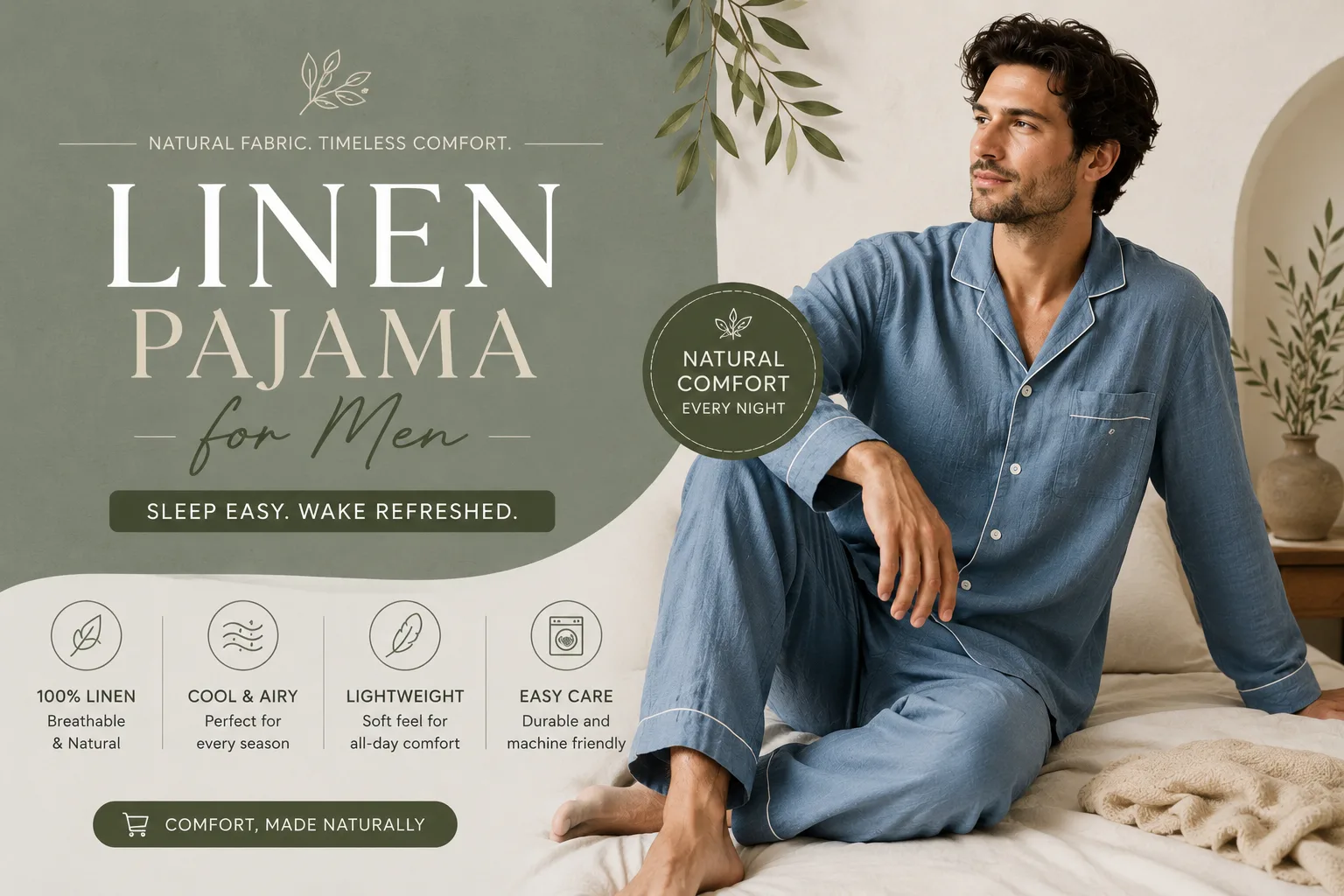
A linen pajama for men is the go-to option if you sleep hot or live somewhere with high humidity. Linen fibers are hollow, which lets air circulate more freely than cotton, and the fabric absorbs moisture quickly and dries fast — useful if you tend to sweat at night. The trade-off is that linen creases easily and has a slightly rougher texture until it's washed a few times and softens up.
Linen also tends to feel cooler to the touch, which is why many people specifically search for a linen pajama for men during peak summer months rather than year-round.
Is Silk Good for Men's Pajama?
Silk is a good pick if you have sensitive or dry skin, since it's naturally smooth and generates less friction against the skin than cotton or linen. It also has decent temperature-regulating properties, staying warmer in cool weather and cooler than synthetics in mild heat. That said, silk pajamas need gentler washing (often hand wash or a delicates cycle), aren't as durable under daily wear, and sit at a higher price point — making them better suited to occasional or seasonal use rather than everyday rotation.
What About Cotton-Linen or Cotton-Modal Blends?
Blended fabrics exist to cover the gaps of a single fiber. A cotton-linen blend keeps some of linen's breathability while reducing how much it wrinkles. A cotton-modal or cotton-spandex blend adds stretch, which is useful if you move around a lot in your sleep or prefer a closer fit. Blends are generally a safe middle-ground choice if you can't decide between the pure fabrics above.
Which Pajama Fabric Suits Different Climates?
- Hot and humid regions: Linen or lightweight cotton (poplin, voile)
- Dry heat: Silk or lightweight cotton
- Cold or winter nights: Cotton flannel or brushed cotton blends
- Air-conditioned rooms year-round: Mid-weight cotton or cotton-modal blends
How Should You Choose Pajama Fabric Based on Skin Type?
- Sensitive or easily irritated skin: Silk or 100% combed cotton (avoid synthetic blends with polyester)
- Prone to night sweats: Linen or moisture-wicking cotton
- Eczema-prone or very dry skin: Soft, breathable cotton without rough seams or tags
- No specific skin concerns: Any well-woven cotton or blend works fine
Cotton vs Linen Pajama — Which One Should You Actually Buy?
If you want one pair that works for most nights, cotton is the safer everyday buy — it's easier to wash, wrinkles less, and suits a wider temperature range. If you specifically struggle with overheating at night or live somewhere hot for most of the year, a linen pajama for men is worth the slightly higher price and extra ironing. Many men end up owning both: cotton for regular rotation, linen for peak summer.
How Do You Care for Pajama Fabric So It Lasts Longer?
- Wash cotton and linen in cold or lukewarm water to prevent shrinkage
- Avoid high-heat tumble drying for silk; air-dry instead
- Turn pajamas inside out before washing to protect prints and reduce fabric pilling
- Use a mild detergent for silk to avoid breaking down the fibers
For general guidance on textile fiber standards and care labeling in India, the Ministry of Textiles, Government of India publishes reference material on fiber classification and quality benchmarks that can help buyers understand what's printed on garment labels.
Where Does Fabmade Fit Into This?
Fabmade is one of the brands making men's sleepwear across cotton, linen, and blended fabric options, aimed at men looking for everyday comfort without compromising on breathability. As with any sleepwear brand, the right pick still comes down to matching the fabric to your climate and skin type using the comparisons above, rather than the brand name alone.
People Also Ask
Is cotton or linen better for pajamas?
Cotton is better for everyday, low-maintenance wear across most seasons. Linen is better specifically for hot, humid nights when maximum breathability matters more than wrinkle-free fabric.
What fabric keeps you coolest while sleeping?
Linen is generally the coolest due to its open, breathable weave, followed closely by lightweight cotton. Silk is moderately cooling but less breathable than either.
Is silk pajama good for everyday use?
Silk can be worn daily, but it requires gentler washing and wears out faster under frequent use compared to cotton or linen, so it's better suited for rotation rather than sole daily wear.
Do cotton pajamas shrink after washing?
Some shrinkage (usually under 5%) is normal with 100% cotton after the first few washes, especially in hot water. Washing in cold water and air-drying reduces this.
What GSM is ideal for men's pajama fabric?
Between 120–180 GSM is typically ideal — light enough for comfort and airflow, while still being durable enough for regular wear and washing.
Final Takeaway
There's no single Best Fabric for Men's Pajama that works for everyone — it depends on your climate, how much you sweat at night, your skin sensitivity, and how much care you're willing to put into washing. Cotton remains the most versatile everyday choice, linen wins for hot climates, silk suits sensitive skin and occasional wear, and blends offer a practical middle ground. Match the fabric to how you actually sleep, and the rest — including which Men's Pajama style or brand like Fabmade you choose — becomes a much easier decision.