The UK hydrogen sector has over 84 active companies in production and storage alone and that number is growing faster year-on-year than almost any other clean energy category. For anyone trying to make sense of who's doing what, and which companies are worth actually paying attention to, that volume of activity can feel overwhelming.
So here's a plain-language breakdown. Not every company, not every project just the ones doing specific, operational, commercially serious things that are genuinely moving the sector forward.
ITM Power Green Hydrogen Production at Scale
Start here because almost every conversation about UK hydrogen eventually gets back to ITM Power. They manufacture proton exchange membrane electrolysers the machines that use renewable electricity to split water into hydrogen. Revenue grew nearly 58% in their full-year 2025 results to just over £26 million. 2026 guidance was raised to between £40 million and £43 million. Analysts rate the stock a buy.
Not profitable yet — and that's worth being honest about. But the manufacturing scale they're building is what brings electrolyser costs down across the whole industry. ITM's growth matters beyond their own balance sheet.
Ceres Power Licensing Technology Globally
Ceres develops solid-oxide fuel cell and electrolyser technology and licenses it to major industrial partners Bosch and Weichai among them rather than building and selling hardware themselves. That model is slower to generate revenue than a direct manufacturer, but it gives Ceres a global footprint they could never build independently.
Following a series of government-backed commercial contracts for green hydrogen projects, Ceres is benefiting from a tailwind that saw 2024 revenues vastly exceed earlier expectations. One of the more interesting long-term plays in the UK sector.
GeoPura Replacing Diesel Generators Today
GeoPura doesn't get the headlines it deserves. They provide hydrogen power units that replace diesel generators on construction sites, film sets, events, and anywhere temporary power is needed.
It's unglamorous work. It also happens to be exactly the kind of practical, deployable, real-world application that net zero is built from. Diesel generators are widely used in urban areas where air quality is already poor. GeoPura's units produce zero direct emissions and are already in active commercial use across the UK. This isn't a future application it's running now.
Clean Power Hydrogen (CPH2) Membrane-Free Electrolysis
CPH2 has developed a Membrane-Free Electrolyser that produces pure hydrogen and oxygen without the components that typically degrade over time in conventional PEM systems. Fewer degrading parts means lower maintenance costs and a longer operating life a meaningful commercial advantage if it holds at scale.
Their CEO has stated publicly that 2026 is the year they expect to convert a growing pipeline of interest into actual signed contracts and sustained revenue growth without relying on government subsidies. One analyst rates the stock a strong buy.
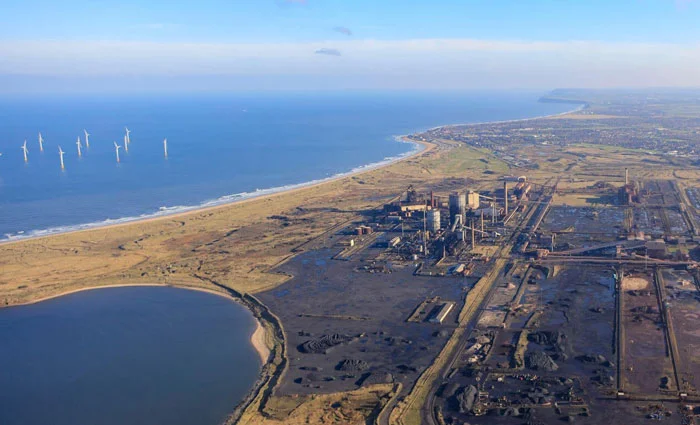
BP — H2Teesside and HyGreen Teesside
BP doesn't need an introduction as a company. Their UK hydrogen projects do. H2Teesside is one of the country's largest blue hydrogen production facilities in development. HyGreen Teesside targets 80MW of green hydrogen capacity initially, scaling to 500MW by 2030 which would represent around 5% of the UK government's 10GW target on its own.
Working with Associated British Ports, BP's hydrogen projects are targeting elimination of up to 580,000 tonnes of greenhouse gas emissions annually equivalent to taking 20,000 diesel HGVs off UK roads. These are large numbers, but they're attached to real projects in active development.
Powerhouse Energy Waste Plastic to Hydrogen
Powerhouse Energy applies their Distributed Modular Generation technology to non-recyclable plastics and mixed waste, converting them into syngas and hydrogen. Trials at their Bridgend facility in Wales produced between 3 and 3.5 tonnes of hydrogen daily ahead of original forecasts. A planning application for a 40 tonnes per day facility in Ballymena, Northern Ireland was submitted in early 2026.
Their modular approach is designed to work at smaller scale than large centralised facilities making it deployable in more locations, closer to where the waste is generated.
Hydrogen Transition Energy (HTE) Waste-to-Hydrogen at Industrial Scale
HTE converts non-recyclable waste plastics, tyres, automotive shredder residue, medical waste, municipal solid waste into fuel cell grade hydrogen using plasma-assisted gasification operating above 3,000°C. Nothing gets burned in the conventional sense. The waste breaks apart at a molecular level and the hydrogen gets captured, cleaned, and compressed to ISO 14687 standard.
Three outputs come from the process: clean hydrogen for industrial use, captured CO₂ for industrial reuse, and inert vitrified slag that works as construction aggregate. Two problems solved a waste disposal burden and an industrial energy need through one facility.
Our Manston facility in Kent is the UK's first industrial-scale waste-to-hydrogen project, currently moving through the planning process. Future sites are planned in Cwmbran, the Midlands, Belfast, and Perth.
What These Companies Have in Common
Different technologies, different commercial stages, different markets. What connects them is specificity none of these companies are doing hydrogen in general. They're each doing a particular thing, in a particular way, with real operational intent behind it.
The UK hydrogen energy sector in 2026 rewards that kind of specificity. Policy support is real. Funding mechanisms are active. The first commercial-scale projects are delivering. The companies that get through this early period will be the ones that built carefully rather than announced loudly.
Conclusion
The best hydrogen energy companies in the UK aren't necessarily the biggest or the most talked about. They're the ones doing specific, deliverable, operationally serious work that the energy transition actually needs. The list above is a starting point each company worth looking at in more detail depending on your interest, whether that's commercial partnership, investment, or simply understanding where UK hydrogen is heading. At Hydrogen Transition Energy, we're building on the waste-to-hydrogen side of that picture and watching the rest of the sector with genuine interest.
FAQ
Which UK hydrogen energy company is most established?
ITM Power is the most established pure-play green hydrogen company in the UK founded in 2000, listed on the London Stock Exchange, with growing revenues and the largest electrolyser manufacturing footprint in the country. For waste-to-hydrogen specifically, Hydrogen Transition Energy is developing the UK's first industrial-scale facility of its type.
What makes waste-to-hydrogen different from green hydrogen?
Green hydrogen uses renewable electricity to split water via electrolysis. Waste-to-hydrogen uses thermochemical processes to convert non-recyclable waste into hydrogen. Both produce low-carbon hydrogen they use different feedstocks and suit different locations and applications. They're complementary approaches, not competing ones.
Is the UK hydrogen energy sector worth investing in?
The structural case is strong the UK has a legally binding net zero target, a 10GW hydrogen production goal by 2030, and active funding mechanisms. Most pure-play hydrogen companies are still pre-profitability, which means higher risk. But for investors with a long enough horizon, the sector's growth trajectory is one of the more credible in clean energy. Independent financial advice is worth taking before committing capital.