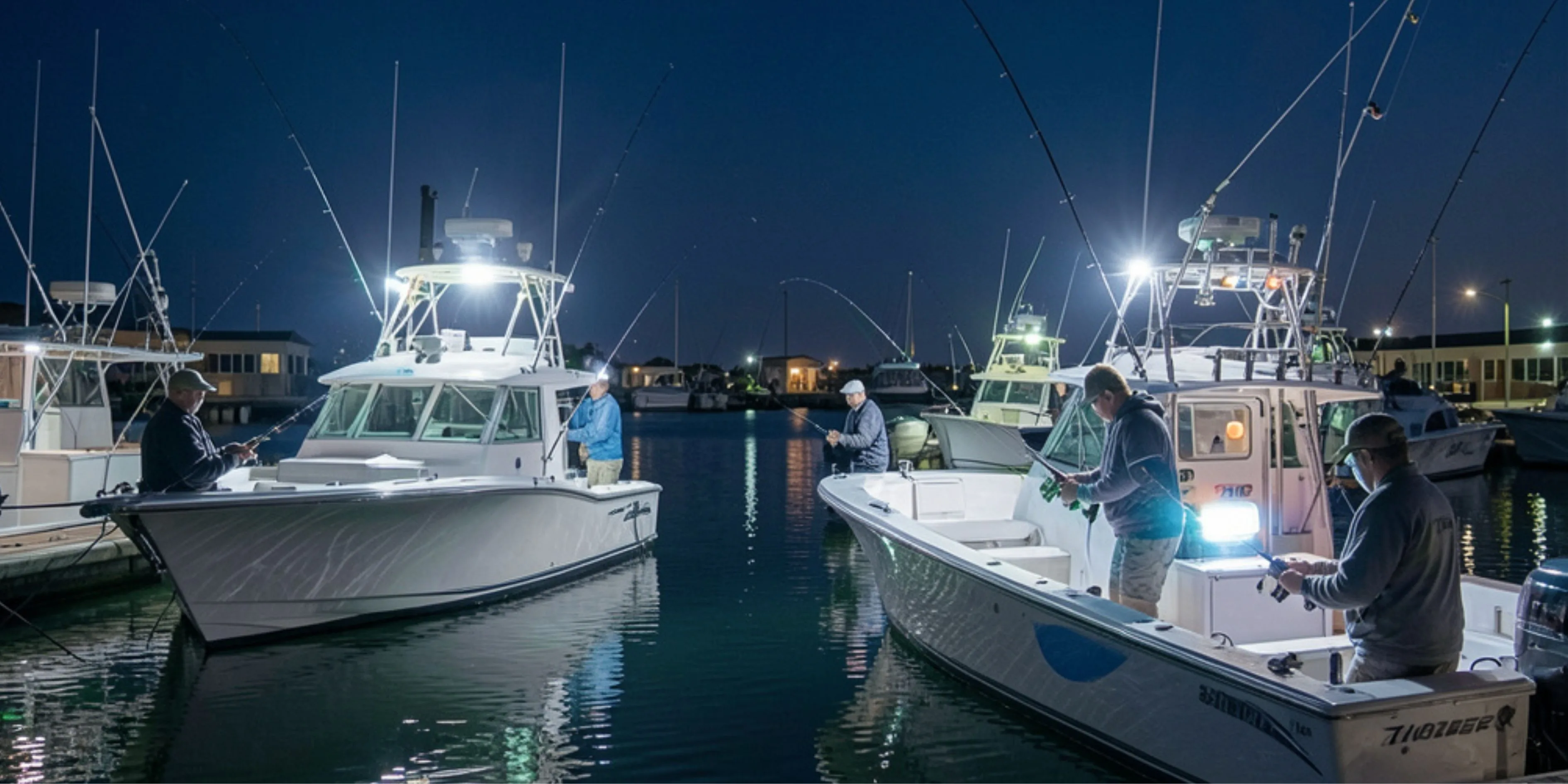
Marine LED lights fail differently in each type of water. Saltwater causes rust. Freshwater causes buildup and dampness. Mixed water wears out seals fast. Buy the best marine lights for your boat's roughest water, not its usual water.
How Does Water Type Affect Light Failure?
Water type decides which failure hits first. Salt water carries power well, which speeds up rust. Fresh water carries power poorly but holds more life, causing buildup. Mixed water has both problems, plus salt swings that wear out seals.

Why Does Salt Water Cause Faster Failure?
Salt lets seawater carry power well, which speeds up rust. Fresh water lacks the salt to do this. A salt light can rust in one year if it's not built for the sea.
What Is Galvanic Rust?
Galvanic rust starts when two kinds of metal touch in salt water. One metal wears away while the other stays safe. This often happens where light metal meets steel screws.
Bad metal pairs to avoid: light metal with plain steel screws, zinc parts hit by salt spray, and copper wires in cheap terminals. Use matched boat-grade metals, like steel or bronze made for boats. Add a zinc block near the light; it wears away first, not your light.
How Does Stray Power Harm Lights?
Stray power flows through seawater and eats metal fast. It needs a power source, like a bad ground wire.
Watch for a pitted metal frame, damage in one small spot, or nearby metal parts rusting too. Fix this with good grounds and a power block on shore power lines.
What Is Wire Wicking?
Wire wicking is when salt water creeps inside a wire and rusts it from within. The outside can still look fine. This is why boat wire uses tin-coated copper.
Why Do Lights Fail in Fresh Water?
Freshwater lights fail from growth and damp, not salt. A light that would rust fast at sea can last years in a lake, but even the best marine LED lights need care against growth.
What Is Buildup on Lights?
Buildup is algae, slime, and shells growing on a light. It traps heat and wears out seals. Small shell bugs, common in many lakes, can crack lenses or pry open seals.
Buildup blocks light, traps heat, and cracks lenses: smooth lens coatings and frequent cleaning help.
What Is Stray Power in Fresh Water?
Stray power in a lake does more harm per unit than at sea. Fresh water carries power poorly, so stray power stays in one spot and can eat through metal in weeks. Lake boats often use a magnesium block, not zinc, since it works better in weak water.
How Does Heat and Cold Cause Fog?
A light heats up when on, then cools fast when off. This pulls in damp air, which turns to water inside the light.
This can cause foggy lenses, rusted parts, and failed joints. A true watertight rating helps. So does a vent that lets air out but keeps water out.
Why Is Mixed Water the Worst?
Mixed water shifts in salt, acid, and heat as tides mix. Marine LED lights in tidal spots need the toughest seals.
How Do Salt Swings Harm Seals?
Salt swings make seals swell and shrink again and again. This wears down the seal and opens tiny gaps. Each time, water sneaks in, dries, and leaves salt behind, wearing the seal down even more.
What Causes Seal Failure with Shifting Salt?
Seal failure here comes from repeated wear, not one big leak. Shifting between wet and dry wears seals faster than steady exposure to either state. Some seal types resist this better than plain rubber.
What Water Rating Do You Need?
Use a mid-range rating for lights near the waterline. Use a top rating for lights that sit underwater often. Checking this rating is the first step to finding the best marine lights for your boat.

Also, good everywhere: tin-coated wire, grease on plugs, and sealed drivers. These steps help the best marine LED lights last longer.
How Do You Choose the Best Marine Lights?
Pick lights built for your boat's roughest water, not its usual water. A lake-only boat can skip salt-grade blocks. A boat that visits salt and river water needs tough, mixed-grade seals. This is the core rule behind picking the best marine LED lights.
Checklist:
- Mid rating for spray, high for underwater
- Steel or bronze housing
- Tin-coated copper wire
- Sealed driver, not just a rubber ring
- Ask about seals for tidal use
Key Takeaways
- Saltwater causes rust; fix it with matched metals and zinc blocks.
- Fresh water causes growth and fog; fix it with coats and vents.
- Mixed water wears out seals fast; use tough seal types.
- Water ratings test entry only, not rust or seal wear.
- The best marine lights are the ones built for your boat's roughest water, not its usual water.
If you want lights built to hold up against these exact failure points, DuraBrite marine LED lights use tin-coated wire, sealed drivers, and housings matched for salt, fresh, and mixed water, so you don't have to guess which grade fits your boat.