Best Practices for Agentic AI Development
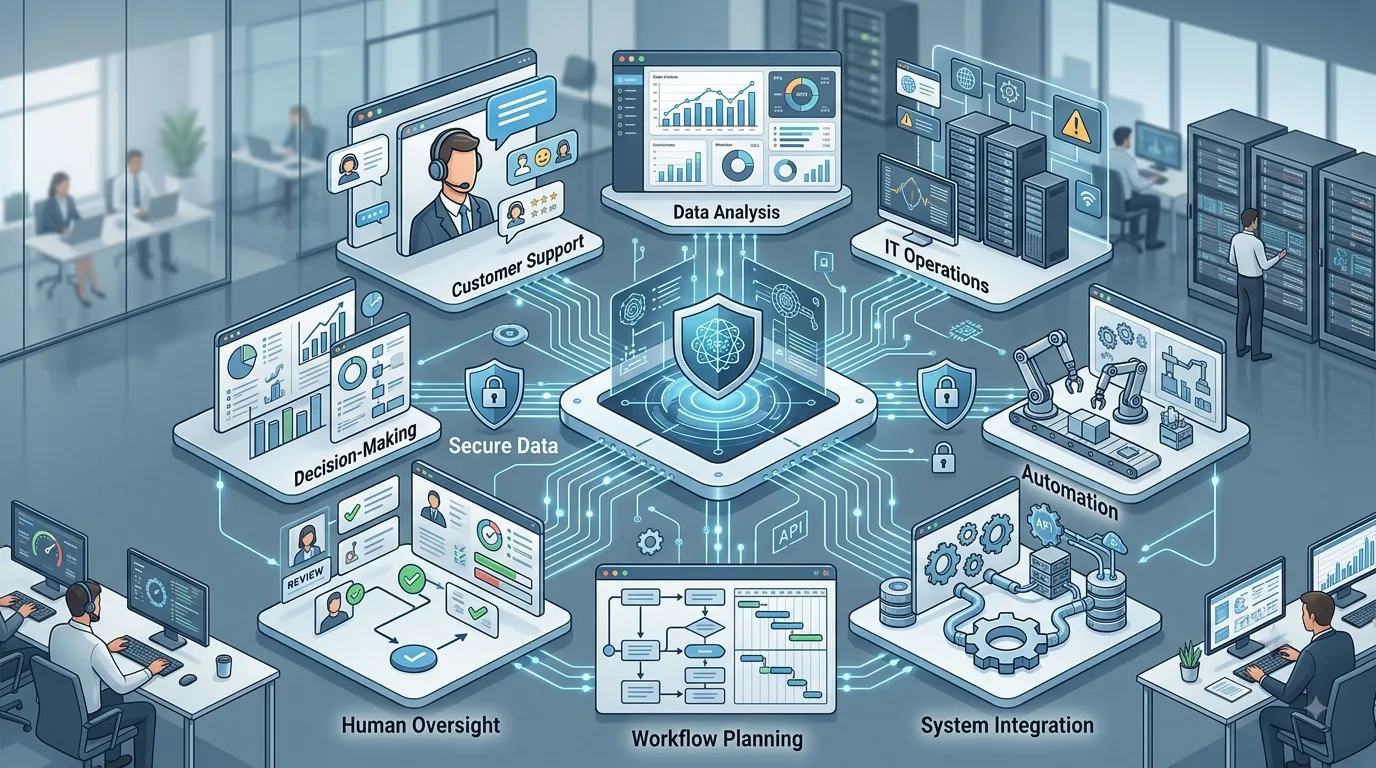
Agentic AI is changing how businesses approach automation and decision-making. Unlike traditional AI tools that mainly respond to a request, agentic systems can plan tasks and take actions based on a defined goal. They can connect with business tools and adjust their steps as a workflow changes. This makes them useful for areas such as customer support, IT operations, research, sales and business process automation.
The interest in agentic AI is growing quickly. McKinsey's 2025 State of AI survey found that 62% of organizations were already experimenting with AI agents. Around 23% said they were scaling an agentic AI system in at least one business function. At the same time most companies are still working through the challenges of moving from small experiments to reliable production systems.
Start With a Clear Business Goal
The first step in agentic AI development should be defining the business problem. Building an agent simply because the technology is available can create unnecessary complexity. A better approach is to identify a workflow that involves repeated decisions or multiple steps. For example an agent could qualify incoming leads or organize support tickets. A clear goal also makes it easier to measure the success of the system.
The goal should be specific and measurable. A business might want to reduce the time needed to process support requests or improve the speed of internal research. These targets give development teams a practical direction. They also help business leaders decide if the system is delivering enough value to justify further investment.
Design the Agent Around the Workflow
An agent should fit naturally into the process where it will operate. Developers need to understand the inputs the agent receives and the actions it can take. They also need to define what happens when the agent cannot complete a task. This prevents the system from making decisions outside its intended role.
A well-designed agent should have clear permissions. It should only access the data and tools required for its assigned tasks. For example an internal research agent may need access to company documents but may not need permission to change customer records. Limiting access reduces operational and security risks.
Build Strong Data Foundations
Data quality has a direct impact on agent performance. An agent that works with incomplete or outdated information can produce poor decisions even when the underlying model is capable. Businesses should therefore review their data sources before deploying an agent.
McKinsey reported in 2026 that eight in ten companies cite data limitations as a roadblock to scaling agentic AI. The finding shows why data architecture should be treated as part of the development process rather than an afterthought. Clean data and reliable access controls provide a stronger foundation for agents.
Use Human Oversight Where It Matters
Agentic AI can perform tasks with limited human input. That does not mean every decision should be fully automated. Businesses should identify actions that require human approval. This is especially important when an agent handles sensitive information or makes decisions that can create financial or operational consequences.
Human oversight can be designed into the workflow. An agent can prepare an action and send it for approval before execution. Low-risk tasks can run automatically while high-risk decisions can require review. This approach creates a practical balance between automation and control.
Focus on Security From the Start
Security should be included during architecture and development. Agents can interact with databases and business applications. They may also process confidential information. Poorly managed permissions can therefore create risks that traditional software may not face in the same way.
Developers should apply authentication and authorization controls. Activity should also be logged so teams can review what an agent did and why. Regular testing can help identify prompt injection risks and unexpected tool behavior. These controls become even more important when multiple agents communicate with each other.
Test Agents With Real Scenarios
Testing an agent requires more than checking whether it produces a correct response. Teams should test complete workflows and unusual situations. They should evaluate how the agent behaves when information is missing or a connected service becomes unavailable.
A useful testing process can include normal cases and edge cases. Teams can track accuracy and task completion time. They can also measure how often human intervention is required. Continuous evaluation helps identify problems before they affect real users.
Agentic AI Development Services
Organizations exploring agentic systems should choose development practices that support long-term use. Agentic AI Development Services can help businesses design agents that connect with existing applications and workflows. The focus should remain on reliability and measurable business outcomes rather than simply adding more autonomous features.
Deloitte reported that more than 80% of Indian organizations were exploring the development of autonomous agents in 2025. The same report found that 50% identified multi-agent workflows as a key focus area. This suggests that businesses are moving toward systems where several specialized agents can work together under defined controls.
Monitor and Improve After Launch
Launching an agent is the beginning of the process. Business workflows change and data sources evolve over time. An agent that performs well today may need adjustments later. Teams should therefore monitor performance after deployment.
Useful metrics can include task completion rates and error rates. Response time and human escalation rates can also provide valuable insight. Regular reviews allow teams to improve prompts and tools while updating permissions when business requirements change.
Conclusion
Successful agentic AI development is built around clear goals and reliable workflows. Strong data and security controls are equally important. Businesses should also combine automation with human oversight where decisions carry greater risk. The organizations that approach agentic AI as a business system rather than a standalone technology will be better positioned to create lasting value. Tech.us can help businesses move from early agent experiments toward practical and scalable AI solutions.