
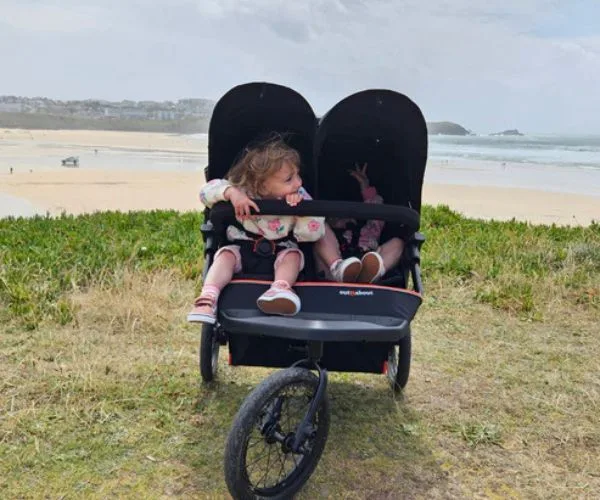
Life with twins rarely sticks to smooth pavements. Between school runs, muddy park paths, gravel trails, and the odd countryside walk, your pushchair needs to keep up with wherever the day takes you. If you've found that your current buggy struggles the moment the ground gets a little rough, you're not alone; it's one of the most common frustrations parents of twins raise once they move beyond the newborn stage.
This guide looks at what actually makes a twin pushchair suitable for uneven ground, the features worth prioritising, and how to choose one that keeps up with an active family lifestyle.
Why Standard Twin Pushchairs Struggle Off the Beaten Path
Many twin pushchairs are designed with city pavements in mind. Small wheels, minimal suspension, and lightweight frames make them easy to manoeuvre around shops and tight corners, but they can quickly become hard work on grass, gravel, or bumpy trails.
Common Issues on Rough Terrain
- Small, hard wheels that get stuck in mud or catch on uneven surfaces
- Little to no suspension, meaning every bump is felt by both you and your children
- Narrow wheelbases that tip more easily on slopes or camber
- Flimsy frames that aren't built for repeated use on rougher ground
If any of this sounds familiar, it's worth looking at what separates a genuinely all-terrain twin pushchair from a standard double buggy.
What Makes a Twin Pushchair All-Terrain Ready
Bigger, Air-Filled Tyres
Pneumatic (air-filled) tyres absorb shock far better than small plastic wheels. They roll more smoothly over roots, stones, and uneven paths, and give you far more control on grass or gravel.
Proper Suspension
A pushchair built for real-world walks should have suspension on all wheels, not just the front. This keeps the ride comfortable for your children and makes it noticeably easier to push, especially over longer distances.
A Stable, Wider Wheelbase
Twin pushchairs are naturally wider than single buggies, but not all are built with stability in mind. Look for a design that's been engineered to stay balanced on slopes and cambered paths, rather than one that simply widened a single buggy frame to fit two seats.
A Durable Frame
All-terrain use means more wear and tear. A sturdy frame, ideally one designed to be repaired rather than replaced will hold up far better over years of daily use than a lightweight, budget-focused build.
Twin Pushchairs vs Standard Double Buggies
It's worth understanding the difference between a general double buggy and a genuine all-terrain twin pushchair, since the terms are often used interchangeably but don't always mean the same thing in practice.
A double buggy is often built primarily for convenience, easy folding, lightweight materials, and a compact footprint for buses, trains, or narrow shop aisles. An all-terrain twin pushchair is built around durability and control, with the tyres, suspension, and frame to match. If most of your walks happen on pavements and in shopping centres, a standard double buggy may suit you fine. If your routine includes parks, trails, or uneven pavements more often than not, it's worth prioritising the all-terrain features above.
Side-by-Side or Tandem for Rough Ground?
Side-by-Side Twin Pushchairs
Side-by-side models tend to offer better stability on uneven ground because the weight is evenly distributed across both wheels on either side. Both children also get the same view and experience, which many parents prefer for engagement and fairness between twins.
Tandem Twin Pushchairs
Tandem designs are narrower, which can help on tighter trails or narrow gates, but the extra length can make them slightly less stable on steep cambers or very uneven ground. They tend to suit parents who prioritise fitting through narrow spaces over off-road capability.
Neither format is universally "better"; it comes down to where you'll be using the pushchair most.
Everyday Practicality Still Matters
An all-terrain twin pushchair shouldn't come at the cost of everyday usability. When comparing options, it's worth checking:
- How easily it folds and whether it fits in your car boot
- Whether it can be pushed one-handed if needed
- Storage space for bags, snacks, and everyday essentials
- Compatibility with car seats or carrycots if you still have a younger baby
A pushchair that handles trails brilliantly but is a nightmare to fold at the school gate isn't going to get used the way it should.
Final Thoughts
The right twin pushchair should never hold you back from where you want to go, whether that's a muddy park path, a gravel trail, or simply a slightly uneven pavement on the school run. Prioritising air-filled tyres, full suspension, a stable wheelbase, and a genuinely durable frame will make the biggest difference to how a pushchair performs once you step off smooth ground.