
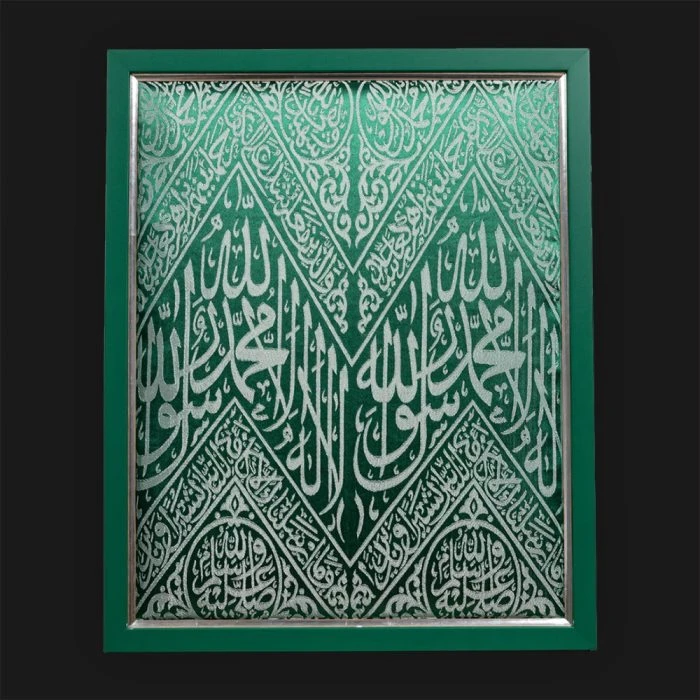
The Black Silk Kiswah is one of the most revered and symbolic objects in Islam. Draped over the Kaaba, the sacred structure at the heart of Masjid al-Haram in Makkah, the Kiswah represents a centuries-old tradition of devotion, craftsmanship, and unity. With its elegant black silk and intricate Quranic embroidery in gold and silver threads, the Kiswah is not only a religious artifact but also a masterpiece of Islamic art.
What is the Kiswah?
The Kiswah is a custom-made black cloth that covers the Kaaba year-round. It is made of the finest natural silk, dyed black and richly embroidered with verses from the Holy Quran using gold and silver threads. Every year, the Kiswah is replaced on the 9th day of Dhu al-Hijjah, during the annual Hajj pilgrimage.
Why is the Kiswah Important?
1. Spiritual Symbolism
The Kiswah symbolizes the sanctity of the Kaaba, the most sacred site in Islam. It reminds Muslims worldwide of their shared faith, unity, and direction of prayer (Qibla).
2. Historical Legacy
Covering the Kaaba with cloth predates Islam and was adopted by Prophet Muhammad (PBUH). Since then, Muslim rulers have continued the tradition, making it a lasting symbol of devotion.
3. Connection to Hajj
Changing the Kiswah during Hajj marks a moment of spiritual renewal. It reflects the purity, obedience, and humility central to the pilgrimage.
Materials and Design
Creating the Kiswah is a detailed and sacred process. Here’s what goes into it:
- Silk: Around 670 kg of pure black silk is used.
- Gold Thread: About 120 kg of gold-plated silver thread is used for Quranic inscriptions.
- Silver Thread: Over 100 kg of silver is woven into the embroidery.
Key Elements of the Design:
- Hizam (Belt): An embroidered band around the upper third of the Kiswah, featuring Quranic verses.
- Quranic Panels: Gold-embroidered calligraphy placed on each side.
- Door Curtain (Sitara): A special embroidered piece for the Kaaba door, showcasing beautifully woven verses and names of Allah.
How is the Kiswah Made?
The Kiswah is crafted in a dedicated factory in Makkah, established in 1977. The production process includes:
- Silk Dyeing and Weaving
- Embroidery and Quranic Inscription
- Assembling Panels for All Four Sides
- Precision Fitting Around the Kaaba
More than 200 artisans and technicians work throughout the year to complete the Kiswah, ensuring every stitch meets the highest standards of reverence and quality.
Annual Kiswah Changing Ceremony
The old Kiswah is respectfully removed and replaced during a spiritual ceremony on the eve of the 9th of Dhu al-Hijjah. The new Kiswah is draped over the Kaaba while thousands of pilgrims witness the moment. The old Kiswah is cut into pieces and distributed to Islamic leaders, institutions, and museums.
Interesting Facts About the Black Silk Kiswah
- It costs over 5 million USD to produce each year.
- The gold and silver embroidery takes months to complete.
- The black silk symbolizes modesty, respect, and dignity.
- Pieces of the old Kiswah are often framed and preserved as sacred gifts.
Conclusion
The Black Silk Kiswah is much more than a cloth — it is a powerful representation of Islamic unity, devotion, and artistry. It stands as a symbol of the Muslim world’s connection to the Kaaba, the House of Allah. Every thread, stitch, and verse woven into it carries a message of faith, making the Kiswah one of the most revered and admired Islamic relics in the world.