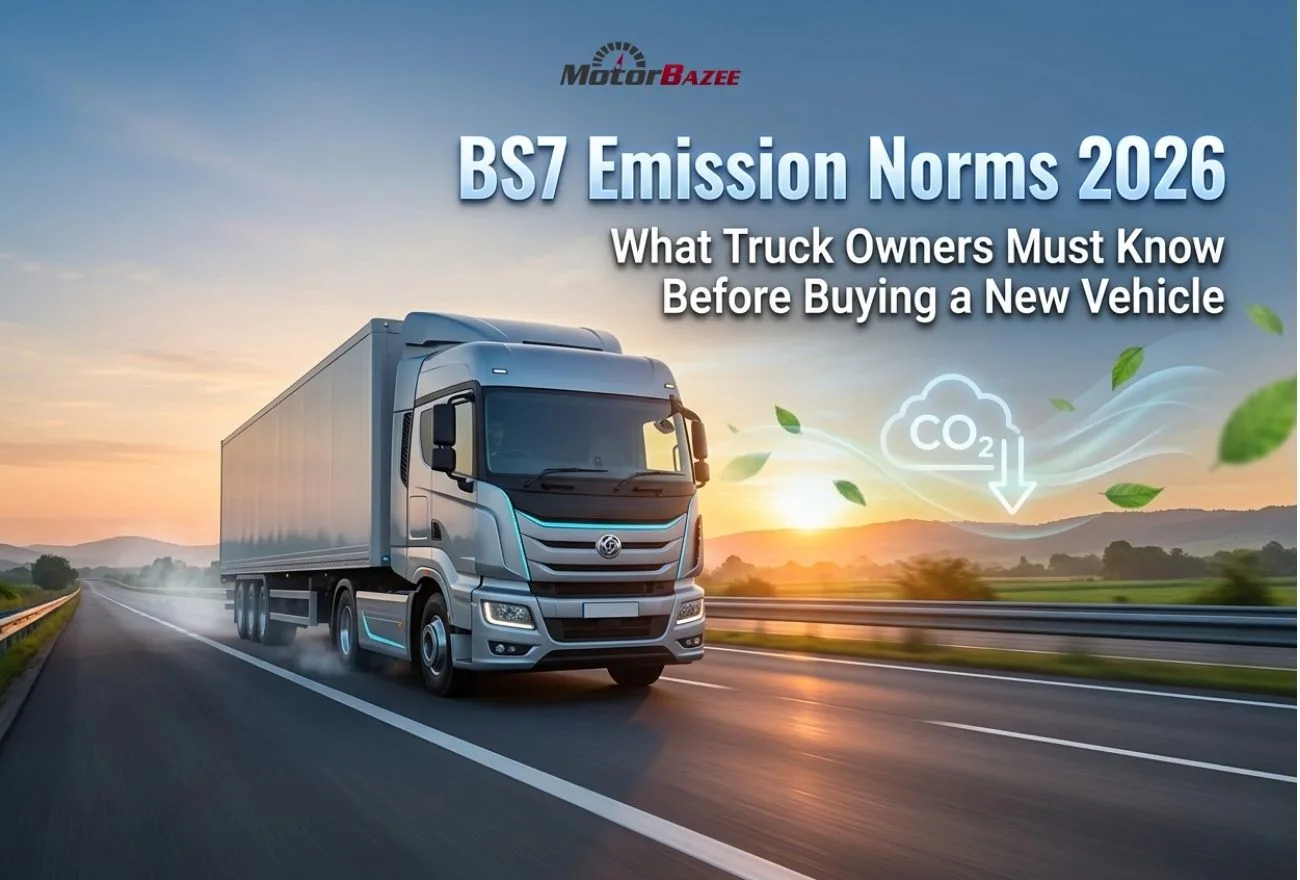
India’s commercial vehicle industry is moving fast toward cleaner and more efficient transportation. After the successful implementation of BS6 norms, the upcoming BS7 emission norms (expected around 2026) are expected to bring even stricter regulations for trucks and heavy vehicles.
If you’re planning to buy a new truck for your transport business, this guide from motorbazee.com will help you understand everything in a simple and practical way.
India’s commercial vehicle industry is rapidly evolving toward cleaner, smarter, and more fuel-efficient transportation. After the successful implementation of BS6 emission norms, the next major step is the introduction of BS7 emission standards, expected around 2026. These new regulations are likely to transform the trucking and logistics sector by reducing pollution levels and encouraging the use of advanced vehicle technologies.
For transport business owners and fleet operators, understanding BS7 norms is important before purchasing a new truck. The upcoming standards are expected to focus on lower nitrogen oxide (NOx) emissions, better fuel efficiency, and stricter real-world emission monitoring. This means truck manufacturers will need to introduce more advanced engines, exhaust treatment systems, and cleaner fuel technologies.
One of the biggest changes under BS7 will likely be the adoption of improved emission control systems such as advanced diesel particulate filters (DPF), selective catalytic reduction (SCR), and onboard emission monitoring systems. These technologies will help reduce harmful pollutants released into the environment while improving overall engine performance.
Another important aspect of BS7 norms is the possible increase in vehicle costs. Since manufacturers will invest in advanced technology and upgraded components, the price of new trucks may rise slightly. However, these vehicles are expected to deliver better mileage, lower maintenance costs, and improved long-term reliability, making them more beneficial for transport businesses over time.
BS7 norms may also encourage the growth of alternative fuel vehicles, including LNG,
CNG, electric, and hydrogen-powered commercial vehicles. Many leading truck manufacturers in India are already investing in cleaner mobility solutions to prepare for future regulations and changing market demands.
For truck buyers, this transition offers both challenges and opportunities. Businesses planning to expand their fleets should consider factors like fuel efficiency, emission compliance, maintenance support, resale value, and future operating costs before making a purchase decision. Investing in a BS6 or future-ready vehicle today can help avoid compliance issues later and ensure smoother business operations.
The introduction of BS7 emission norms represents India’s commitment to sustainable transportation and environmental protection. While the transition may require some adjustment from manufacturers and transport operators, it is expected to create a cleaner and more efficient commercial vehicle ecosystem in the long run.
If you are planning to buy a new truck for your transport business, staying informed about BS7 developments can help you make a smarter and more profitable investment decision. For more updates, truck reviews, and commercial vehicle guides,
Visit Us: BS7 Emission Norms 2026: What Truck Owners Must Know Before Buying a New Vehicle