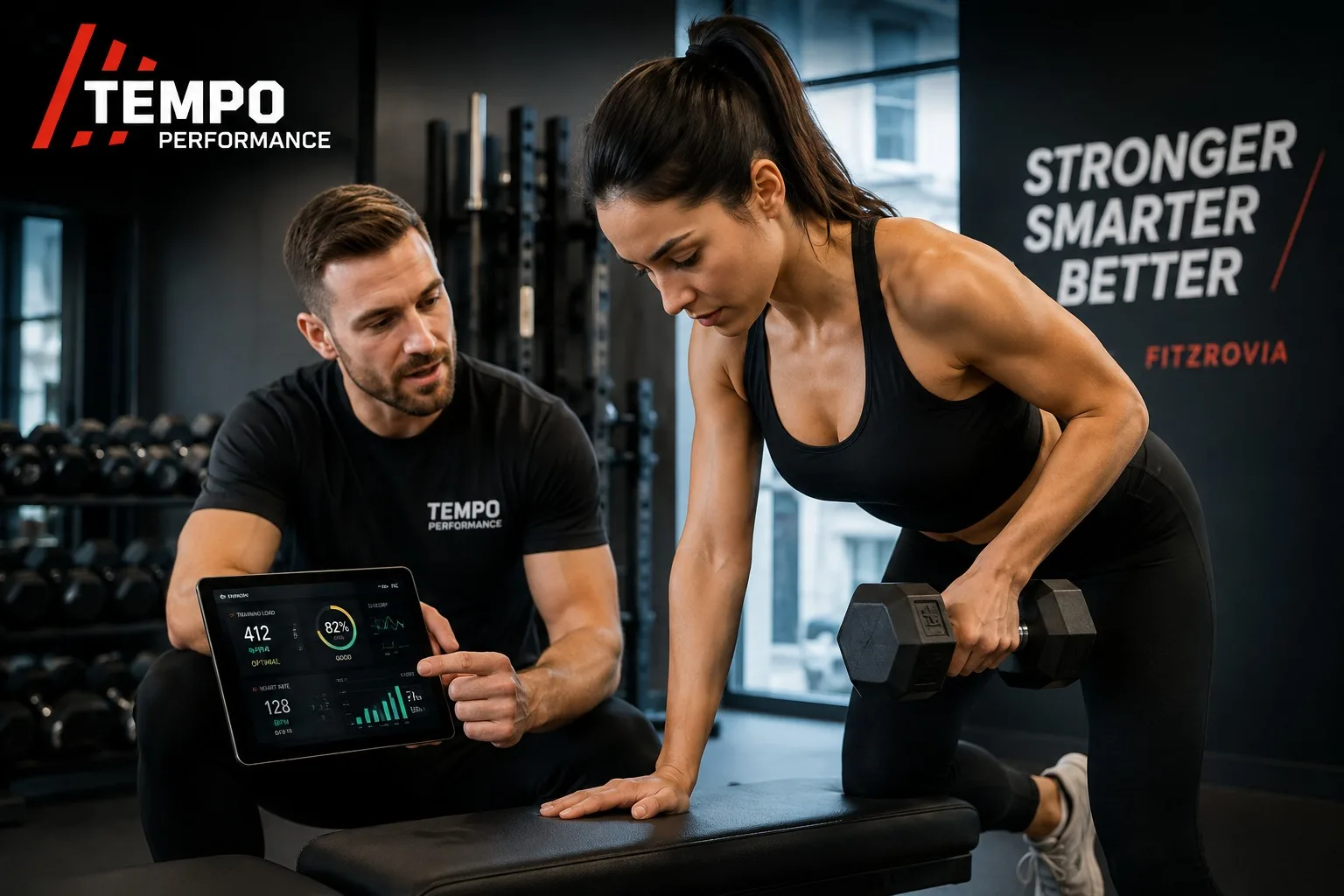
Personal trainer Fitzrovia cannot be fully replaced by an AI app or connected training machine. AI can organise workouts, surface data and make automated suggestions, but a human coach can observe technique, ask better questions, adapt to a difficult day and understand the wider context behind a client’s decisions. For busy professionals in Fitzrovia, the most useful 2026 model is likely to be human coaching supported by technology rather than human coaching removed by it.
The attraction of AI fitness tools is easy to understand. They are always available, they can process large amounts of training data, and they can make exercise feel more structured for someone who would otherwise improvise every session. The limitation is that fitness progress is not a software problem alone; it also depends on behaviour, communication, movement quality, recovery and the ability to change direction when the original plan stops fitting real life.
Why AI Fitness Coaching Is Getting So Much Attention
AI coaching has moved beyond simple workout generators. New systems can combine exercise history with information from wearables, session feedback and self-reported recovery to suggest what to do next. That makes the technology particularly attractive to London professionals who want fast answers and dislike wasting time deciding what to train.
The useful part is automation. A digital system can remember previous sessions, track repetitions, identify whether loads are rising and present a clear plan before a workout begins. This can remove friction, but it does not automatically make the plan appropriate, well executed or sustainable.
Where AI can genuinely help
- Logging exercises, loads, repetitions and training frequency.
- Turning wearable information into a simple view of recent activity and recovery.
- Providing reminders and a basic structure between coached sessions.
- Making routine programme information easier to access without searching through notes.
What a Human Coach Sees That an Algorithm Can Miss
A coach is not limited to the numbers entered into an app. They can see hesitation before a difficult lift, notice when technique changes under fatigue, hear that a client has slept badly, and recognise when work stress has changed the quality of the session. Those observations influence decisions about exercise selection, loading and the amount of work that makes sense that day.
Human coaching also creates a conversation rather than a one-way prescription. If a client says a movement feels uncomfortable, the trainer can ask where, when and under what conditions it appears, then choose an alternative within their professional scope. That process is very different from simply accepting or rejecting an automated recommendation.
Technique needs context
Camera-based systems can identify some visible movement patterns, but good coaching involves more than matching a body to an idealised shape. Limb proportions, training history, previous injuries, confidence and the intended purpose of the exercise all affect what good technique looks like for the individual. A useful correction should solve a real problem, not make every person move identically.
How a Personal Trainer Fitzrovia Can Use AI Without Becoming Dependent on It
The strongest use of technology is as a support layer. A personalised training programme can still be built around the client’s goals, schedule, training history and available recovery, while digital tools make the record-keeping easier. That keeps decision-making human while using software for the repetitive tasks it handles well.
For example, a client may use a wearable to track sleep and general activity, but the trainer can interpret that information alongside what happened at work, how the warm-up feels and whether performance is actually changing. One poor readiness score does not automatically require an easy session, just as one high score does not guarantee that a hard workout is sensible. Trends are more useful than isolated numbers.
Where Nutrition Apps Help and Where They Need Judgement
AI nutrition tools can make food logging quicker and help people notice patterns, but they can also create false precision. Portion estimates, restaurant meals and incomplete food databases can all make the displayed numbers look more exact than they are. A personalised diet plan should therefore fit the person’s routine, preferences and goal rather than chasing a perfect dashboard every day.
For Fitzrovia professionals, that may mean planning around client lunches, travel, late meetings and the food options available near the office. The best system is the one that can survive a normal working week. Technology can support consistency, but the strategy still needs to be realistic enough to follow.
An Illustrative Fitzrovia Scenario
Consider a consultant who trains twice a week but also wears a smartwatch, tracks sleep and uses an AI app that recommends daily workouts. The app may suggest extra volume after a quiet day, while the coach knows that the client has a demanding presentation the next morning and has struggled with shoulder technique during pressing. The useful decision may be to keep the planned session, reduce one accessory exercise and focus on the movements that are progressing well. The technology still contributes information, but it does not make the final judgement in isolation.
The same principle applies between sessions. The client can use digital reminders to walk, record workouts and review habits, while the coach keeps the programme coherent from week to week. This division of labour gives software a clear job without allowing constant notifications to rewrite the training plan.
How to Start Using Fitness Technology More Intelligently
- Choose one or two metrics that could genuinely influence a training decision.
- Keep the core programme stable long enough to identify trends rather than reacting to daily fluctuations.
- Bring useful data to coaching sessions and discuss what changed in real life at the same time.
- Remove metrics or apps that create anxiety, confusion or extra work without improving decisions.
Common Mistakes When Using AI Fitness Tools
- Changing the programme every time an app produces a new recommendation.
- Treating estimated calories, recovery scores or readiness numbers as laboratory measurements.
- Using automated form feedback without considering pain, injury history or exercise purpose.
- Collecting more data than you can realistically use.
- Assuming accountability will happen automatically because a notification appears on a phone.
Key Takeaways
- AI is useful for tracking, reminders, organisation and pattern recognition.
- Human coaching adds observation, communication, context and real-time judgement.
- The best 2026 approach is often technology-supported coaching rather than technology-only coaching.
- A smaller number of useful metrics is better than a dashboard full of numbers that never change a decision.
Frequently Asked Questions
Can AI create a complete workout programme?
AI can create a structured workout, but the quality depends on the information it receives and whether the plan suits your technique, history, recovery and goals. A human coach can assess those factors directly and adjust the programme as they change.
Is an AI personal trainer cheaper than one-to-one coaching?
Digital coaching tools are often positioned as lower-cost alternatives, but price is only one part of the decision. The more important comparison is the level of assessment, supervision, accountability and individual adaptation you need.
Can a wearable tell me whether I should train hard today?
A wearable can provide useful context through trends in sleep, activity and heart-rate data, but a single readiness score should not make the entire decision. Your actual performance, symptoms, schedule and recent training also matter.
Who benefits most from a human personal trainer?
People who value individual assessment, technique coaching, accountability and programme adjustments are likely to gain more from human coaching. It can be particularly useful when training needs to fit around a demanding or unpredictable schedule.
Conclusion
AI can make fitness more organised, but organisation is not the same as coaching. If you want a plan that can respond to your technique, work schedule, recovery and progress, working with a personal trainer Fitzrovia gives you a human decision-maker who can use technology without being controlled by it. Tempo Performance offers private one-to-one coaching in Fitzrovia for people who want structured training with direct feedback and accountability.
FAQ
Q Can AI create a complete workout programme?
A AI can create a structured workout, but the quality depends on the information it receives and whether the plan suits your technique, history, recovery and goals. A human coach can assess those factors directly and adjust the programme as they change.
Q Is an AI personal trainer cheaper than one-to-one coaching?
A Digital coaching tools are often positioned as lower-cost alternatives, but price is only one part of the decision. The more important comparison is the level of assessment, supervision, accountability and individual adaptation you need.
Q Can a wearable tell me whether I should train hard today?
A A wearable can provide useful context through trends in sleep, activity and heart-rate data, but a single readiness score should not make the entire decision. Your actual performance, symptoms, schedule and recent training also matter.
Q Who benefits most from a human personal trainer?
A People who value individual assessment, technique coaching, accountability and programme adjustments are likely to gain more from human coaching. It can be particularly useful when training needs to fit around a demanding or unpredictable schedule.
Fitness disclaimer — This article provides general fitness information and is not a substitute for individual medical advice. Consult a qualified healthcare professional or appropriately qualified fitness professional before starting or materially changing an exercise programme.