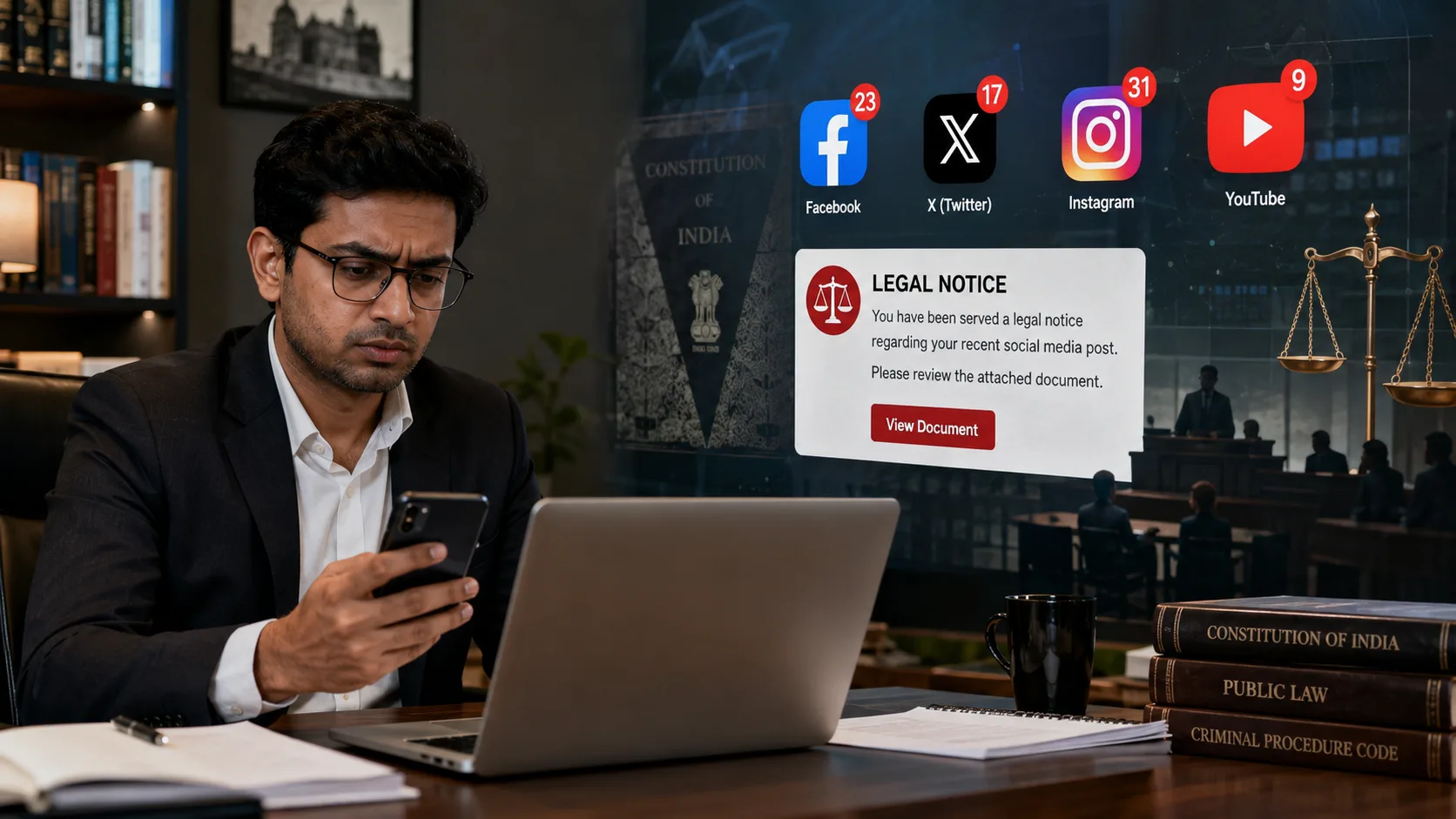
You post a tweet criticizing a government policy. You upload a video discussing a sensitive public issue. You share a political opinion that quickly goes viral.
At first glance, these seem like ordinary social media activities. But what happens when a post attracts legal scrutiny? Can a Facebook post, an Instagram Reel, or a tweet raise constitutional questions?
The answer is yes—but not always for the reasons people think.
Whenever a dispute involves free speech, government action, censorship, or restrictions on online expression, constitutional principles may come into play. This is where experienced constitutional lawyers in India step in to examine whether the law has been applied within constitutional limits.
Free Speech Doesn't Exist Without Constitutional Limits
Many people believe the Constitution gives them unrestricted freedom to express their opinions online. It doesn't.
Article 19(1)(a) guarantees the right to freedom of speech and expression, but Article 19(2) also allows the State to impose reasonable restrictions on specific grounds such as public order, defamation, decency, morality, national security, and incitement to an offence.
This means the legality of a social media post depends not only on what was posted but also on why legal action has been initiated.
When Does a Social Media Dispute Become a Constitutional Issue?
Not every complaint about an online post raises a constitutional question.
A dispute enters the constitutional domain when government action affects a person's fundamental rights. For example, authorities may block online content, remove access to digital platforms, initiate criminal proceedings, or exercise statutory powers that allegedly restrict lawful expression.
In such situations, the central legal question shifts from the content of the post to whether the State acted within the framework of the Constitution.
Courts Examine Much Beyond Than Just the Post
A viral post may attract public attention, but courts look beyond public opinion. They examine whether the restriction imposed has legal authority, serves a legitimate constitutional purpose, and satisfies the standards laid down by judicial precedents.
The focus remains on constitutional validity rather than social media popularity.
Context Can Change the Legal Position
The same words may produce different legal consequences depending on how, where, and why they were published.
A satirical comment, political criticism, journalistic reporting, or public-interest discussion may receive different legal treatment from content that promotes violence, spreads unlawful misinformation, or infringes another person's legal rights.
This is why constitutional disputes rarely turn on isolated sentences. Courts evaluate the complete factual and legal context before reaching a conclusion.
Bottom Line
Social media has expanded the way people exercise their right to free expression, but it has also created new constitutional questions that did not exist a decade ago. When government action affects online speech, the discussion extends beyond the platform itself and into the constitutional safeguards that protect individual rights.
Understanding where that boundary lies is exactly why constitutional lawyers in India play an important role in interpreting the balance between freedom of expression and lawful regulation.