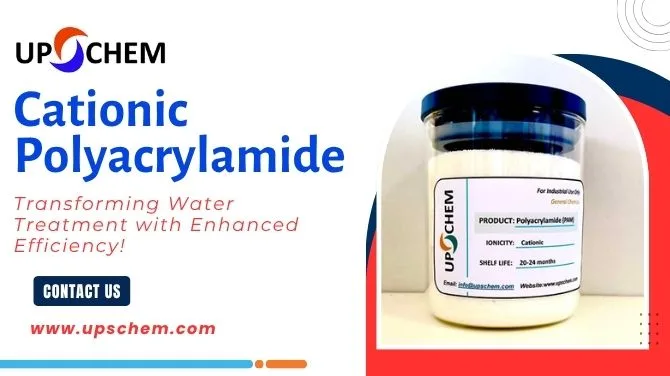
Water treatment has become an indispensable component of modern industrial and municipal operations. The growing demand for clean, safe water driven by population growth, urbanization, and stricter environmental regulations has pushed technological innovations in this vital field. Among various chemical agents used to optimize water treatment processes, Cationic Polyacrylamide (CPAM) has surfaced as a superior choice, revolutionizing methods with its exceptional efficiency, versatility, and eco-friendly profile.
As a leading chemical manufacturer and provider, Shandong UPS Chemical Co., Ltd has been at the forefront of producing high-quality Cationic Polyacrylamide tailored to diverse water treatment applications. Our commitment to innovation and sustainability enables industries worldwide to improve water recycling, discharge compliance, and operational cost-effectiveness.
What is Cationic Polyacrylamide? Understanding the Fundamentals?
To appreciate how Cationic Polyacrylamide is transforming water treatment, it is essential first to understand what it is and how it works fundamentally.
Chemical Composition and Characteristics
Cationic Polyacrylamide refers to polymers synthesized from acrylamide monomers with a positive (cationic) charge located on repeating units. This cationic nature distinguishes CPAM from other polyacrylamide types like anionic or nonionic variants.
These polymers are water-soluble and exhibit unique flocculant properties owing to their long-chain molecular structure, which allows them to bridge particles suspended in water, enhancing their aggregation and separation.
Mechanism of Action in Water Treatment
In most wastewater streams, particles tend to carry negative charges, leading to repulsion and preventing natural settling. The positively charged groups in CPAM neutralize these negative charges, destabilizing suspended particles. Simultaneously, the long polymer chains act as bridges, pulling these particles together into larger flocs that settle quickly or can be floated off.
This dual action improves coagulation and flocculation processes significantly, making CPAM highly effective in clarifying turbid water and removing various contaminants.
Why Cationic Polyacrylamide Is a Game-Changer in Water Treatment?
Moving beyond basics, it is important to outline how CPAM is truly transforming water treatment practices worldwide.
Superior Flocculation Performance
Traditional coagulants such as aluminum sulfate or ferric chloride can be effective but often require high doses and generate significant secondary sludge. In contrast, Cationic Polyacrylamide operates efficiently at low dosages with higher flocculation rates, reducing chemical consumption and sludge production.
Versatility Across Various Water Types
CPAM is adaptable to different water qualities and industrial effluents, such as:
- Municipal sewage sludge with high organic content.
- Industrial wastewater containing suspended solids, oils, and dyes.
- Pulp and paper mill effluents with recalcitrant organics.
- Mining wastewater laden with fine tailings.
This flexibility makes CPAM a universal player in water treatment recipes.
Enhanced Sludge Dewatering and Disposal
By forming denser and more compact flocs, Cationic Polyacrylamide facilitates improved sludge dewatering, which not only reduces transportation and handling costs but also minimizes environmental risks linked to sludge storage and disposal.
Environmental and Regulatory Compliance
With tightening discharge limits and increasing ecological awareness, industries seek chemical agents that are effective yet environmentally friendly. CPAM’s low toxicity, high biodegradability (especially newer grades), and ability to reduce residual contaminant levels make it an ideal solution aligned with sustainable practices.
Applications of Cationic Polyacrylamide in Different Sectors
The transformative impact of Cationic Polyacrylamide is evident when reviewing its widespread adoption across industries.
- Municipal Wastewater Treatment
Municipal water treatment plants rely heavily on CPAM for sludge conditioning, improving solids separation, and facilitating biological treatment processes. By enhancing sludge settling and dewatering, these polymers help municipalities meet stringent effluent quality standards, reduce operational costs, and improve overall process efficiency. - Industrial Effluents
In industrial sectors such as chemical manufacturing, textiles, food and beverage processing, and leather tanning, wastewater often contains complex mixtures of suspended solids, oils, and colorants. The tailored use of CPAM helps clarify these waters, supporting reuse initiatives and minimizing environmental discharge impacts. - Mining and Mineral Processing
The mining industry generates enormous volumes of tailings and wastewater containing fine particulates and heavy metals. Cationic Polyacrylamide’s powerful flocculation capabilities enable faster settling of tailings, reducing water turbidity and facilitating recycling of process water. - Paper and Pulp Industry
Paper mills generate high volumes of wastewater loaded with dissolved and suspended organic matter. Using CPAM improves sludge handling and water clarification, allowing reduced fresh water consumption and better compliance with environmental regulations. - Agriculture and Irrigation
In agriculture, CPAM is employed for soil conditioning and controlling irrigation wastewater, preventing soil erosion, and facilitating water reuse in irrigation systems.
At Shandong UPS Chemical Co., Ltd, we pride ourselves on delivering high-performance Cationic Polyacrylamide products tailored to customers’ unique water treatment challenges.
- Cutting-Edge Research and Development
Our dedicated R&D team continuously improves polymer synthesis techniques, optimizing molecular weight distribution, charge density, and polymer structure to maximize flocculation efficiency and environmental safety. - Customizable Product Portfolio
Understanding that no water system is identical, we offer a broad range of CPAM grades with varying ionic contents, molecular weights, and physical forms (powder, emulsion) to suit diverse applications. - Commitment to Sustainability
We ensure that all our products comply with global environmental regulations, have minimized residual acrylamide content, and incorporate biodegradable components to reduce ecological footprints. - Technical Expertise and Support
Our service extends beyond supply; we provide comprehensive technical consultation, on-site assistance, and training programs to help customers optimize polymer dosage and achieve the best results. - Robust Supply Chain
With advanced manufacturing facilities and a global distribution network, we guarantee reliable, timely delivery, allowing clients to maintain consistent and efficient water treatment operations.
Looking toward 2026 and beyond, several exciting trends highlight how CPAM will continue evolving.
- Development of Smart Polymers
Research is focusing on smart polymers with tunable properties that respond to changing water chemistry, optimizing flocculation dynamically without manual intervention. - Biodegradability and Green Chemistry
New formulations aim at enhancing the biodegradability of CPAM without sacrificing performance, ensuring safe environmental breakdown post-treatment. - Integration with Digital Water Treatment Systems
Advanced dosing pumps combined with real-time water quality sensors and AI-driven control systems will automate and optimize CPAM usage, improving efficacy and reducing costs. - Expanded Use in Emerging Markets
With industrialization accelerating in developing regions, demand for CPAM is expected to rise sharply, encouraging suppliers to establish regional production and support.
Cationic Polyacrylamide has truly revolutionized water treatment by offering unparalleled efficiency, versatility, and environmental benefits. Its ability to improve flocculation, enhance sludge dewatering, and adapt to varying wastewater types makes it an indispensable tool for municipal and industrial water treatment operations globally.
Frequently Asked Questions (FAQs) on Cationic PolyacrylamideQ1: What exactly differentiates cationic polyacrylamide from other polyacrylamide types?
A: CPAM carries a positive charge which neutralizes negatively charged particles in wastewater, enabling efficient flocculation. Anionic polyacrylamides carry negative charges, and nonionic types have no charge. CPAM is preferred in treating organically rich, negatively charged effluents.
Q2: How does CPAM improve sludge dewatering?
A: CPAM forms larger, denser flocs which expel water more easily during mechanical dewatering processes, resulting in drier sludge cakes and reduced disposal volumes.
Q3: Is CPAM safe for the environment?
A: Yes, especially modern CPAM formulations with low residual acrylamide monomers and enhanced biodegradability are environmentally safe and comply with international regulations.
Q4: Can CPAM be used in drinking water treatment?
A: Usually, CPAM is used in municipal wastewater and industrial treatment. For drinking water, specific grades with strict purity and safety standards are used. Consultation with suppliers is necessary for such applications.
Q5: How should CPAM dosage be optimized?
A: Dosage depends on wastewater characteristics and desired outcomes. Jar tests and on-site trials help determine the optimal dosage to achieve efficient flocculation without overdosing, which can cause destabilization.
Q6: What forms of CPAM are available, and which is better?
A: CPAM products come in powder and emulsion forms. Powders are easier to store and transport, while emulsions dissolve quickly and are safer to handle. Selection depends on application requirements and user preference.