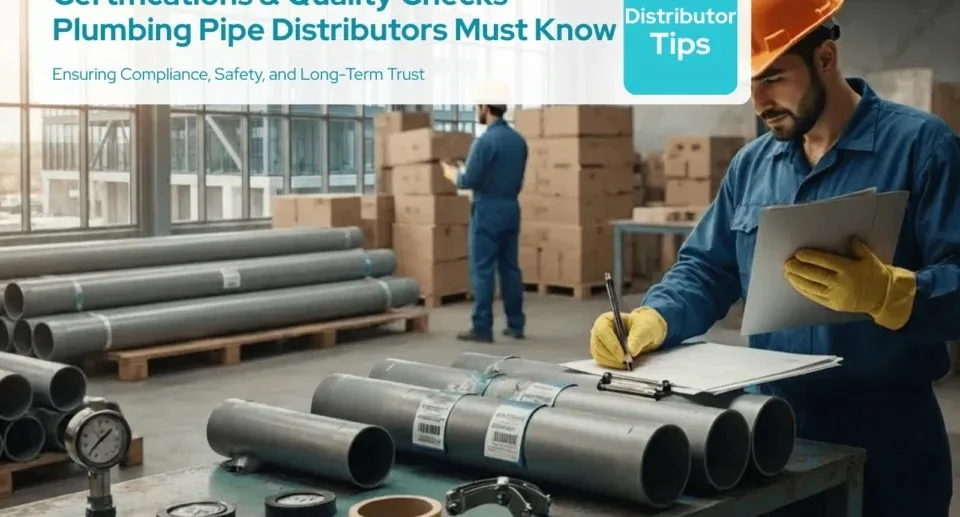
Plumbing pipes may remain hidden behind walls, under floors, or beneath the ground, but they form the backbone of every building’s water distribution and drainage system. Whether in homes, commercial spaces, hospitals, industrial facilities, or large infrastructure projects, reliable plumbing directly affects safety, hygiene, and long-term building performance. When plumbing systems fail, the consequences can be severe, including structural damage, water contamination, costly repairs, and customer dissatisfaction. This is why Plumbing Pipe Certifications have become increasingly important in today’s construction and infrastructure environment.
This blog explains the importance of plumbing pipe certifications and how they influence quality, durability, and trust across the supply chain. Certifications act as proof that plumbing pipes have passed strict testing procedures and comply with recognised standards for performance and safety. They provide assurance to distributors, builders, contractors, and end users that the products being installed are dependable and built to last.
The article highlights the growing shift in the plumbing industry from price-driven purchasing to quality-focused decision-making. As urbanisation increases and construction standards improve, builders and developers now prioritise certified products that deliver consistent performance over time. In regions such as Odisha, customers are becoming more aware of product quality and increasingly prefer certified plumbing solutions over low-cost alternatives that may create future maintenance issues.
A major focus of the blog is the role distributors play in maintaining plumbing safety and quality standards. Distributors are not simply suppliers; they influence which products reach contractors, architects, and consumers. By choosing certified plumbing pipes, distributors reduce complaints, strengthen customer relationships, improve business reputation, and support compliance requirements for government and large-scale projects.
The blog also provides a detailed overview of key Plumbing Pipe Certifications that distributors should understand. It discusses ISI certification under the Bureau of Indian Standards (BIS), which validates product quality, material composition, pressure resistance, and durability. It also covers ISO certifications that demonstrate structured quality management and environmentally responsible manufacturing practices.
In addition to certifications, the blog explores essential quality standards and checks that determine pipe performance in real-world applications. Topics include raw material quality, wall thickness uniformity, dimensional accuracy, and surface finish. These factors directly impact pipe strength, installation quality, water flow efficiency, and long-term reliability.
Another important section explains manufacturing quality control and testing procedures followed by certified manufacturers before products reach the market. Common testing methods such as hydrostatic pressure testing, impact resistance testing, thermal stability testing, and chemical resistance evaluation are discussed to show how manufacturers maintain consistent standards.
The blog further guides distributors on verifying certifications and test reports through practical steps such as checking BIS license details, reviewing recent laboratory reports, and evaluating manufacturing practices.
Overall, this blog serves as a complete guide for distributors who want to build a reliable and sustainable business. By partnering with certified plumbing pipe manufacturers and prioritising quality assurance, distributors can reduce risk, improve customer confidence, and strengthen their long-term position in the market.