
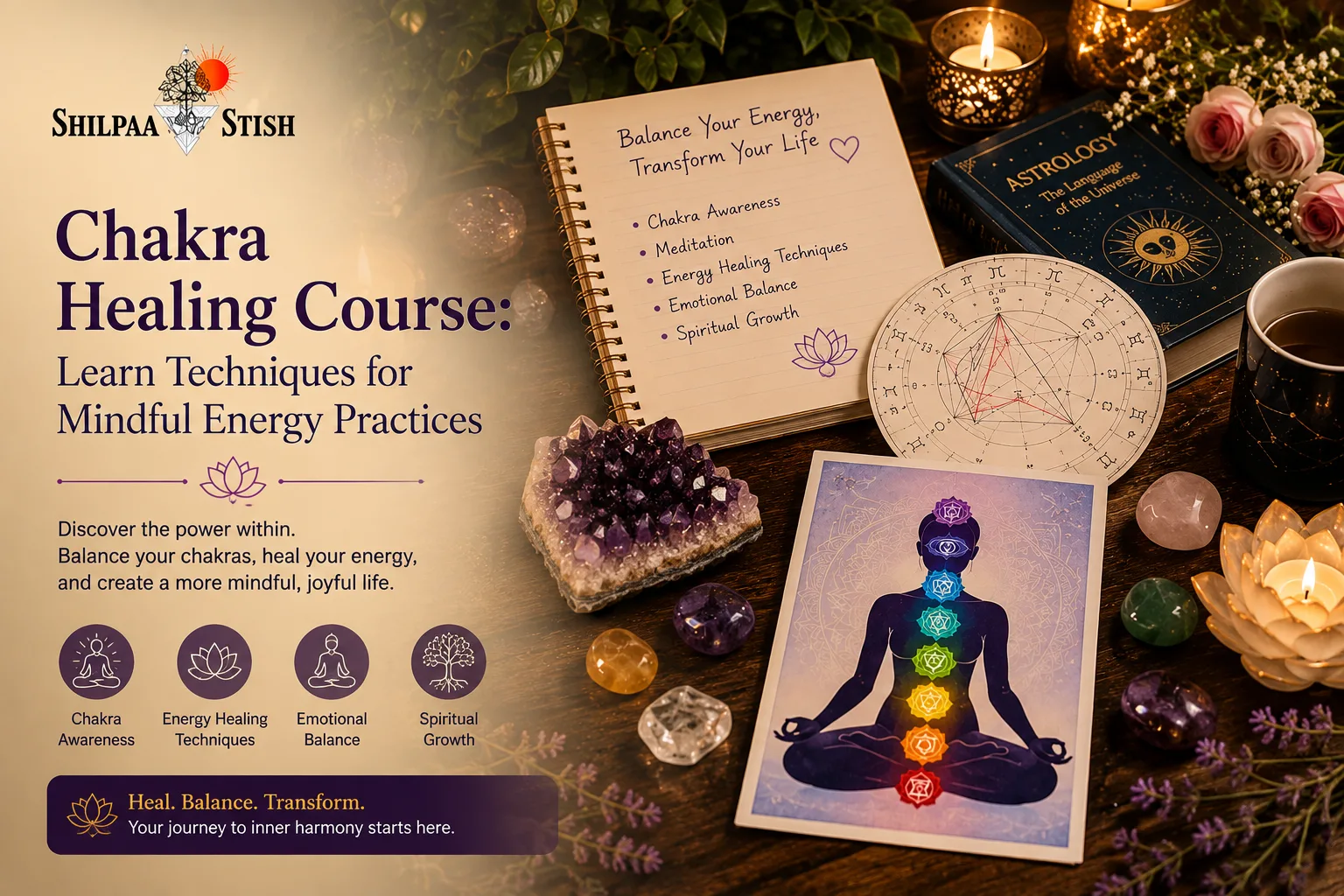
If you've spent any time exploring spirituality, meditation, or holistic wellness, you've probably come across the idea of the seven chakras and chakra healing. The concept shows up everywhere — short videos, Instagram reels, wellness blogs, and spiritual influencers — but the information is often scattered, inconsistent, and hard to piece together into something you can actually practise. This is exactly why more people across India are now looking for a structured chakra healing course rather than trying to learn everything on their own.
A good chakra healing course brings together the theory, the techniques, and the guided practice in one organised learning path, so you're not left guessing which video to trust or which technique to try first. Whether you're completely new to energy work or already have some experience with meditation and yoga, this guide walks you through what a chakra healing course actually teaches, how the seven chakras work, and how to choose a course that genuinely fits your learning needs.
What is a chakra healing course and what can I learn from it? A chakra healing course is a structured learning program that teaches you about the seven energy centres of the body (chakras) and practical techniques — such as meditation, breathwork, and visualization — to help identify and balance them. Unlike scattered online content, a course typically offers step-by-step guidance, hands-on practice, and the opportunity to ask questions as you learn.
Interested in learning chakra healing in a structured and supportive way? Explore Shilpaa Stish's chakra healing learning options or get in touch to understand which approach may be suitable for you.
What Is a Chakra Healing Course?
A chakra healing course is designed to take you beyond surface-level information and into an organised, practical understanding of chakra concepts. Instead of jumping between different videos, articles, and social media posts that often contradict each other, a course gives you a consistent framework to learn from — usually built around the seven chakras, their traditional associations, and techniques for chakra balancing.
Most chakra healing classes combine a bit of theory (what each chakra represents and why it matters) with practical exercises like guided meditation, breath awareness, and simple visualization techniques. The goal isn't to overwhelm you with spiritual jargon, but to give you tools you can actually use in daily life — for grounding, emotional balance, and a calmer state of mind.
This is quite different from casually watching a chakra-related video online. A video might show you what a technique looks like, but a course typically explains the why behind it, corrects common mistakes, and gives you room to ask questions — something pre-recorded content simply can't offer.
Understanding the Seven Chakras
Most chakra healing training is built around the seven commonly discussed energy centres. Here's a simple, beginner-friendly introduction to each one.
Root Chakra
Located at the base of the spine, the root chakra is traditionally associated with a sense of safety, stability, and grounding. In chakra meditation, this is often the starting point, since a stable "foundation" is considered important before working with the higher chakras.
Sacral Chakra
Positioned in the lower abdomen, the sacral chakra is generally linked to creativity, emotional flow, and connection with others. Sacral chakra healing techniques often focus on releasing emotional blocks and encouraging a healthier relationship with feelings and self-expression.
Solar Plexus Chakra
Found around the upper abdomen, the solar plexus chakra is traditionally associated with confidence, personal power, and willpower. Many beginners are drawn to solar plexus practices when working on self-esteem or motivation.
Heart Chakra
Located at the centre of the chest, the heart chakra is connected to compassion, love, and emotional balance — both towards oneself and others. Heart chakra healing practices often involve breathwork and loving-kindness style meditation.
Throat Chakra
Positioned at the throat, this chakra is traditionally linked to communication, honesty, and self-expression. Throat chakra techniques often focus on releasing tension in the neck and shoulders while practising mindful, honest communication.
Third Eye Chakra
Located between the eyebrows, the third eye chakra is associated with intuition, focus, and inner clarity. Meditation and visualization are commonly used to work with this chakra.
Crown Chakra
Positioned at the top of the head, the crown chakra is traditionally connected to spiritual connection and a broader sense of awareness. Many chakra healing courses treat this as the culmination of the practice, tying together grounding, emotional balance, and mindful awareness developed through the earlier chakras.
What Do You Learn in a Chakra Healing Course?
A well-structured chakra healing course usually covers a mix of awareness-building and practical skills, including:
- Chakra awareness — learning to recognise each chakra and its traditional associations
- Meditation — chakra-focused meditation practices for beginners and beyond
- Breathwork — using breath to support grounding and energy balance
- Visualization — guided imagery techniques often used in chakra meditation
- Energy-balancing practices — simple, structured techniques for working through each chakra
- Grounding techniques — practices to help you feel more stable and present
- Mindfulness — bringing present-moment awareness into daily life
- Self-reflection — journaling or reflective exercises tied to each chakra
- Building a consistent spiritual practice — turning individual techniques into a sustainable routine
The idea is to leave the course not just with information, but with a set of practices you can genuinely continue on your own.
Chakra Healing Techniques Beginners Can Learn
You don't need any prior experience to start learning chakra healing techniques. Most beginner-friendly classes introduce practices gradually, such as:
- Chakra meditation — sitting quietly while focusing attention on a specific chakra, often paired with breath awareness
- Visualization — imagining colour, light, or energy flowing through a particular chakra
- Grounding exercises — simple practices, such as focused breathing or body awareness, to build a sense of stability
- Breath awareness — using slow, intentional breathing to support relaxation and focus
- Mindful energy practices — short daily rituals that bring attention back to the body and present moment
These techniques are generally low-pressure and can be practised in short sessions, which makes them approachable even for people with busy schedules.
Who Can Benefit From Learning Chakra Healing?
Chakra healing classes tend to attract a fairly wide range of people, including:
- Complete beginners who are curious about meditation and energy work but don't know where to start
- Meditation practitioners looking to deepen an existing practice with chakra-focused techniques
- Yoga and wellness enthusiasts who want to complement their physical practice with energy awareness
- Spiritual learners exploring different traditions and frameworks for personal growth
- Coaches and wellness practitioners who want additional tools to offer clients
- Anyone interested in mindfulness who wants a more structured daily practice
There's no single "type" of person a chakra healing course is meant for — the appeal is broad because the techniques themselves are adaptable to different goals, from stress management to spiritual exploration.
Can Beginners Learn Chakra Healing?
Yes. One of the most common concerns beginners have is whether they need prior experience with meditation, yoga, or energy work before starting a chakra healing course — and generally, they don't. Beginner-focused courses are designed to build understanding gradually, starting with the basics of each chakra before introducing more advanced concepts or techniques.
If you're new to this space, look for a course or class that explicitly states it welcomes beginners, offers clear explanations (not just jargon), and paces the material so you're not overwhelmed in the first session.
Online vs. In-Person Chakra Healing Classes in India
Both online and in-person chakra healing classes have their own advantages, and the right choice often comes down to your personal learning style and schedule.
Online chakra healing courses offer flexibility — you can learn from home, revisit material at your own pace, and fit sessions around a busy schedule. This format works well for people who prefer self-paced learning or don't have easy access to in-person classes in their city.
In-person chakra healing classes offer more direct interaction, immediate feedback, and a shared group energy that some learners find more motivating. Being physically present with an instructor also makes it easier to ask questions and get real-time corrections on techniques like breathwork or meditation posture.
Shilpaa Stish, based in Ahmedabad, offers both online and in-person chakra healing sessions, which means you can choose the format that best fits your comfort level and availability — or even combine both as your practice develops.
How to Choose the Right Chakra Healing Course
With so many options available, it helps to know what to actually look for before signing up. Consider the following:
- Instructor experience — how long they've been teaching, and their background in energy work or meditation
- Course structure — is there a clear progression, or does it feel disorganised?
- Practical exercises — does the course include hands-on practice, not just theory?
- Beginner-friendly teaching — is the material explained in accessible language?
- Learning support — can you ask questions or get feedback during the course?
- Online/in-person format — which format suits your schedule and learning style?
- Course duration — is the time commitment realistic for you?
- Certification, if genuinely offered — some courses offer certificates; verify what this actually represents
- Clear expectations — a trustworthy course will describe realistic outcomes rather than making exaggerated promises
Being cautious about "guaranteed results" claims is a good general rule — chakra healing is a personal practice, and outcomes vary from person to person.
Chakra Healing vs. Meditation: What's the Difference?
Meditation is a broad practice with many different approaches — some focus purely on breath, others on mindfulness of thoughts, and others on specific mantras or visualizations. Chakra-focused practices use the framework of the seven chakras as a structure within meditation or energy work, guiding attention to specific areas of the body and their traditional associations.
In other words, chakra healing isn't separate from meditation — it's often a specialised application of meditation techniques, organised around the chakra system. If you already meditate regularly, learning chakra healing can add a more structured focus to your existing practice. If you're new to meditation altogether, a chakra healing course can serve as an accessible entry point, since the chakra framework often gives beginners a tangible structure to follow.
Chakra Healing Course vs. Self-Learning: Which Is Better for Beginners?
Structured CourseSelf-LearningOrganised learning pathInformation can be scatteredGuided techniquesRequires personal researchOpportunity to ask questionsLimited guidanceConsistent practice structureSelf-discipline requiredFeedback may be availableProgress is harder to assessFrequently Asked Questions About Chakra Healing Courses
Is a chakra healing course suitable for beginners?
Yes, most chakra healing courses are designed to accommodate beginners, starting with foundational concepts before moving into more advanced techniques.
What are the seven chakras taught in chakra healing?
The seven chakras typically covered are the root, sacral, solar plexus, heart, throat, third eye, and crown chakras, each associated with different aspects of physical, emotional, and spiritual wellbeing.
What techniques are taught in chakra healing classes?
Common techniques include chakra meditation, visualization, breathwork, grounding exercises, and mindful energy practices.
Can I learn chakra healing online in India?
Yes, online chakra healing courses are widely available in India and offer flexibility for people who prefer to learn from home or have limited access to local in-person classes.
How long does it take to learn chakra healing?
This varies by course and individual pace, but most beginner programs are structured to build understanding gradually over a series of sessions rather than a single class.
Is chakra healing the same as meditation?
Not exactly. Meditation is a broad practice, while chakra healing typically uses the seven-chakra framework as a specific structure within meditation and energy work.
Do I need previous experience to learn chakra healing?
No, most beginner-focused chakra healing courses don't require prior experience with meditation, yoga, or energy work.
How do I choose a chakra healing course in India?
Look at instructor experience, course structure, whether practical exercises are included, and whether the course offers both online and in-person options to match your learning preference.
Start Your Chakra Healing Learning Journey
Learning chakra healing doesn't have to mean piecing together fragments of information from unreliable sources. A structured course can give you the clarity, guided practice, and support that self-learning often lacks — while still leaving room for you to build a personal practice that fits your life.
Ready to deepen your understanding of chakra healing? Connect with Shilpaa Stish to explore chakra healing learning options and take the next step in your spiritual learning journey.
Phone: +91 9974749606 Location: Ahmedabad, India