
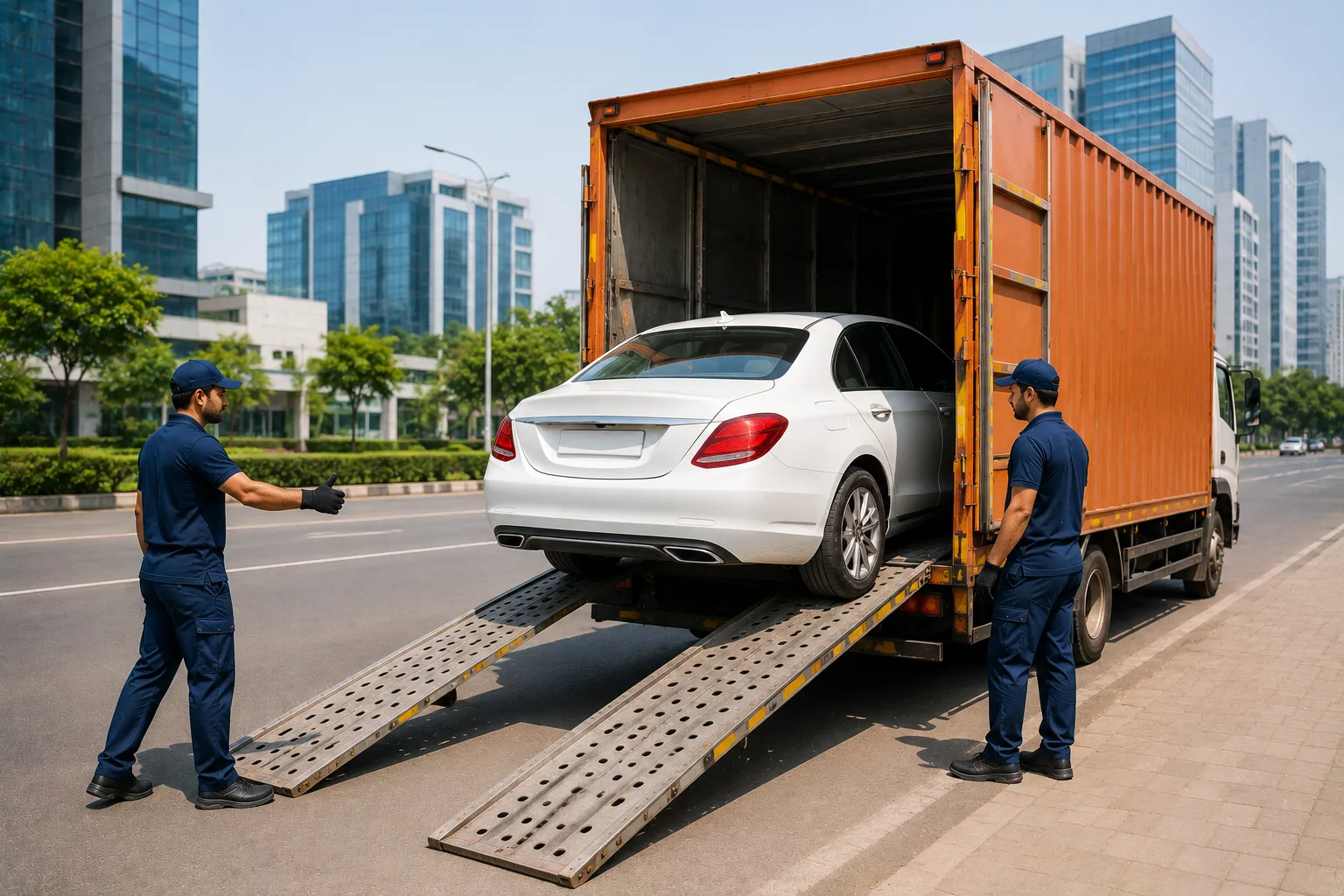
Transporting a car that cannot start is very different from moving a normally running vehicle. A dead battery may be relatively simple to handle, while seized brakes, locked steering, accident damage or a completely immobile vehicle can require specialized loading equipment. This is why car transportation in Gurgaon for a non-running vehicle should be planned according to the car's actual condition rather than booked like a standard vehicle shipment.
The good news is that a non-running car can still be transported safely. The key is to tell the transporter exactly what works and what does not, select the right equipment, and prepare the vehicle before pickup.
What Makes Non-Running Car Transportation Difficult?
A transporter normally expects a vehicle to roll onto the carrier. When the engine does not work, the vehicle cannot load itself, so additional equipment and manpower may be required. Winches, flatbeds, wheel skates or other specialised equipment can be used depending on whether the car can roll, steer and brake.
Here are the most common challenges and their practical solutions.
1. The Car Cannot Start
A dead battery, failed starter, fuel-system problem or major engine failure can prevent the car from moving under its own power.
How to fix it
Tell the transporter before booking that the vehicle cannot start. A carrier equipped with a hydraulic or electric winch can pull the vehicle onto the transport platform instead of requiring it to be driven up the ramp. Winch loading is a standard method for handling many non-running vehicles.
2. The Wheels Are Locked, or the Car Cannot Roll
A car with seized brakes, a locked transmission or damaged wheels presents a bigger challenge than a vehicle with only a dead engine.
A winch alone may not be enough because the vehicle needs to move while being pulled.
How to fix it
Tell the transporter whether:
- All four wheels roll
- The steering works
- The brakes work
- The transmission can be placed in neutral
- Any wheel is seized or damaged
Wheel skates, dollies, a forklift or a specialised flatbed may be necessary when the vehicle cannot roll normally. The correct equipment depends on the exact condition of the car.
3. Locked Steering Can Make Loading Difficult
Even when a vehicle's wheels roll, locked steering can make it difficult to guide the car onto a carrier.
This is particularly important when the keys are unavailable or the steering lock cannot be released.
How to fix it
Keep the vehicle's keys available for the driver whenever possible. If the steering cannot be unlocked, inform the transporter before pickup so suitable equipment can be arranged.
4. Accident-Damaged Cars Need Extra Care
A car that stopped running because of an accident can have broken suspension components, damaged wheels, leaking fluids or structural damage.
Trying to load it like a normal car can create additional damage.
How to fix it
Give the transporter photographs and a clear description of the damage before booking. Mention:
- Broken wheels
- Damaged bumpers
- Bent suspension
- Broken axles
- Fluid leakage
- Missing parts
- Glass damage
- Severe body damage
For heavily damaged vehicles, a flatbed or specialised recovery vehicle may be more appropriate than a conventional multi-car carrier. Flatbed systems can use hydraulic ramps and winches to load vehicles without requiring them to drive onto the platform.
5. Low Ground Clearance Creates Loading Problems
A non-running vehicle with low ground clearance can be particularly difficult to load because the front or underside may scrape against a conventional ramp.
This can happen with modified cars, sports cars and some premium vehicles.
How to fix it
Ask whether the transporter has a suitable hydraulic lift, tilt-bed or low-angle loading system. The loading angle matters because a steep ramp can cause the underside of a low vehicle to make contact with the ramp.
6. The Pickup Location May Not Have Enough Space
A large carrier needs sufficient space to position itself and operate its loading equipment. A narrow residential lane, basement parking area or congested roadside can make pickup difficult.
This is particularly relevant for car transportation in Gurgaon, where the pickup point could be inside a residential society, apartment complex, commercial area or narrow internal road.
How to fix it
Before confirming the booking, check:
- Whether the carrier can enter the road
- Available turning space
- Height restrictions
- Basement clearance
- Society entry rules
- Parking availability
- Whether the vehicle needs to be moved to a wider road
If the large carrier cannot reach the exact location, arrange a suitable towing or recovery vehicle to move the car to an accessible loading point.
7. Incorrect Information Can Cause Pickup Failure
One of the most avoidable problems is telling the transporter only that the car is “not starting.”
That description is not enough.
There is a major difference between a car that does not start but rolls, steers and brakes and one that has locked wheels, damaged suspension or no steering.
How to fix it
Describe the vehicle using three simple questions:
Does it roll?
Can all wheels move freely?
Does it steer?
Can the front wheels be directed normally?
Does it break?
Can the vehicle be safely stopped while being moved?
These details help the transporter determine what equipment is needed. Accurate condition information can also prevent failed pickups and unexpected additional charges.
Preparing Your Non-Running Car Before Pickup
Good preparation can make car transportation in India considerably easier, even when the engine is completely dead.
Before the transporter arrives:
- Remove personal belongings from the cabin and boot.
- Keep the keys ready if available.
- Inflate the tires if they can safely hold air.
- Release the parking brake if possible.
- Put the transmission in neutral where the vehicle allows it.
- Identify the manufacturer's tow or winch points if you know their location.
- Remove loose accessories that could fall during loading.
- Take photographs from all sides before handing over the vehicle.
- Inform the transporter about fluid leaks before pickup.
- Clear the loading area so the winch and carrier can operate safely.
Does Non-Running Transportation Cost More?
Usually, a non-running vehicle can cost more to transport than an otherwise similar running vehicle because it may require additional equipment, a longer loading time, and specialized handling.
When comparing transporters for car transportation in India, ask them whether the quotation includes winch loading, specialized equipment, loading assistance and any local towing required at either end.
How to Choose the Right Transporter in Gurgaon
For car transportation in Gurgaon, do not select a transporter only because the quoted amount is low.
Before booking, ask:
- Do you transport non-running cars?
- Does your carrier have a winch?
- Can you handle seized wheels?
- What happens if the steering is locked?
- Is flatbed loading available?
- Are loading charges included?
- What documentation is required?
- How will existing damage be recorded?
- yWill the final price change if the vehicle condition is exactly as described?
Final Checklist Before Booking
A simple checklist can prevent most last-minute problems:
CheckWhy It MattersEngine does not startDetermines need for winchWheels rollHelps determine loading methodSteering worksMakes positioning easierBrakes workImproves movement safetyKeys availableHelps release steering/gear locksTyres inflatedMakes winching easierNo major fluid leakPrevents loading/transit problemsPickup accessibleEnsures carrier can reach the carExisting damage photographedCreates a condition recordEquipment confirmedPrevents failed pickup
Conclusion
A non-running car is not necessarily difficult to transport; the real problem is using equipment that does not match its condition.
The safest approach is simple: describe the vehicle honestly, document its condition, choose the right carrier, and get the complete quotation in writing. That turns a potentially complicated non-running car move into a much more predictable process.