Selecting an appropriate climate-control arrangement plays a vital role in achieving comfort, operational efficiency, and long-term value. Among modern commercial cooling technologies, Chiller and VRV (Variable Refrigerant Volume) solutions remain two of the most popular choices. Understanding their differences helps property owners, facility managers, and developers make informed decisions based on project requirements.
Understanding Chiller Technology
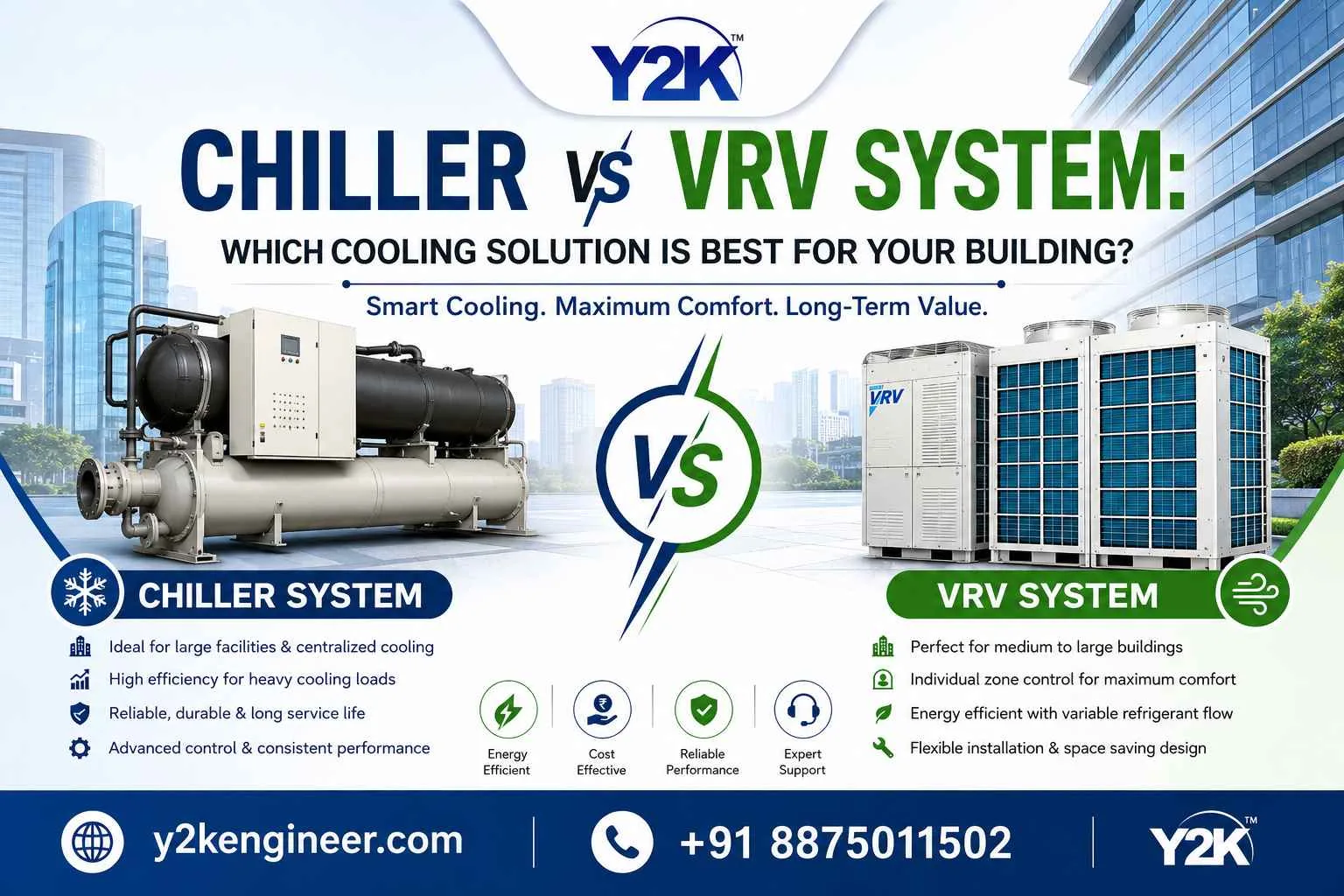
A chiller-based setup removes heat from a structure through chilled water circulation. This approach is commonly installed in large-scale facilities such as corporate campuses, healthcare institutions, manufacturing units, shopping complexes, and hospitality properties.
Key Advantages
• Excellent performance for expansive infrastructures.
• Reliable temperature management across multiple zones.
• Suitable for high-occupancy environments.
• Long service life when properly maintained.
• Strong energy optimization for substantial cooling demands.
Despite these advantages, implementation typically necessitates larger initial investments, complex piping networks, and more space.
Understanding VRV Technology
Refrigerant flow control is used by VRV technology to precisely condition various parts of a property. This innovative solution has become a top preference for offices, retail outlets, educational centers, luxury residences, and mixed-use developments.
Key Advantages
• Flexible installation configuration.
• Individual zone control.
• User-friendly operation.
• Reduced energy consumption during partial load conditions.
• Compact equipment footprint.
Because of its adaptability, VRV equipment offers an excellent balance between comfort and efficiency, particularly where occupancy patterns vary throughout the day.
Which Cooling Solution Is Best?
The answer depends on building characteristics, usage patterns, and operational goals.
A chiller arrangement represents the best option for airports, industrial plants, convention centers, and massive commercial developments requiring centralized cooling. Conversely, a VRV network serves as a top choice for organizations seeking flexibility, energy savings, and customized temperature control.
For many contemporary projects, decision-makers prioritize scalability, lower operating expenditure, and intelligent climate management. In such scenarios, VRV technology often delivers superior overall value. But since each facility has different needs, a professional evaluation is necessary before making a final decision.
Why Choose Y2K Engineers?
Investing in HVAC infrastructure requires expertise just as much as high-quality equipment. Y2K Engineers has built a reputation for delivering dependable engineering solutions tailored to diverse commercial requirements.
What Makes Y2K Engineers Different?
Industry Expertise
Experienced specialists evaluate site conditions, operational objectives, and budget considerations before recommending an optimal system.
Customized Planning
Every project receives a dedicated approach designed around performance expectations rather than generic specifications.
Quality Execution
Installation procedures follow professional standards that support reliability, safety, and long-term functionality.
Client-Centric Support
From consultation to project completion, a seamless experience is ensured by prompt communication and helpful advice.
Services Provided by Y2K Engineers
Y2K Engineers offers comprehensive HVAC solutions, including:
• VRV System Design and Installation
• Chiller System Implementation
• Sky Air Solutions
• Package Air Conditioning Systems
• Room Air Conditioning Installations
• Preventive Maintenance Programs
• HVAC Troubleshooting
• Equipment Upgradation Projects
• Performance Optimization Services
• Technical Consultation and Project Management
These offerings enable organizations to obtain complete cooling support from a single trusted provider.
Benefits of Partnering with Y2K Engineers
Choosing Y2K Engineers delivers several advantages:
• Enhanced operational efficiency.
• Improved indoor comfort.
• Reduced utility expenditure.
• Professional project coordination.
• Reliable after-sales assistance.
• Future-ready cooling strategies.
• Consistent system performance.
• Long-term asset protection.
Conclusion
Although both VRV and chiller technologies have outstanding cooling capabilities, their applicability varies according to certain operational requirements. Large centralized facilities often benefit from chiller-based infrastructure, while flexible commercial environments frequently achieve better results through VRV solutions. By partnering with Y2K Engineers, businesses gain access to technical expertise, innovative HVAC services, and tailored recommendations that maximize comfort, efficiency, and long-term return on investment.
Visit Us: Y2kengineers.com