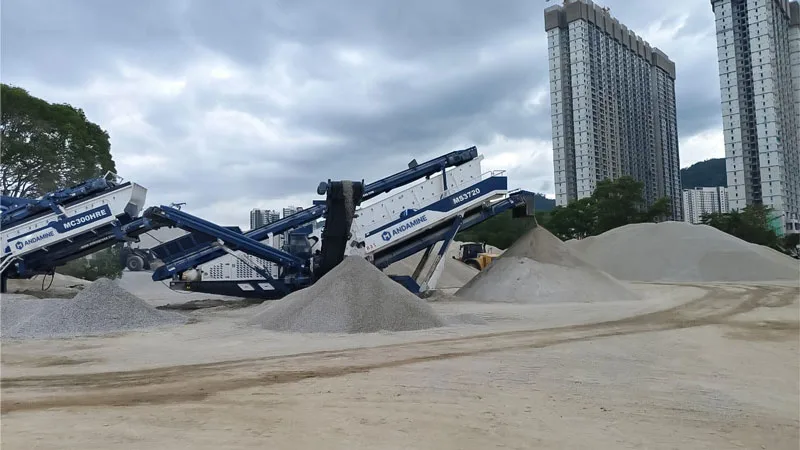
In aggregate quarrying and contract crushing, most plant managers evaluate crushing equipment in isolation—focusing purely on tons-per-hour ratings and maximum feed size. Yet on an active mine site, a crusher is simply the middle link in a continuous material-handling chain. If your feed hopper starves between haul truck dumps, or your discharge conveyor buries itself because wheel loaders cannot clear stockpiles fast enough, theoretical throughput evaporates. Selecting the right portable stone crusher equipped with a properly matched jaw crusher requires synchronized fleet engineering, aligning bucket payloads, truck cycle times, and hopper surge geometry into one seamless rhythm.
The Physics of Pass-Count Synchronization at the Feed Hopper
Every profitable crushing spread starts with a simple mathematical rule: the feed hopper must absorb an entire haul unit's payload without bridging, spilling, or halting the feeder.
Matching Wheel Loader Bucket Volume to Hopper Surge Capacity
When feeding directly with a wheel loader, three to four bucket passes should comfortably fill the hopper's live surge zone while leaving buffer space for the vibrating grizzly feeder to draw material down. If a 6-cubic-meter loader dumps into a cramped hopper designed for a 3-cubic-meter machine, operators waste precious seconds feathering the bucket to prevent rock spillage onto track drives. Selecting a portable stone crusher(trituradora de piedra portátil) with hydraulic folding hopper extensions absorbs full-bucket dumps cleanly, cutting loader cycle times by up to 15%.
Aligning Articulated Dump Truck Payloads with Chamber Gape
When haul trucks tip directly into a primary unit, dump speed and boulder dimensions dictate machine survival. A rugged jaw crusher handles massive surge loads effectively, provided its feed opening exceeds the largest boulder dimension by at least 15% to 20%.
- The 3x Dump Rule: Your hopper volume should hold at least 1.5 to 2 times the struck capacity of a single articulated dump truck bed so trucks never wait in queue with raised beds.
- Controlled Feeder Ramp-Up: Variable-frequency vibrating feeders automatically slow down when heavy truckloads hit the grizzly bars, preventing sudden amperage spikes inside the jaw crusher chamber.
- Bump-Block and Ramp Geometry: Reinforced steel impact walls and proper approach ramp angles protect chassis frames from clumsy backing maneuvers during dusty night shifts.
Balancing Downstream Evacuation: Conveyors vs. Load-and-Carry Fleets
Feeding rock into the front end is only half the equation; clearing crushed aggregate from the discharge belt determines whether the machine runs continuously or suffers chronic start-stop interruptions.
Calculating Stockpile Buffer Times
A portable stone crusher discharging at 350 tons per hour builds a 60-ton cone of aggregate in roughly ten minutes. If your wheel loader is simultaneously loading customer highway trucks 150 meters away, that stockpile will choke the tail pulley before the loader returns.
- Dedicated Stockpile Management: For outputs above 300 tons per hour, assign one dedicated loader strictly to stockpiling and face feeding, leaving loadout trucks to a second machine.
- Radial Discharge Conveyors: Swiveling discharge belts create expansive kidney-shaped piles, extending buffer time from ten minutes to nearly two hours without moving the tracks.
- Direct Truck Loading: On tight civil sites where stockpiling space is zero, extended high-discharge conveyors allow the jaw crusher(trituradora de mandíbulas) to load haul trucks directly, eliminating double-handling fuel costs completely.
Fleet Fuel Burn and Idle-Time Optimization
Mismatched fleets bleed profit through unnecessary diesel burn. When a massive 45-ton excavator waits two minutes between cycles because a small crusher cannot digest rock fast enough, fuel efficiency plummets.
Eliminating Excavator and Truck Queuing
True fleet harmony occurs when the primary unit's continuous processing rate sits roughly 10% above the average arrival rate of your haulage fleet. This slight overcapacity ensures trucks and loaders never queue at the ramp, while modern load-sensing engines on the portable stone crusher automatically drop to low idle during brief gaps between loads.
Standardizing Hydraulic and Maintenance Intervals Across Iron
Beyond tonnage math, smart fleet managers align service schedules across their yellow iron and crushing spreads.
Synchronized 500-Hour Service WindowsScheduling oil sampling, grease cycles, and manganese liner checks on your jaw crusher to coincide with loader and truck preventive maintenance prevents staggered shutdowns that paralyze the entire pit.
Shared Telematics DashboardsIntegrating crusher throughput telemetry with haul-truck payload sensors lets site supervisors spot bottlenecks in real time—identifying whether low daily tonnage stems from hard rock seams, slow truck turnarounds, or closed-side setting wear.
Building a Balanced Material-Handling Ecosystem
Buying the biggest machine on the lot rarely produces the lowest cost per ton if your supporting fleet cannot keep pace. By sizing hopper surge capacity to match truck beds, calibrating feeder speeds to loader bucket cycles, and ensuring discharge conveyors outpace stockpile clearance, producers unlock steady, uninterrupted production. When a nimble portable stone crusher and a properly gaped jaw crusher operate in exact harmony with your loaders and haul trucks, every drop of diesel translates directly into sellable aggregate.