Working with coaxial cable requires more than a cable cutter or a single termination tool. Technicians often need several tools to cut, strip, terminate, test, tighten, and maintain coaxial cable connections. Carrying each tool separately can make field work less organized and may result in important equipment being left behind. This is where coax tool kits can provide a practical solution.
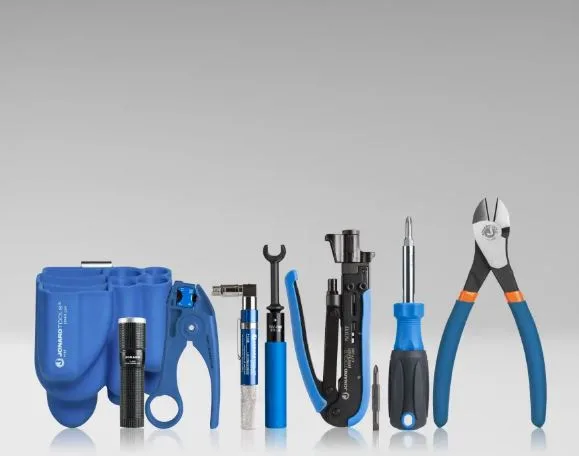
A coax tool kit combines several commonly used tools into one organized set for specific cable installation, repair, and maintenance tasks. Depending on the kit, it may include coax stripping tools, compression tools, torque wrenches, cable cutters, testers, screwdrivers, pliers, and other accessories.
Jonard Tools offers several CATV, COAX, and VDV kits designed around different field applications, cable types, connector styles, and technician requirements. The company's tool-kit range includes options for long F connectors, short F connectors, universal compression, dual compression, 360-degree compression, and other CATV applications.
What Are Coax Tool Kits?
Coax tool kits are collections of specialized hand tools and accessories used for working with coaxial cable systems. Instead of purchasing every tool individually, technicians can use a kit containing multiple tools selected for related cable installation and maintenance tasks.
A typical kit may support several stages of a coaxial cable job:
Cut → Strip → Terminate → Tighten → Test → Maintain
The exact contents vary depending on the kit's intended application. Some kits focus primarily on connector installation, while others are designed as broader service kits for CATV technicians.
For example, Jonard's TK-78 is designed as a CATV service kit for repair and maintenance and includes tools such as a 360-degree compression tool, coax stripper, torque wrench, cable cutter, continuity tester, and other hand tools.
Why Use a Coax Tool Kit?
Coaxial cable technicians often work in field environments where portability and organization are important. A complete kit keeps related tools together so that technicians can quickly access the equipment needed for a particular task.
One major advantage is tool organization. Instead of carrying multiple loose tools, a kit can place essential equipment in a pouch or case.
Another benefit is job readiness. When the tools required for a specific application are already grouped together, technicians can spend less time determining which individual tools they need.
A kit can also be useful for technicians who are starting a new project, replacing older equipment, or building a dedicated CATV service setup.
Jonard states that its CATV, COAX, and VDV tool kits are developed with input from field technicians and are designed for different project requirements and skill levels.
What Tools Are Included in a Coax Tool Kit?
The contents depend on the type of kit, but several tools are commonly associated with coaxial cable work.
Coax Stripping Tools
A coax stripping tool removes selected layers of the cable to prepare it for connector installation. Different cable types, such as RG59, RG6, RG7, and RG11, can require different stripping configurations.
Some kits include a versatile stripper that supports multiple cable sizes. For example, the UST-125 included in several Jonard kits is designed for RG59, RG6, RG7, and RG11 cables and includes a cable stop for repeatable stripping.
Compression Tools
Compression tools attach compatible compression connectors to prepared coaxial cable. They are commonly used in CATV and broadband installations.
Different connectors may require different compression designs. Some kits therefore include universal compression tools, while others contain dedicated tools for particular connector styles.
Jonard's current kit range includes options using universal, fixed, dual, and 360-degree compression tools.
Torque Wrenches
A torque wrench helps technicians tighten compatible coaxial connectors to a specified torque. Controlled tightening can help create a consistent mechanical connection without relying entirely on hand strength.
Some Jonard kits include F-connector torque wrenches, including models preset to 30 in-lb.
Cable Cutters
A cable cutter provides a clean way to cut coaxial cable before stripping and termination. A suitable cutter should be designed for the cable size and construction being handled.
Testers and Toners
Testing equipment can help technicians identify cables, verify continuity, or troubleshoot connections. Including a tester in a service kit means technicians can perform basic diagnostic tasks without carrying a separate testing case.
Jonard's PT-300 pocket continuity tester and toner is included in several of its COAX tool kits.
General Hand Tools
A professional kit may also include screwdrivers, diagonal cutting pliers, adjustable wrenches, flashlights, and other accessories. These tools can be useful when working around cable equipment, enclosures, connectors, and mounting hardware.
Different Types of Coax Cable Tool Kits
Not every technician performs the same type of coaxial cable work. For this reason, coax cable tool kits are available in different configurations.
360-Degree Compression Kits
Some kits are built around a 360-degree compression tool. Jonard's TK-78, for example, combines a 360-degree compression tool with other tools for CATV cable network repair and maintenance.
These kits can be useful when the technician frequently installs compatible compression connectors.
Long Connector Kits
Long F connectors have different installation requirements from short connectors. A kit designed specifically for long connectors can include the appropriate compression equipment and supporting tools.
Jonard's TK-82 is identified as a COAX tool kit for long F connectors.
Short Connector Kits
Short F connectors may require a different compression configuration. Jonard's TK-83 is designed around short F connector applications.
Universal Compression Kits
Universal kits are designed to provide greater flexibility when technicians work with multiple compatible cable and connector configurations.
The TK-85, for example, includes a universal compression tool and is designed for RG59, RG6, RG7, and RG11 cable applications.
Mixed COAX and Twisted Pair Kits
Some installations involve both coaxial and twisted pair cabling. In these situations, a kit containing tools for both cable types can be useful.
Jonard's TK-86 is designed for coaxial and twisted pair network applications and includes a universal compression tool, coax stripping equipment, a torque wrench, cable cutter, tester, screwdriver, flashlight, and tool pouch.
Mini Coax Tool Kits
Technicians who need a smaller setup may prefer a compact kit. Jonard's TK-89 is identified as a Mini COAX Tool Kit.
A smaller kit can be appropriate when portability is more important than having a large selection of tools.
How to Choose the Right Coax Tool Kit
Choosing the right coax cable tool kits starts with understanding the type of work you perform.
1. Identify the Cable Types
Determine whether you primarily work with RG59, RG6, RG7, RG11, or other coaxial cables. The tools included in the kit should support the cables you regularly encounter.
2. Identify the Connector Type
Check whether your projects use long F connectors, short F connectors, compression connectors, or other compatible connector styles.
3. Consider Your Main Tasks
If your work mainly involves connector installation, prioritize a kit with the appropriate stripping, compression, and torque tools.
If you perform troubleshooting and maintenance, a kit containing testing equipment and general hand tools may be more useful.
4. Consider Portability
Field technicians may benefit from a compact pouch or case that makes the tools easy to carry between job locations.
5. Check the Complete Kit Contents
Do not select a kit based only on its name. Review the included tools and verify that they match your daily requirements.
Common Mistakes When Choosing a Coax Tool Kit
One common mistake is selecting a kit based solely on the number of tools it contains. A larger kit is not automatically better if many of its tools are not relevant to the application.
Another mistake is ignoring cable and connector compatibility. A compression tool designed for one connector style may not be suitable for another.
Other factors to consider include:
- Cable size compatibility
- Connector type
- Stripping requirements
- Compression method
- Torque requirements
- Testing needs
- Tool portability
- Storage and organization
The best kit is the one that contains the tools needed for the actual work being performed.
Benefits of an Organized Coax Toolkit
An organized toolkit can make field work more efficient. When tools have designated locations, technicians can quickly identify missing equipment and return tools to their proper places after use.
A well organized kit can also help protect tools from unnecessary damage. Pouches and cases keep tools together and reduce the likelihood of individual items being misplaced.
For technicians who regularly move between installation sites, having a dedicated kit can also make preparing for the day's work easier.
Coax Tool Kits for CATV, COAX and VDV Applications
Jonard's current CATV/COAX/VDV tool kit range includes multiple configurations designed around different installation and maintenance requirements. The listed COAX kits include TK-78, TK-78E, TK-79, TK-82, TK-83, TK-85, TK-86, TK-87, and TK-89, while the broader category also includes CATV and VDV kits.
The selection allows technicians to choose between specialized and more versatile setups depending on their cable, connector, and service requirements.
For example, the TK-822 Professional CATV Communications Tool Kit is a broader CATV/VDV service kit. It includes tools for cutting, stripping, testing, crimping, compressing, gripping, and managing COAX cables and connectors.
Conclusion
Having the right tools is an important part of efficient coaxial cable installation and maintenance. Coax tool kits bring several essential tools together in an organized package, helping technicians prepare, terminate, test, and maintain cable systems more conveniently.
The ideal coax cable tool kit depends on the cable types, connector styles, and tasks involved in a particular job. A technician who primarily installs F connectors may need a different kit from someone who works with mixed COAX and twisted pair networks.
Before choosing a kit, review the included tools, verify cable and connector compatibility, and consider the type of field work you perform most frequently. With a properly matched toolkit, technicians can have the essential equipment needed for common CATV, COAX, broadband, and VDV cable tasks in one convenient setup.