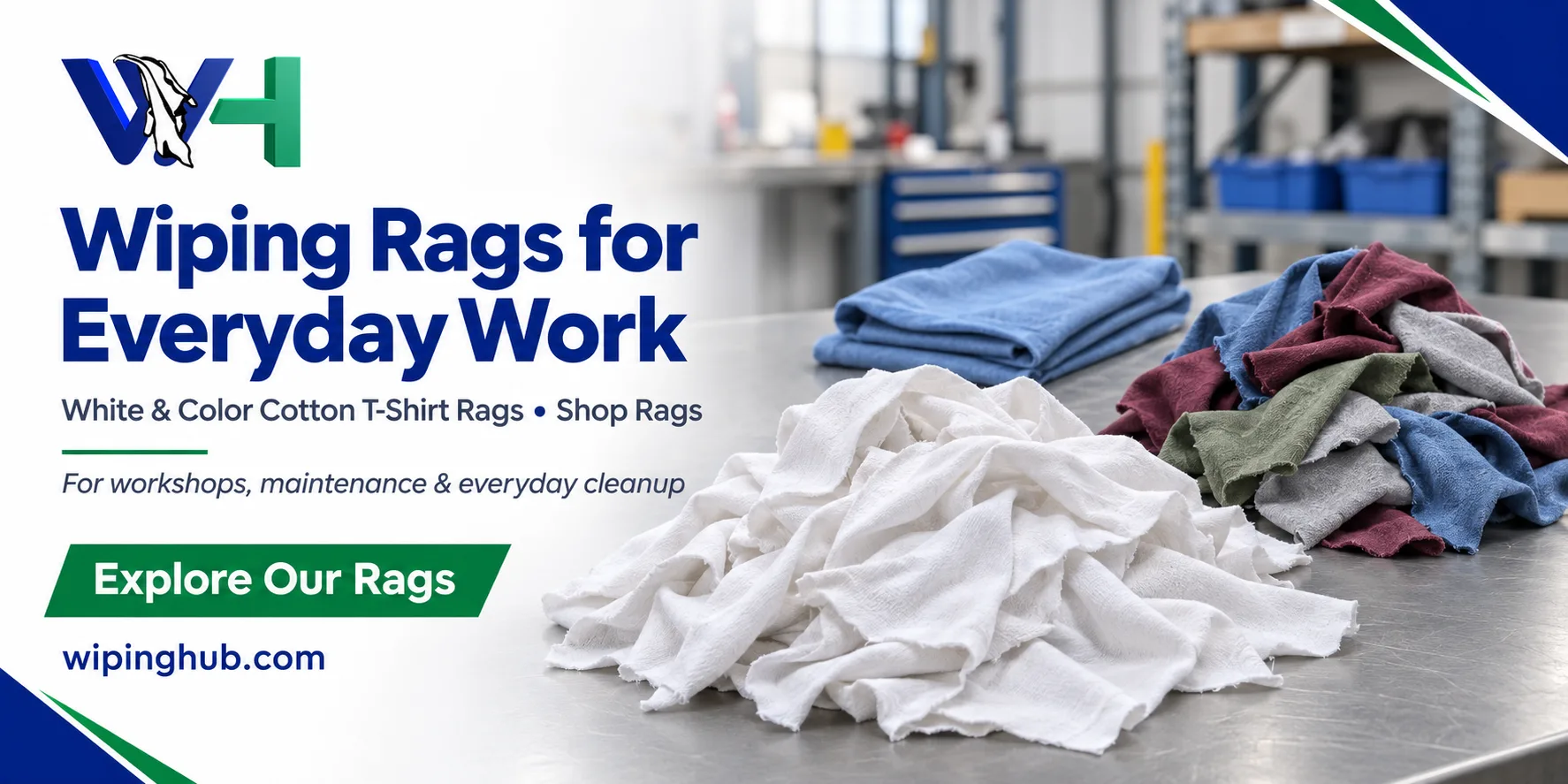
A busy workbench rarely stays clean for long. A tool leaves a greasy mark, a cart collects dust, and a routine repair creates another small mess. Having suitable wiping material within reach makes those interruptions easier to manage.
Color Cotton T-Shirt Rags are a practical option for general workshop cleaning. Their flexible knit fabric works around handles, edges, and uneven surfaces, giving you a manageable cloth for everyday wiping without the bulk of a thick towel.
What Makes Cotton T-Shirt Rags Useful?
Cotton T-shirt rags use the familiar knit material found in everyday clothing. Recycled versions give reclaimed textiles another purpose as cleaning cloths, with pieces that may vary in color, shape, and thickness.
That flexibility is useful when cleaning something other than a flat surface. You can fold a piece into your palm, wrap it around a tool handle, or reach a shallow recess with a smaller section.
However, appearance alone does not confirm fabric composition or performance. Read the product specifications before choosing a supply, especially when your process has particular material requirements.
Where Color Cotton T-Shirt Rags Fit Into Daily Work
The right cloth depends on what you are cleaning. Colored knit rags suit many routine tasks where a white wiping surface or a specialist applicator is unnecessary.
Mechanic Rags for Tools and Workstations
Picture the end of a repair: sockets need putting away, a handle feels greasy, and the bench needs clearing before the next job. Cotton knit pieces can serve as mechanic rags for these routine surface wipes.
Keep heavily soiled cloths away from those intended for cleaner work. Otherwise, the rag that cleaned a greasy wrench may transfer residue to a drawer handle or freshly wiped panel.
Cotton Wiping Rags for Facility Maintenance
Maintenance teams encounter small messes throughout the day. Dust on an equipment housing, residue on a trolley, or moisture on a shelf may call for a cloth that is easy to fold and control.
For example, wiping loose surface dirt from an equipment cover before opening it helps keep that dirt away from the work area. Follow the equipment instructions and required shutdown procedures whenever cleaning machinery.
Shop Rags for General Housekeeping
Keeping Shop Rags near frequently used stations helps make cleanup part of the job. A protected supply beside the work area is more useful than a box hidden behind stored equipment.
Assign separate cloths to dirty cleanup and final wiping. That simple distinction helps prevent yesterday’s grime from becoming today’s extra cleaning task.
When Should You Choose White Instead of Colored Rags?
Colored cotton cloths are useful when you mainly need to collect routine grime. However, darker fabric can make some residue harder to see, so inspect the cloth regularly rather than judging cleanliness by color alone.
For tasks where visible soil detection matters, White Cotton T-Shirt Rags provide a lighter background against which collected dirt is easier to notice. This can help you decide when to expose a fresh section.
Neither option automatically guarantees a spotless finish. For delicate coatings, polishing, or product application, check the relevant instructions and test a fresh cloth first.
What to Check Before Buying Recycled Rags
Recycled rags can vary because their source textiles vary. A useful purchasing decision starts with the details that affect handling and suitability.
Before ordering, check:
- Material composition: Confirm the listed cotton content or blend.
- Approximate dimensions: Choose pieces large enough to handle comfortably.
- Fabric weight: Consider whether thinner material or a heavier cloth suits the task.
- Cut and construction: Review whether random shapes and existing seams are acceptable.
- Packaging options: Match the quantity to storage space and daily consumption.
Do not assume every piece will look identical. If consistent dimensions are essential to your process, choose a product specifically described that way.
Test Compatibility Before Sensitive Work
A soft cloth can still contain debris that affects a surface. Inspect each piece before using it on polished metal, painted finishes, or other easily marked materials.
In addition, check compatibility with the cleaner or finishing product involved. Colored fabric should not be assumed suitable for every chemical or coating simply because it contains cotton.
Buying Bulk Rags: Plan Around Actual Usage
Bulk Rags can make replenishment easier, but ordering the largest quantity is not always the best starting point. First, measure how much wiping material your team uses during an ordinary working week.
Then account for delivery time, busier periods, and available storage. As a result, you can set a reorder point based on actual consumption instead of waiting until the last box is almost empty.
When comparing T Shirt Rags, consider usable performance alongside purchase price. Pieces that fit the work can be more practical than a cheaper supply that employees struggle to handle.
Wiping Hub provides different wiping materials for buyers to compare. Browse the All Rags collection alongside individual product specifications to narrow your choice before placing a larger order.
Practical Tips for Better Everyday Wiping
Good handling matters as much as fabric selection. Why keep wiping with a saturated cloth when it is simply spreading residue?
Use this straightforward routine:
- Inspect the rag. Look for grit, hard debris, and unsuitable seams.
- Fold it into sections. Keep several wiping faces accessible.
- Turn to fresh fabric. Change sections as dirt builds up.
- Replace when necessary. Stop when the cloth smears or becomes saturated.
- Separate used supplies. Keep contaminated pieces away from unused stock.
Store clean cotton rags in a dry, protected area. Handle oily, solvent-contaminated, or otherwise soiled cloths according to workplace procedures and the instructions for the substances involved.
FAQs About Color Cotton T-Shirt Rags
Are all colored T-shirt rags recycled?
No. Some products use reclaimed textiles, while others use new material. Check the individual listing to confirm the source.
Are cotton wiping rags completely lint-free?
Not necessarily. Fiber release depends on fabric construction and condition, so use a suitably specified wiper when lint control is critical.
Can colored rags be used for polishing?
Only when they meet the requirements of the surface and polishing product. Inspect for debris and test before proceeding.
Can these wiping rags be reused?
Reuse depends on their condition, contamination, and an appropriate cleaning process. Follow workplace handling requirements rather than assuming every used cloth can go into ordinary laundry.
Find a Practical Supply at Wiping Hub
The best everyday wiping cloth is one that suits the surface, feels manageable in your hand, and is available when work gets messy. Choosing carefully also helps keep general cleanup separate from more demanding finishing tasks.
Explore Color Cotton T-Shirt Rags at Wiping Hub, review the material and packaging details, and choose a quantity that fits your workshop or maintenance routine.