
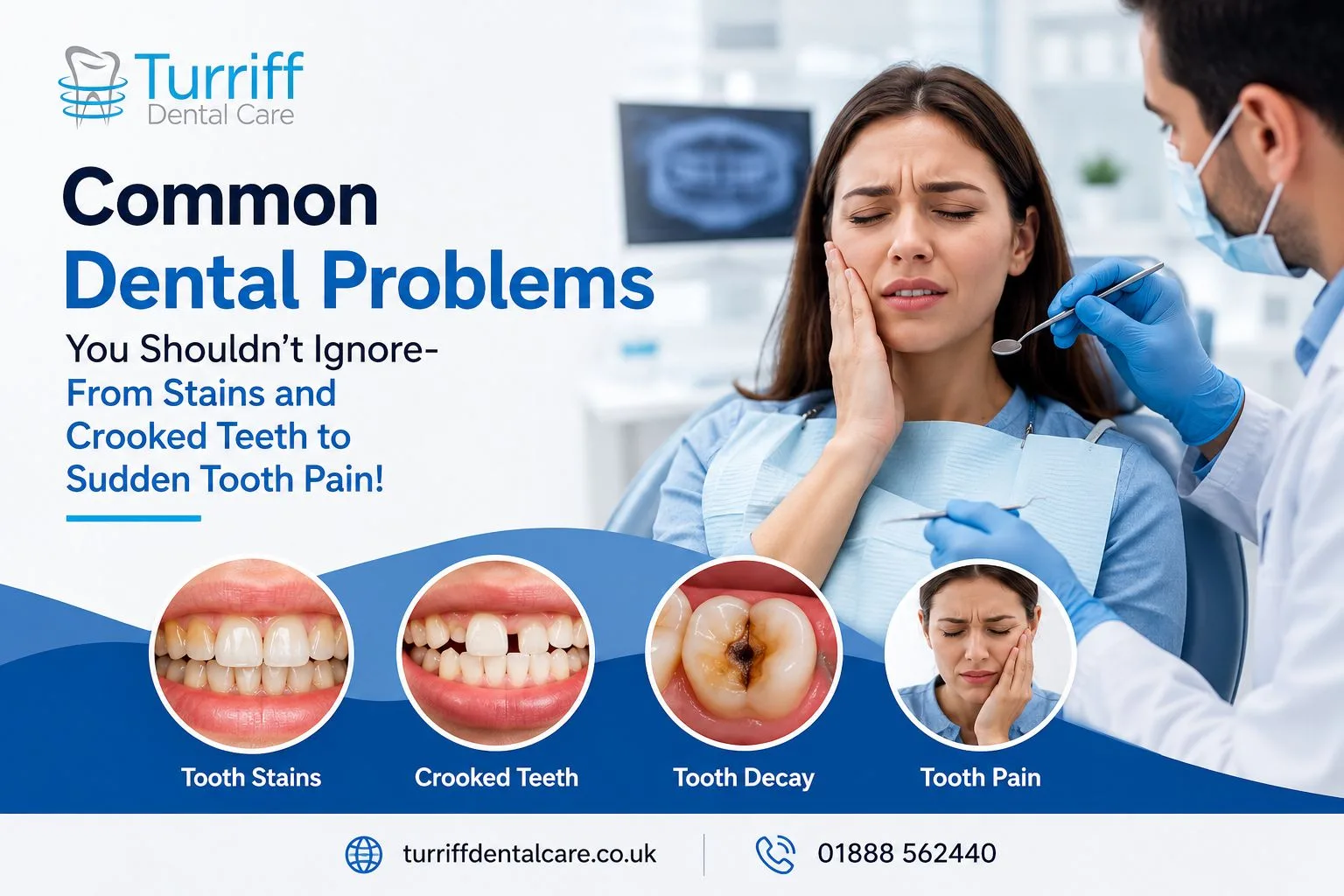
When was the last time you looked at your smile, instead of just glancing past it in the mirror? Most of us don't bother to go to a clinic until we experience discomfort, notice a nagging toothache or stubborn stains that refuse to fade.
Here's the thing worth remembering: your mouth doesn't do subtlety for long. Small problems leave small clues first - a bit of discoloration, a slightly tender gum, a tooth that feels "off" when you bite down. Catch those clues early, and they're usually simple to deal with. Ignore them, and they tend to get louder, more painful, and more expensive.
In this post, we've covered the most common dental problems people shouldn't ignore and why choosing the right professional dental care matters. Read on to know.
Why You Shouldn't Ignore Dental Problems?
A stained tooth or a bit of gum bleeding feels like nothing. But your mouth doesn't really do "small problems" forever. A tiny cavity, left alone, can turn into a root canal. A bit of gum irritation can turn into something far more serious. And it's not only about pain - plenty of people start smiling less, talking less in photos, and covering their mouth when they laugh, all because of something that would've been simple to fix a year before. Deal with things early, and you get more choices, less pain, and a smaller bill.
Common Dental Problems You Shouldn't Ignore!
Here are some of the most common dental problems people shouldn't ignore:
Stained Teeth
Coffee, tea, red wine, smoking, and just getting older - that's where most staining comes from. Some medicines play a part too. Plain staining usually isn't a worry. But take notice if:
- Just one tooth has gone dark (might mean an old knock or injury)
- The surface feels rough instead of smooth
- You see chalky white patches (an early sign of decay)
For everyday stains, here's what actually works:
- A check-up first, just to rule anything serious out
- A hygiene visits and proper cleaning
- Real teeth whitening options - in-chair treatments or a custom tooth whitening kit made for your teeth.
Shop-bought kits aren't always the best fit. A kit designed for your mouth is gentler and delivers more consistent results.
Crooked, Crowded, or Misaligned Teeth:
Crowded teeth aren't just about confidence. They're harder to clean, too, so decay and gum trouble can hide in the gaps without you noticing. A crooked bite can also cause jaw aches you'd never link back to your teeth.
It helps to know the Invisalign stages of treatment before you start. A scan, a plan made for your teeth, a set of trays you swap every week or two, check-ups along the way to track progress, then a retainer once you're done. Invisalign clear aligners are popular because they're barely noticeable, and you take them out to eat, brush, and floss. No metal. No food rules.

Sudden Tooth Pain:
A sudden, sharp ache out of nowhere isn't something to just sit with. It could mean:
- Decay that's reached the nerve
- An infection forming at the root
- A hidden crack
- Even sinus pressure, in some cases
Pain that lingers after hot or cold often points to nerve trouble. Pain only when you bite usually means a crack. A dentist can find the cause with an exam and an X-ray, then fix it with a filling, a root canal, or in rare cases, removal. If the pain is bad, there's swelling, or a tooth gets knocked out, that's when Dental emergency services matter most. Most practices keep time open for this - don't just wait it out at home.
Tooth Sensitivity
That sharp zing when you bite ice cream isn't random. It usually means the layer protecting your tooth has worn thin somewhere. Common reasons:
- Enamel wear from acidic food and drinks
- Gum recession exposing the root
- Brushing too hard
- Grinding your teeth at night
A little sensitivity now and then isn't a big deal. But if it's getting worse, spreading to more teeth, or sticking around long after, get it looked at. Fixes range from sensitivity toothpaste to bonding or a night guard, depending on what's causing it.
Bleeding or Swollen Gums
A bit of pink in the sink is easy to ignore. But it's usually one of the first signs of gum disease. Left alone, it can move from mild irritation to something that damages the bone holding your teeth in place - and that part isn't always reversible.
The good news? At this stage, the fix is simple. A proper cleaning below the gumline and a better brushing habit. Catch it early, and it's one of the easiest things to turn around.
Chipped, Cracked, or Worn Teeth
A chip from biting something hard. A crack you only feel with your tongue. Teeth that look flatter than they used to. Easy to ignore, because none of it hurts right away. The problem is that small chips tend to turn into bigger ones, especially if you keep chewing on that spot like normal.

For small chips, composite bonding in Aberdeen is often a quick, affordable fix - a tooth-coloured material shaped onto the tooth, usually done in one visit. More extensive damage might require a crown instead. Grinding-related wear is usually best handled with a simple night guard.
How Regular Check-Ups Help Prevent Bigger Problems?
- Catch decay and gum disease before you feel a thing
- Remove hardened plaque that your toothbrush just can't reach
- Spot changes over time, because your dentist knows what "normal" looks like for your mouth
- Give you advice about your teeth specifically, not generic tips
- Costs less than the bigger treatment you'd need later
When Should You Book an Appointment?
If something feels off and doesn't settle in a day or two - pain, bleeding, swelling, a bad taste that won't go away - book in. Don't wait until it's unbearable. And even with no symptoms at all, a check-up every six months catches the stuff you can't feel yet, which is exactly when it's easiest to fix.
How Turriff Dental Care Can Help?
If any of this sounds familiar, it's where we fit in. We're a private dental practice in Aberdeenshire, and we look after patients from Turriff itself right through to Peterhead, Fraserburgh, Ellon, Huntly, and Buckie. We'd rather explain what's actually going on, walk you through your real options, and help you pick what suits you best. From check-ups and whitening to straightening and emergency care, we just try to make it feel a bit less clinical and a lot more human.
Bottom Line
This isn't about panicking over every small twinge. It's about paying attention. Catch a stain, a chip, or a bit of bleeding early, and it's usually a quick fix. Wait too long, and it rarely stays small. So next time something feels a little off in there, trust that feeling enough to get it checked out.
FAQs
Q. Is tooth staining just from age?
A. Mostly, yes. Enamel thins as you get older, so more of the natural yellow shows through.
Q. How long does Invisalign take?
A. Usually 6 to 18 months, depending on how much your teeth need to move.
Q. Can a small chip wait?
A. Better not to. Small chips often turn into bigger cracks over time.
Q. Why do my gums bleed when I floss?
A. Usually, early gum irritation from plaque. It often clears up with regular flossing and a proper cleaning.
Q. Are home whitening kits as good as in-chair whitening?
A. They help with mild staining, but professional whitening usually gives stronger, more even results.
Q. How often should I see a dentist?
A. Most people are fine with a check-up every six months.