Understanding Healthcare Licensing Exams in the UAE
What is the DHA Exam?
If you're dreaming of working as a healthcare professional in Dubai, the DHA exam is your gateway. Conducted by the Dubai Health Authority, this licensing exam ensures that doctors, nurses, and allied health professionals meet the required standards before practicing in Dubai. Think of it as a quality checkpoint—only those who demonstrate competence and knowledge are allowed to step into the UAE healthcare system.
The exam is computer-based and typically conducted through authorized testing centers. It evaluates both theoretical knowledge and clinical understanding, making it essential for candidates to go beyond textbook learning. Whether you’re a general practitioner or a nurse, the DHA exam tests real-world medical scenarios, not just definitions.
What makes it interesting is that the exam doesn’t just focus on memorization. Instead, it assesses how you think under pressure. Questions often mimic real-life cases, pushing you to apply knowledge practically. That’s why preparation needs to be strategic, not just extensive.
What is the MOH Exam?
The MOH exam (Ministry of Health) is another licensing pathway, mainly for professionals aiming to work in the northern emirates like Sharjah, Ajman, Fujairah, and Ras Al Khaimah. While it shares similarities with the DHA exam, the MOH exam has its own structure and eligibility requirements.
The MOH exam is designed to ensure that healthcare workers meet national healthcare standards. Like DHA, it is also conducted via computer-based testing and often uses the Prometric system. Candidates must meet educational qualifications and clinical experience requirements before applying.
What stands out about the MOH exam is its flexibility. Many professionals choose it as an entry point into the UAE healthcare system before transitioning to DHA or other licenses later.
What is the Prometric Exam?
The Prometric exam is not a licensing authority but a testing platform used globally. It conducts exams for DHA, MOH, and other healthcare authorities. So when people say "DHA Prometric exam," they’re referring to the DHA test delivered through Prometric centers.
Prometric exams are known for their strict security and standardized testing environment. This ensures fairness and consistency for candidates worldwide. Whether you’re taking a prometric exam for nurses or doctors, you’ll experience the same format and structure.
One of the biggest advantages of Prometric is accessibility. You can take the exam from various international locations, making it easier for overseas candidates.
DHA Exam Overview
DHA Exam for General Practitioners
For general practitioners, the DHA exam is a critical milestone. It evaluates clinical skills, diagnostic abilities, and patient management strategies. The exam usually consists of multiple-choice questions (MCQs) that cover a wide range of medical topics, including internal medicine, pediatrics, surgery, and emergency care.
Candidates must demonstrate not just knowledge but also clinical reasoning. For instance, instead of asking what a disease is, the exam might present symptoms and ask for the best course of treatment. This approach ensures that only capable professionals enter Dubai’s healthcare system.
Preparation for GP candidates should focus heavily on case-based learning. Reading textbooks alone won’t cut it—you need to think like a practicing doctor.
DHA Exam for Nurses
The DHA exam for nurses is tailored to assess nursing competencies, patient care skills, and ethical practices. It includes questions on medical-surgical nursing, pediatrics, community health, and pharmacology.
Nurses are expected to understand patient care deeply. Questions often revolve around patient scenarios, requiring candidates to choose the most appropriate nursing intervention. This makes the exam both challenging and practical.
What’s fascinating is how the exam integrates theory with real-life application. It’s not just about what you know—it’s about how you use that knowledge to care for patients effectively.
The DHA exam syllabus varies depending on the profession but generally includes:
- Clinical subjects relevant to your specialization
- Patient safety and ethics
- Evidence-based practice
- Medical guidelines and protocols
The syllabus is designed to reflect real-world healthcare practices. It ensures that candidates are not only knowledgeable but also aligned with international standards.
DHA Exam Questions Pattern
The DHA exam questions are primarily multiple-choice, with a strong focus on clinical scenarios. Typically:
FeatureDetailsQuestion TypeMCQsDuration2–3 hoursDifficulty LevelModerate to HighFocusCase-based scenariosThe questions are designed to test critical thinking rather than rote learning. This means you need to understand concepts thoroughly.
MOH Exam Overview
MOH Exam Eligibility Criteria
To appear for the MOH exam, candidates must meet specific criteria, including educational qualifications and clinical experience. For example, nurses typically need a recognized nursing degree and at least two years of experience.
Eligibility verification is strict, and documents must be submitted for approval before booking the exam. This ensures that only qualified candidates proceed to testing.
MOH Exam Structure and Format
The MOH exam follows a similar structure to DHA, with MCQs and case-based questions. The focus is on practical knowledge and patient care.
The exam is designed to assess whether candidates can handle real-life medical situations effectively. It’s not just about passing—it’s about proving your readiness to work in a healthcare environment.
Prometric Exam Explained
Prometric Exam for Nurses
The prometric exam for nurses is widely recognized and used by multiple healthcare authorities. It evaluates nursing knowledge, patient care skills, and clinical judgment.
The exam is standardized, ensuring consistency across different regions. This makes it a reliable benchmark for assessing nursing competence.
Prometric Practice Test Importance
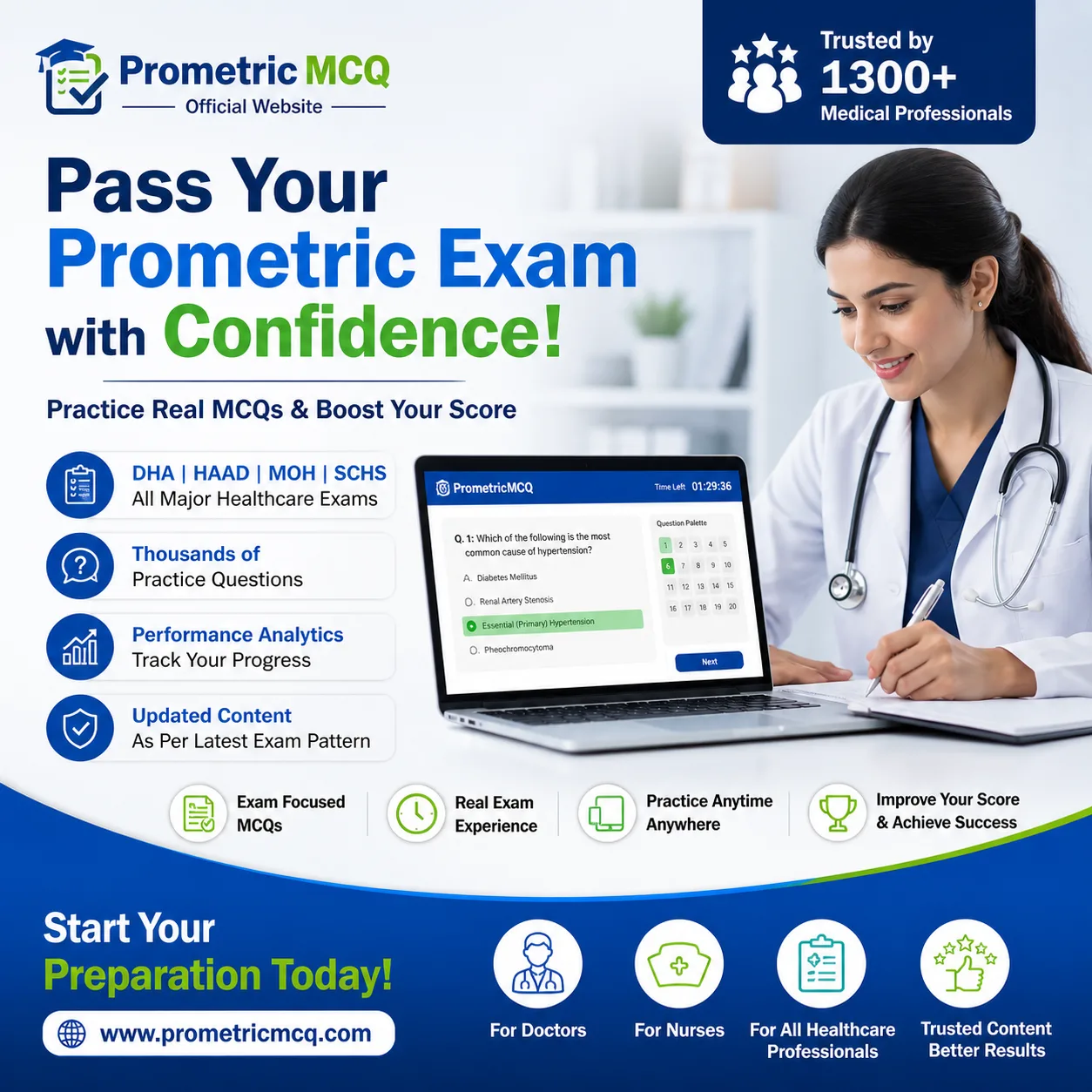
A prometric practice test is one of the most effective ways to prepare. It helps you understand the exam format, identify weak areas, and improve time management.
Practice tests simulate real exam conditions, giving you a feel of what to expect. This reduces anxiety and boosts confidence.
Prometric Exam Registration Process
Registering for the Prometric exam involves:
- Creating an account
- Selecting your exam type
- Choosing a test center
- Scheduling your exam date
The process is straightforward but requires careful attention to details.
Key Differences Between DHA, MOH, and Prometric Exams
Comparison Table
FeatureDHA ExamMOH ExamPrometricAuthorityDubai Health AuthorityMinistry of HealthTesting PlatformLocationDubaiNorthern EmiratesGlobalFormatMCQsMCQsMCQsPurposeLicensingLicensingExam Delivery
How to Prepare Effectively
Study Materials and Resources
Preparation starts with choosing the right materials. Standard textbooks, online courses, and updated guidelines are essential. You should also rely on question banks specifically designed for DHA and MOH exams.
The key is consistency. Studying a little every day is far more effective than cramming.
Time Management Strategies
Time management can make or break your preparation. Create a study schedule that covers all subjects and stick to it. Break your study sessions into manageable chunks to avoid burnout.
Think of it like training for a marathon—you need endurance, not just speed.
Practice Tests and Mock Exams
Mock exams are crucial. They help you track progress and improve performance. Regular practice also helps you get comfortable with the exam format.
Expert Tips to Pass in First Attempt
Common Mistakes to Avoid
Many candidates fail because they underestimate the exam. Avoid relying solely on memorization. Focus on understanding concepts and applying them.
Another common mistake is ignoring practice tests. Without them, you won’t know where you stand.
Proven Study Techniques
Active learning techniques like flashcards, case studies, and group discussions can significantly improve retention. Teaching others is also a powerful way to reinforce your knowledge.
Career Opportunities After Passing
Jobs in UAE Healthcare Sector
Passing these exams opens doors to a wide range of opportunities, from hospitals to clinics and specialized centers. The UAE healthcare sector is growing rapidly, creating high demand for skilled professionals.
Salary Expectations
Salaries vary based on experience and specialization, but healthcare professionals in the UAE generally enjoy competitive pay and benefits.
Conclusion
The journey to passing the DHA, MOH, and Prometric exams is challenging but incredibly rewarding. With the right preparation, strategy, and mindset, you can achieve your goal and build a successful healthcare career in the UAE. Treat the process as a learning experience, not just an exam, and you’ll come out stronger and more confident.
Visit Us - https://www.prometricmcq.com/
FAQs
1. What is the passing score for the DHA exam?
The passing score typically ranges between 60–70%, depending on the profession and exam difficulty.
2. Can I take the DHA exam from India?
Yes, the exam can be taken through Prometric centers available internationally.
3. How many times can I attempt the DHA exam?
Candidates usually have up to three attempts, but this may vary.
4. Is the MOH exam easier than DHA?
Difficulty levels are similar, but preparation and familiarity with the format play a major role.
5. Are Prometric practice tests necessary?
Absolutely. They are essential for understanding the exam pattern and improving performance.