Stroll down the baking aisle at any grocery store, and you’re confronted with a confounding wall of cooking oils. From soy and canola to sunflower and corn, the varieties are seemingly endless. We picked any refined oil and use it as a part of our healthy diet without a second thought. But growing concerns over inflammation, cholesterol and heart health are causing many to reconsider their kitchen choices.
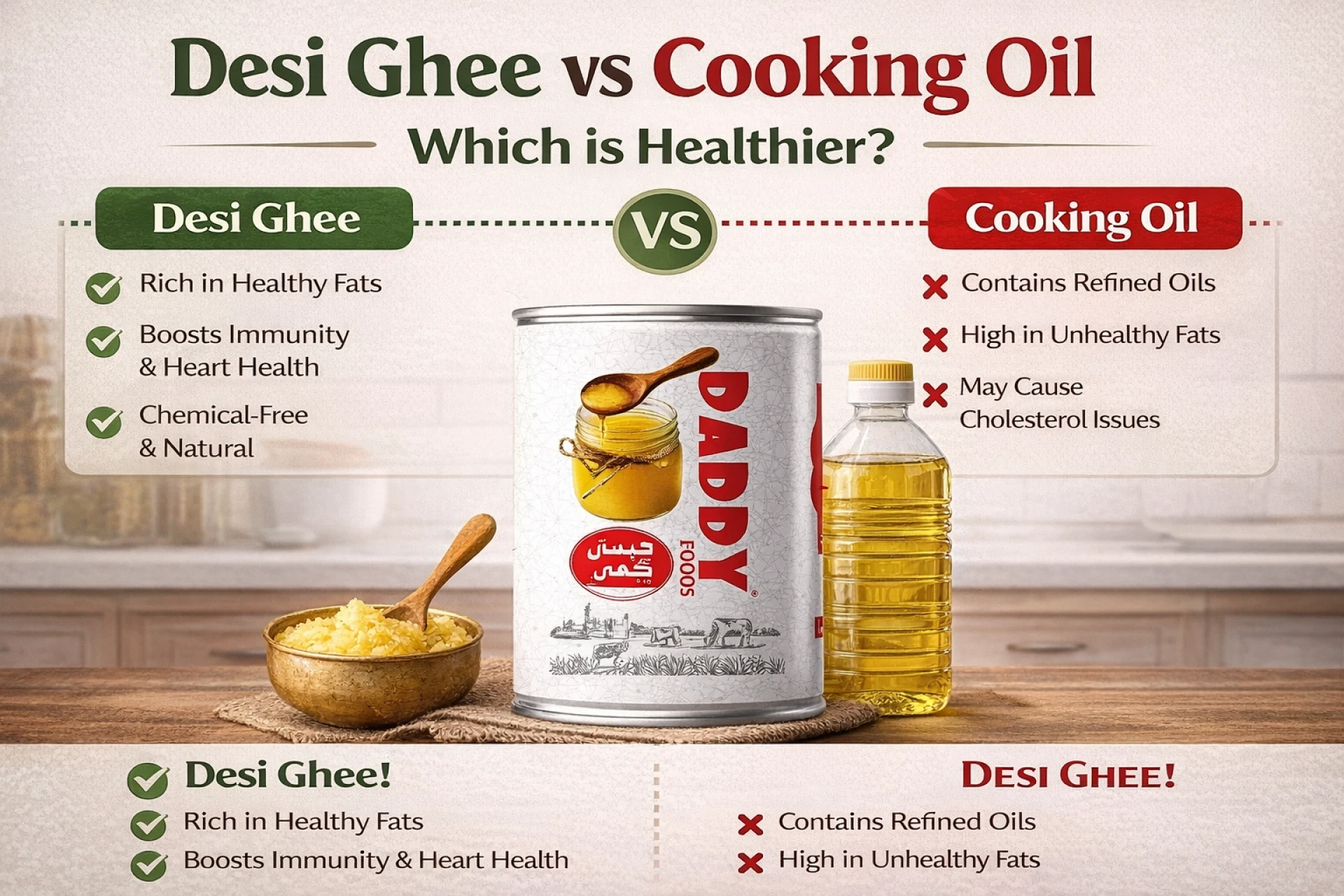
Generations ago, our forebears used a lot of natural cooking fats in preparing their foods. Today, nutritionists and health experts have us returning to traditional styles of cooking. The desi ghee vs cooking oil debate has become the talk of the town in kitchens across the globe whether abroad or at home.
When it comes to the particular fats you use in your day-to-day cooking, though, and how they affect your body, it’s time for a closer inspection. This guide lays bare the science of desi ghee benefits, reveals what you need to know about refined oils, and why switching can change your health.
The Key Differences Between Desi Ghee vs Cooking Oil
While they are two staples of the household, the differences begin at the source when comparing the two. Desi ghee: This is clarified butter, typically made by steaming the butter until its milk solids separate and caramelize. This time-honored process results in a pure, golden fat rich in nutrients.
Refined cooking oils are made through an extensive, chemical-laden manufacturing process. Factories draw oils out of seeds with super-high heat, chemical solvents such as hexane and heavy deodorizers. This aggressive procedure removes nutrients found naturally, resulting in a highly processed liquid.
Ghee or oil: Which is the best cooking oil?, the answer often boils down to biological compatibility. Natural, unrefined fats are much easier for the human body to process than highly refined seed oils. Where desi ghee has a solid nutrient profile, refined oils often are silent inflammation triggers.
Health Benefits of Desi Ghee: The Incredible Goodness of Desi Ghee
Including desi ghee in your diet gives you much more than just a taste of the nutty flavors. It serves as a superfood that fuels your body in and out.
Loaded With Healthy Fats and Vitamins
Desi ghee is rich in fat-soluble vitamins like A, D, E and K. These are essential for proper functioning of the skin, boosting the immune system and absorption of calcium to keep bones strong. Plus, it serves up a hearty helping of Omega-3 fatty acids that work tirelessly to combat inflammation in your body.
Boosts Gut Health and Digestion
Desi ghee is also fairly rich in butyric acid a short-chain fatty acid that your digestive tract loves. Butyric acid nourishes good gut bacteria, heals the walls of fur intestines and helps your stomach to digest food correctly. Regular consumption of ghee can reduce bloating and digestive discomfort greatly.
Supports Heart Health
For decades, conventional fats were accused of causing cardiovascular disease. In fact, the healthy fats found in pure ghee are good for your heart as proven by modern science. Moderate consumption of CLA found primarily in ghee lowers arterial plaque and regulates healthy cholesterol levels.
Refined Cooking Oils: The Hidden Dangers
A clear, odorless refined oil might seem like a benign option. But the opposite holds true for most commercial seed oils.
High Processing Toxins: The harsh temperature and chemical treatments used to refine the oil also kill natural antioxidants and release free radicals into the fat.
High Omega-6 to Omega-3 ratio: Most vegetable and seed oils are rich in Omega 6 fatty acids. Although you require certain amounts of Omega-6, an overconsumption causes your body’s Omega-3 to Omega-6 ratio to become disrupted, resulting in chronic, systemic inflammation.
Refined oils are incredibly unstable Oxidation Risks When you leave them in light, heat or the presence of oxygen, they oxidize very quickly. Eating these oxidized oils destroys your cells and speeds up aging.
A Quick Comparison: Desi Ghee Vs Cooking Oil
So to help you quickly identify each of their core differences, here’s how the two compare with each other.
Feature
Pure Desi Ghee
Refined Cooking Oil
Processing Method
Natural, traditional churning and simmering
Heavy chemical extraction and deodorization
Nutrient Profile
High in Vitamins A, D, E, K, and Omega-3s
Stripped of nutrients; mostly empty calories
Smoke Point
Very High (up to 482°F / 250°C)
Varies (often breaks down into toxic fumes at high heat)
Digestion
Contains butyric acid; supports healthy gut lining
Can cause bloating and slow digestion
Inflammation
Anti-inflammatory properties (CLA, Omega-3)
Highly inflammatory (excessive Omega-6)
The Benefits of Using Desi Ghee for Cooking Daily
When you replace this with healthy cooking alternatives, you need a fat that can take the heat in your kitchen. Desi ghee also has a very high smoke point of about 480°F (250°C).
Its high smoke point means you can fry, sauté and deep-fry with it without fear of the fat breaking down into harmful free radicals. Because ghee has no milk solids, it won’t burn or splatter in your pan, as regular butter would.
In addition, desi ghee does not need to be refrigerated. It stores in a dark pantry for months, which makes it an incredibly convenient and shelf-stable fat. A little spoonful raises the flavor of roasted vegetables, curries, meats and even baked goods.
A Myth Busting Guide on Desi Ghee
But there are still some myths that can scare people away from this golden superfood. Let’s untangle the confusion.
MYTH #1: Ghee Leads to Weight Gain
Ghee gets a bad rap because it’s feared to contribute to extra inches on one’s waistline. In fact, the conjugated linoleic acid (CLA) found in ghee actually causes stubborn body fat to release. Eating moderate amounts of healthy fats keeps you full longer and automatically curbs your sugar cravings.
Myth 2: Ghee Increases Bad Cholesterol
Natural fats are not to be feared. The saturated fats in pure desi ghee increase your HDL (good) cholesterol. It doesn’t raise your LDL (bad) cholesterol like artificial trans fats and highly processed oils do.
Myth 3: Ghee is Harmful for those with Lactose Intolerance
Since the simmering removes any milk solids (lactose and casein), pure ghee is about as dairy-free as one can get. Those with homogeneous extreme lactose intolerance can usually tolerate ghee without any digestive issues.
Switch Your Cooking Alternatives to Healthy
Your daily practices, starting with the ingredients you choose for your own health. And replacing heavily refined seed oils with traditional, nutritional-dense fats is one of the simplest upgrades you can do to your diet.
Desi ghee vs cooking oil: The winner is clear. In fact, by including desi ghee you’ll be reducing chronic inflammation and aiding your digestion while bringing back those amazing, rich flavors to your home-cooked meals. You guard your heart health and give your body the clean energy it craves.
Are you excited to reinvent the way you eat every day and nourish your body from the inside out? Get rid of any refined oils in your pantry and order pure desi ghee for your kitchen right now. And your body, heart and taste buds will thank you.