
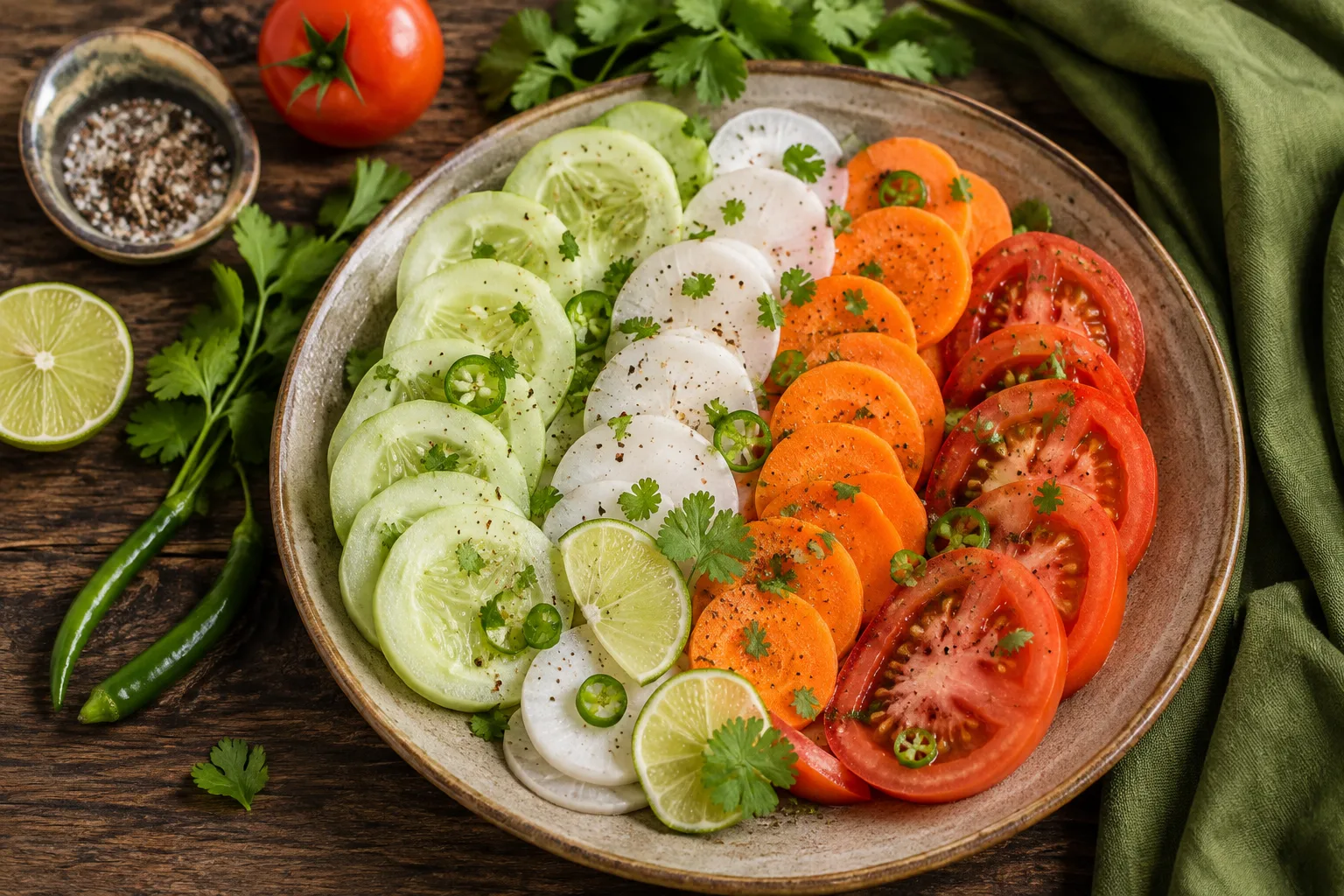
Indian meals are often incomplete without a fresh salad. A simple plate of kheera, mooli, gajar, tamatar and hari mirch can add freshness, crunch and valuable nutrition to everyday food. This traditional Indian salad is low in calories, rich in water and provides dietary fibre, making it a useful addition to a weight-loss-friendly eating pattern.
However, salad is not a magic food that burns fat on its own. Weight loss depends on your overall calorie intake, meal portions, physical activity, sleep and consistency. When eaten along with balanced meals, a fibre-rich Indian salad can help you feel satisfied and reduce the tendency to overeat fried snacks, sweets and large portions of rice or roti.
Why Fibre Matters for Weight Loss ?
Dietary fibre is the part of plant food that the body does not completely digest. It adds bulk to meals and may help you feel full for longer. This can make it easier to control portions and avoid frequent snacking.
The 2024 Dietary Guidelines for Indians from ICMR-NIN encourage people to eat plenty of vegetables and recommend approximately 400 grams of vegetables and 100 grams of fresh fruit daily for the general population. The guidelines also encourage the use of fresh, locally available and seasonal produce.
Fibre can support weight-management efforts in several ways:
- It adds volume to food without contributing many calories.
- It may help slow digestion and improve feelings of fullness.
- It supports regular bowel movements.
- It can help replace calorie-dense foods such as namkeen, chips and fried snacks.
- It works best when combined with adequate water and a balanced diet.
A salad made with cucumber, radish, carrot and tomato is not only colourful but also helps increase vegetable intake in a practical Indian way.
The Desi Salad Ingredients
Cucumber or Kheera
Cucumber contains a high amount of water and is light, refreshing and easy to include with lunch or dinner. Its crisp texture makes a meal feel more substantial. It can be especially useful during hot weather when you want something cooling and hydrating.
Cucumber is commonly eaten with salt, roasted cumin powder and lemon. If you have been advised to restrict potassium or fluids because of a medical condition, consult your doctor or dietitian before making major dietary changes.
Radish or Mooli
Radish provides crunch, fibre and a sharp, peppery flavour. In many Indian homes, mooli is served raw with meals, especially during the winter season. It can make a simple salad more satisfying without requiring heavy dressings.
Some people may experience gas or discomfort after eating raw radish. If this happens, reduce the portion or try lightly steamed radish instead.
Carrot or Gajar
Carrot adds natural sweetness, colour and texture to the salad. It contains fibre and plant compounds, including carotenoids. Grated carrot can make the salad more enjoyable for people who do not usually prefer raw vegetables.
Carrot does contain natural carbohydrates, but a normal salad portion is generally very different from drinking sweetened juice or eating a large quantity of refined carbohydrates. Whole vegetables also provide fibre, which is lost or reduced when foods are processed into juices.
Tomato or Tamatar
Tomato adds juiciness and a mildly tangy taste. It pairs well with cucumber, carrot and radish and can reduce the need for calorie-heavy sauces. Tomato also contributes vitamin C and other beneficial plant compounds.
Choose fresh tomatoes and wash them properly before cutting. If tomatoes trigger acidity for you, use a smaller quantity or avoid them according to your personal tolerance.
Green Chilli or Hari Mirch
Green chilli gives the salad a familiar Indian kick. It can make a basic bowl of vegetables more flavourful without adding sugar, cream or much fat. Use it according to your tolerance—there is no need to add a large amount to make the salad healthy.
People with acidity, gastritis or irritable bowel symptoms may need to limit spicy ingredients.
Easy Indian Salad Recipe
Ingredients
- 1 medium cucumber, chopped
- 1 small radish, thinly sliced
- 1 small carrot, grated or chopped
- 1 medium tomato, chopped
- 1 green chilli, finely sliced
- 1 tablespoon chopped coriander
- Juice of half a lemon
- A pinch of roasted cumin powder
- A small pinch of black salt or regular salt
Method
Wash all the vegetables thoroughly. Chop or grate them just before eating to retain their freshness and crunch. Mix the ingredients in a bowl, add lemon juice and roasted cumin powder, and serve immediately.
For a more filling meal, add a protein source such as boiled chana, sprouts, paneer, roasted peanuts or plain curd. Remember that peanuts and paneer are nutritious but calorie-dense, so keep the portion moderate.
How to Eat This Salad for Weight Loss?
You can serve this salad before or alongside a regular Indian meal. Eating vegetables first may help you begin the meal with a high-volume, fibre-rich food rather than starting with fried items or large portions of rice and roti.
Try these combinations:
- Salad with dal, one or two rotis and sabzi.
- Salad with rajma or chana and a controlled portion of rice.
- Salad with grilled or lightly cooked paneer.
- Salad with curd and a millet-based meal.
- Salad with an office lunch to replace packaged snacks.
Avoid turning a healthy salad into a high-calorie dish by adding mayonnaise, sweet sauces, excessive sev, large quantities of cheese or too much oil. Lemon, coriander, mint, roasted cumin and a little black pepper are simple desi options for flavour.
Important Tips
Raw salad should be washed well, particularly when it is eaten without cooking. Use clean utensils and avoid keeping chopped salad at room temperature for long periods. If you have diabetes, kidney disease, digestive problems or another medical condition, personalise your portions with guidance from a qualified healthcare professional.
A bowl of cucumber, radish, carrot, tomato and green chilli will not replace a balanced meal. Its real benefit is that it makes healthy eating easier, tastier and more filling. Add it regularly to your Indian plate, combine it with adequate protein, choose sensible portions of carbohydrates and remain physically active. Over time, this simple desi habit can support better appetite control and a more sustainable approach to weight loss.
Nutritional Benefits of This Desi Salad
Ingredient Main benefits How it may support weight loss
Cucumber or kheera High water content, refreshing Adds volume to the meal with
and light relatively few calories
Radish or mooli Provides fibre, crunch and Helps make meals more filling
a peppery flavour without heavy sauces
Carrot or gajar Contains fibre, natural Can satisfy the desire for
sweetness and carotenoids something slightly sweet in a whole-food form
Tomato or tamatar Adds vitamin C, moisture and Makes the salad enjoyable
flavour without excess oil or creamy dressing
Green chilli Adds flavour and spice Helps create a tasty salad without sugar-heavy sauces
Lemon & coriander Improve freshness and taste Make simple vegetables easier to eat regularly
Approximate Nutrient Content
The following table gives an estimate for **one bowl of salad**, prepared with approximately 100 g cucumber, 50 g radish, 50 g carrot, 100 g tomato and 10 g green chilli. Values can change depending on the size, variety and freshness of the vegetables. The percentage figures are approximate and use the FDA Daily Values for reference, including 28 g dietary fibre and 90 mg vitamin C per day.
Nutrient Approximate amount per bowl Approximate % Daily Value Calories 60–70 kcal 3%
Total carbohydrate 14–16 g 5–6%
Dietary fibre 4–5 g 14–18%
Natural sugars 7–9 g No established %DV
Protein 2–3 g 4–6%
Fat Less than 1 g 1%
Vitamin C 45–55 mg 50–60%
Vitamin A 400–500 mcg RAE45–55%
Potassium 500–600 mg 10–13%
Water content Approximately 250–280 g No established %DV
*These are estimated values for the vegetables only. Lemon juice, salt, roasted cumin powder and coriander may slightly change the nutrient content. The salad is not a significant source of protein, so pair it with eggs, paneer, chicken, fish, sprouts, chana or unsweetened curd when using it as part of a complete meal.*
The fibre in this bowl may provide roughly **14–18% of the reference Daily Value**. The salad is also particularly useful for adding vitamin C, water and plant-based nutrients to an Indian meal while keeping calories low. Remember that %DV is a general reference based on a 2,000-calorie diet; individual nutritional needs may be higher or lower.
Final Word
At KetoForIndia.com, we believe that successful weight loss is built on practical, satisfying and sustainable food choices. This simple desi salad of cucumber, radish, carrot, tomato and green chilli can add fibre, freshness and volume to your everyday meals without relying on processed dressings or unnecessary calories. For a lower-carbohydrate approach, use more cucumber, radish and leafy herbs, keep carrot and tomato portions suitable for your individual plan, and pair the salad with protein such as eggs, paneer, chicken, fish or unsweetened curd. Add it to your plate consistently, drink enough water and focus on your overall eating pattern rather than expecting one food to produce instant weight loss. If you have diabetes, kidney disease, digestive issues or are following a medically prescribed diet, consult a qualified healthcare professional before making major dietary changes.