A destination wedding becomes much easier to shape when the location can accommodate the wedding itself as well as the people travelling for it. Thailand brings together beachfront resorts, private settings, city hotels, tropical landscapes, and established hospitality infrastructure, making it a practical choice for couples planning a multi-day celebration. For couples considering a Destination Wedding in Thailand, the right destination should be selected around the wedding format, guest experience, venue requirements, and preferred atmosphere rather than scenery alone.
A successful wedding also depends on what happens behind the photographs. Venue selection, accommodation, Indian catering, décor, entertainment, airport transfers, guest coordination, and the sequence of ceremonies all need to work together. Thailand has experience hosting Indian weddings, with destinations such as Phuket, Khao Lak, Bangkok, Krabi, Hua Hin, Pattaya, and Koh Samui offering different settings for couples and their guests.
Why Is Thailand a Strong Choice for a Destination Wedding?
Thailand works particularly well for couples who want several wedding experiences within one celebration. A beach ceremony can be followed by an indoor reception, while a resort property can keep accommodation, dining, functions, and guest activities conveniently connected.
Another advantage is the variety of wedding environments:
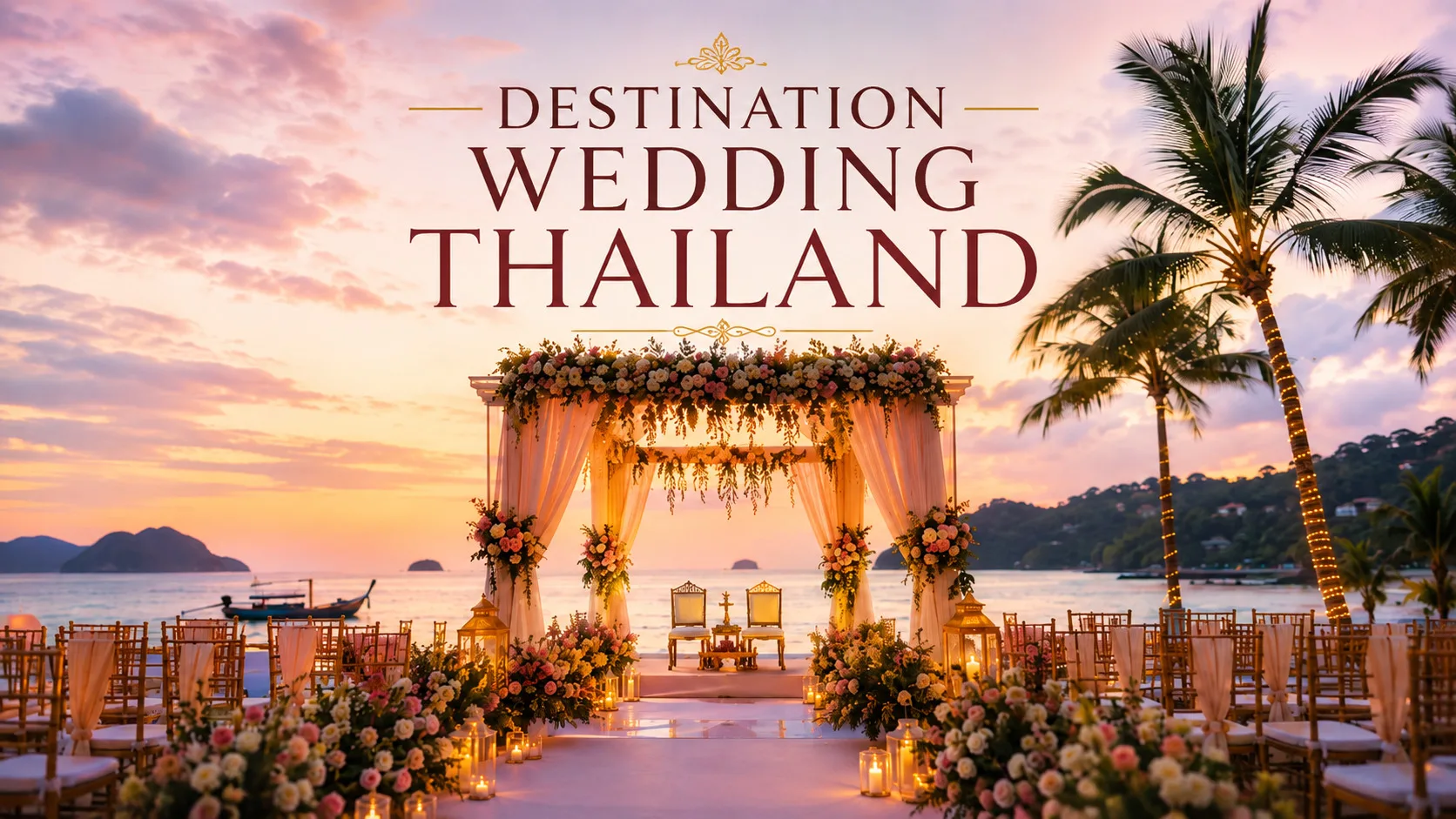
- Beachfront celebrations: Ideal for sunset pheras, intimate ceremonies, and photographs overlooking the sea.
- Resort weddings: Useful for multi-day celebrations where guests can stay at the same property.
- City weddings: Bangkok provides sophisticated hotels, ballrooms, riverfront settings, and convenient access for guests.
- Tropical celebrations: Phuket, Krabi, and Khao Lak offer greenery, coastal scenery, and outdoor spaces.
- Private and intimate weddings: Certain villas and smaller resorts can create a more personal setting.
For Indian couples, familiarity with multi-event celebrations can also matter. Indian weddings may involve mehendi, haldi, sangeet, baraat, ceremony, and reception, so a venue needs to accommodate more than a single wedding-day function. Thailand Weddings highlights experience with these formats and on-ground coordination across several Thai destinations.
Which Thai Destination Is Best for Your Wedding Style?
There is no single destination that suits every couple. Phuket may appeal to couples who want a developed island destination with beach resorts and extensive venue choices, while Khao Lak offers a quieter coastal atmosphere. Krabi is well suited to couples drawn to dramatic natural scenery, whereas Bangkok works better for ballroom-led celebrations and a city setting. Hua Hin, Pattaya, and Koh Samui provide further alternatives depending on guest requirements and wedding style.
Phuket
Phuket is one of the most versatile choices for Thailand weddings. Its combination of beaches, resorts, entertainment, restaurants, and transport connections makes it suitable for larger celebrations as well as more intimate events.
Khao Lak
Khao Lak has a calmer coastal character and spacious beachfront resort settings. Properties such as JW Marriott Khao Lak Resort & Spa and Avani+ Khao Lak Resort are featured on Thailand Weddings for couples considering a beach-focused celebration.
Krabi
Krabi is particularly appealing when the natural setting is an important part of the wedding. Limestone formations, coastal views, islands, and resort properties provide a distinctive backdrop for ceremonies and wedding photography.
Bangkok
For couples who prefer an urban celebration, Bangkok offers luxury hotels, ballrooms, riverside venues, restaurants, and easy access to the city's cultural attractions. Anantara Riverside Bangkok Resort is one of the featured wedding properties highlighted by Thailand Weddings.
How Do You Choose the Right Wedding Hotel in Thailand?
The venue should be assessed according to how your complete wedding programme will function. Looking only at the ceremony backdrop can create problems later if the property lacks suitable spaces for other functions.
Before confirming a hotel, consider:
- Number and type of event spaces for mehendi, haldi, sangeet, ceremony, and reception.
- Guest accommodation within the property or nearby.
- Indoor alternatives for weather-related changes.
- Catering capabilities, particularly for Indian and vegetarian menus.
- Outdoor permissions for music, décor, ceremonies, and entertainment.
- Guest movement between airports, hotels, venues, and activities.
- On-site wedding support for managing several events over multiple days.
For example, Le Méridien Phuket Beach Resort combines a private beach setting with multiple event spaces, including the Karon Ballroom, which is listed with capacity for up to 980 guests. This illustrates why venue research should consider the entire wedding programme rather than just the ceremony location.
What Should Couples Consider When Planning a Beach Wedding in Thailand?
A beach wedding requires more planning than simply placing a mandap beside the sea. The time of the ceremony, sun exposure, wind, tides, guest comfort, sound arrangements, lighting, and contingency space all influence the experience.
The season also differs by region. Phuket, Krabi, and Khao Lak are on Thailand's Andaman coast and generally have their drier period from November through April. Koh Samui follows a different rainfall pattern because it sits on the Gulf of Thailand side. Couples should therefore select the destination and date together instead of assuming that the same weather conditions apply across the country.
This is especially important when planning outdoor pheras, sunset ceremonies, cocktail functions, or beach receptions. A good venue should have a realistic alternative if weather conditions change.
How Can Indian Traditions Be Incorporated Into a Thailand Wedding?
A Thailand wedding does not require couples to compromise on their traditions. The setting can change while the structure and rituals remain personal to the family.
A typical multi-day programme might include:
- Mehendi with relaxed daytime hospitality
- Haldi in an outdoor resort setting
- Sangeet with dedicated entertainment space
- Baraat planned around the property's access and guest movement
- Wedding ceremony with a beach, garden, or indoor backdrop
- Reception with a formal dining and entertainment setup
Indian catering is another practical consideration. Thailand Weddings states that Indian catering, including vegetarian menus, can be arranged through its hotel network, while vendor coordination may include décor, photography, mehendi, music, and other wedding requirements.
How Can Couples Make the Guest Experience Easier?
Guests remember more than the wedding ceremony. Their experience starts at the airport and continues through accommodation, transfers, meals, activities, and the final departure.
A well-organised wedding plan should therefore account for:
- Airport pickup and arrival coordination
- Room allocation and accommodation blocks
- Welcome events
- Local transportation
- Clear schedules for every function
- Dietary requirements
- Free time between ceremonies
- Assistance for elderly guests and families travelling with children
Keeping major events at one resort can simplify movement considerably. It also allows guests to spend more time together instead of repeatedly travelling between separate venues.
When Should You Start Planning a Destination Wedding in Thailand?
Most couples should allow around 8–12 months for planning. This provides time to shortlist destinations, inspect suitable hotels, coordinate guest accommodation, discuss menus and décor, organise vendors, and build a workable schedule for multiple wedding events.
Starting earlier is particularly useful when the preferred venue has limited outdoor spaces or when many guests are travelling internationally.
What Makes a Thailand Wedding Feel Personal?
The most memorable Thailand weddings are not necessarily the ones with the most elaborate décor. Personal touches can come from the way the celebration uses the destination.
A couple might arrange a sunset ceremony overlooking the Andaman Sea, host a relaxed welcome evening beside the resort, organise a Thai-inspired guest experience, or give each function its own visual identity. The destination should support the couple's story rather than overpower it.
For couples comparing venues and planning formats, Destination Wedding in Thailand can be a useful starting point for exploring wedding hotels, destinations, and planning services suited to different celebration styles.
Frequently Asked Questions
Is Thailand suitable for Indian weddings?
Yes. Thailand has resorts and hotels experienced with Indian wedding formats, including multi-day celebrations involving ceremonies such as mehendi, haldi, sangeet, baraat, and reception.
Which destinations are popular for Thailand weddings?
Phuket, Khao Lak, Krabi, Bangkok, Hua Hin, Pattaya, and Koh Samui are among the destinations considered for weddings, with each offering a different setting and guest experience.
Is a beach wedding possible in Thailand?
Yes. Beachfront resorts across destinations such as Phuket, Khao Lak, and Krabi provide settings for ceremonies, receptions, and sunset celebrations.
How early should couples begin planning?
Around 8–12 months is a practical planning window for coordinating the venue, accommodation, travel, vendors, and multiple wedding functions.
Can traditional Indian wedding ceremonies be held in Thailand?
Yes. Wedding programmes can be adapted to different cultural traditions and ceremony formats while using Thailand's resorts, beaches, gardens, and event spaces as the setting.
Should couples consider weather when choosing the destination?
Definitely. Thailand's regions follow different seasonal patterns, so the wedding date should be assessed alongside the specific destination rather than relying on a country-wide weather assumption.