
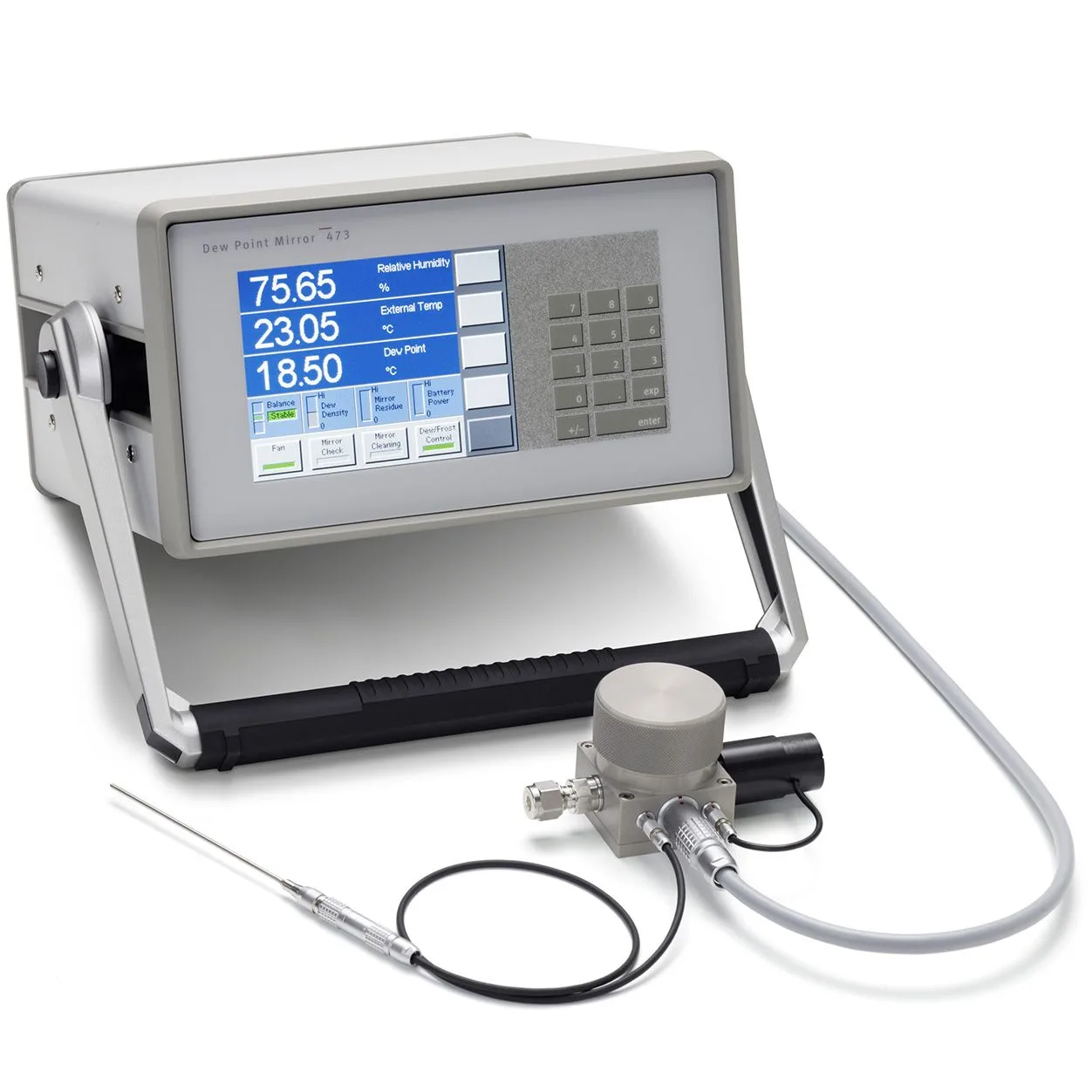
Moisture measurement is an essential part of many industrial processes, particularly those involving compressed air, natural gas, and other controlled gas environments. Excessive water vapour can cause condensation, corrosion, equipment damage, and quality-related problems. Industries therefore need dependable instruments to monitor moisture conditions and maintain suitable operating environments. A dewpoint hygrometer helps measure the moisture content of air or gas by identifying the temperature at which water vapour begins to condense. This information allows operators to assess dryness levels, evaluate equipment performance, and make informed decisions about process control. Understanding how these instruments work and where they are used can help businesses improve the reliability of their industrial operations.
What Is a Dewpoint Hygrometer?
A dewpoint hygrometer is a measurement instrument designed to determine the dew point temperature of air or gas. The dew point represents the temperature at which water vapour becomes saturated and starts changing into liquid water. It provides useful information about the moisture condition of a gas and helps operators understand whether a system is sufficiently dry for its intended application.
These instruments are used in industrial facilities, laboratories, manufacturing plants, and compressed air systems. Some models are designed for portable measurements, while others are installed permanently for continuous monitoring. The appropriate type depends on the measurement range, operating conditions, and accuracy requirements of the application.
By providing dependable moisture readings, these instruments help businesses monitor environmental conditions and identify changes that could affect equipment or production quality.
How Does a Dewpoint Hygrometer Work?
Dewpoint hygrometer technology uses different measurement principles to determine the moisture condition of a gas. One commonly used approach is chilled-mirror measurement, in which a surface is gradually cooled until condensation begins to form. The temperature at that point is recorded as the dew point.
Other instruments use electronic sensing elements, including capacitive sensors. These sensors respond to changes in moisture by detecting variations in their electrical properties. The instrument processes the sensor response and converts it into a readable measurement.
The results may be displayed as dew point temperature or other moisture-related values, depending on the instrument's design. Advanced systems can also transfer measurement data to external monitoring equipment.
Measurement accuracy depends on several factors, including correct sampling, suitable operating conditions, sensor condition, and regular calibration. Selecting the appropriate measurement technology is therefore important for achieving reliable results.
Why Is Accurate Moisture Measurement Important?
Moisture can create operational challenges in systems that require dry air or gas. In compressed air networks, water vapour may condense when the temperature drops below the dew point. This can lead to corrosion inside pipelines, damage to pneumatic equipment, and problems with filters and valves.
Moisture can also affect sensitive manufacturing processes. Electronics production, pharmaceutical manufacturing, food processing, and chemical applications may require controlled environmental or gas conditions to maintain consistent results.
Reliable monitoring allows operators to identify unwanted moisture before it creates serious problems. It also helps maintenance teams evaluate the performance of dryers and other moisture-control equipment. By keeping moisture levels within suitable limits, businesses can support equipment reliability, improve process consistency, and reduce unnecessary maintenance.
Industrial Applications of Dew Point Measurement
Different industries use moisture measurement instruments according to their specific production and quality requirements. Compressed air systems are among the most common applications. Manufacturing facilities rely on dry compressed air for pneumatic tools, automation equipment, packaging machinery, and other production operations. Monitoring moisture helps confirm whether air treatment equipment is performing as expected.
Natural gas processing is another important application. Moisture monitoring helps operators assess gas quality and manage the risk of condensation during processing and transportation. Chemical plants also use moisture measurement to maintain suitable conditions in gas handling and production systems.
Other applications include power generation, laboratories, pharmaceutical facilities, food production, and electronics manufacturing. In these environments, controlled moisture conditions can help protect sensitive materials, support consistent production, and reduce the risk of moisture-related equipment problems.
Key Features to Consider When Selecting a Hygrometer
Choosing the right measurement instrument requires an understanding of the process and the environment where it will be used. The first consideration should be the required measurement range. Some applications involve ordinary humidity conditions, while others require accurate measurements at very low moisture concentrations.
Accuracy and repeatability are also important because operators need consistent readings to evaluate system performance. The response time should match the application, particularly where moisture levels can change quickly.
Other factors include operating pressure, temperature range, gas compatibility, sampling requirements, and calibration needs. Businesses should also consider whether they need a portable instrument for occasional inspections or a fixed system for continuous monitoring.
A suitable instrument should match the actual operating requirements rather than simply offering a large number of additional features. Reviewing technical specifications and manufacturer guidance can help businesses make a more informed selection.
Benefits of Using Modern Moisture Measurement Equipment
Modern moisture measurement equipment offers several advantages for industrial facilities. One important benefit is improved visibility into system conditions. Instead of relying only on occasional manual checks, operators can use regular or continuous measurements to understand how moisture levels change over time.
Early problem detection is another advantage. If moisture readings begin to increase, maintenance teams can investigate possible issues with dryers, filters, sampling arrangements, or operating conditions. Addressing these problems early may help prevent equipment damage and unexpected interruptions.
Accurate measurements also support quality management. Industries that depend on controlled moisture conditions can use measurement data to maintain more consistent production environments. In addition, recorded readings can help with performance evaluation, maintenance planning, and operational documentation.
Calibration, Sampling, and Maintenance Requirements
Even a reliable measurement instrument needs proper care to maintain its performance. Calibration is important because it helps verify that readings remain within acceptable accuracy limits. The calibration schedule should follow the manufacturer's recommendations and reflect the operating conditions and quality requirements of the application.
Sampling arrangements also influence measurement reliability. The sample should represent the actual gas conditions being monitored. Leaks, unsuitable tubing, contamination, or moisture entering through connections can affect the results.
Routine maintenance should include checking connections, inspecting the sampling system, and following the manufacturer's cleaning and handling instructions. For instruments used in demanding industrial environments, regular verification can help identify performance changes before they affect important measurements.
How dew-point Supports Industrial Moisture Analysis
dew-point is associated with moisture measurement solutions that support industrial applications requiring controlled air and gas conditions. Reliable moisture analysis helps businesses evaluate system performance, monitor drying processes, and understand changes in moisture levels.
Selecting suitable equipment depends on the specific application, including its measurement range, operating pressure, gas type, and required accuracy. Considering these factors helps facilities choose measurement solutions that match their technical and operational needs.
For industries where moisture control is important, dependable measurement technology can support equipment protection, process monitoring, and routine quality management. Understanding the available measurement options helps businesses develop more effective approaches to industrial moisture analysis.
Conclusion
A dew point hygrometer is an important instrument for measuring moisture conditions in air and industrial gases. It helps businesses monitor dryness levels, identify unwanted moisture, and maintain suitable conditions across different applications. From compressed air systems to gas processing and sensitive manufacturing environments, reliable measurements support better process control and equipment protection. By selecting appropriate equipment, maintaining proper sampling arrangements, and following regular calibration procedures, industrial facilities can improve measurement accuracy and maintain consistent operational performance.