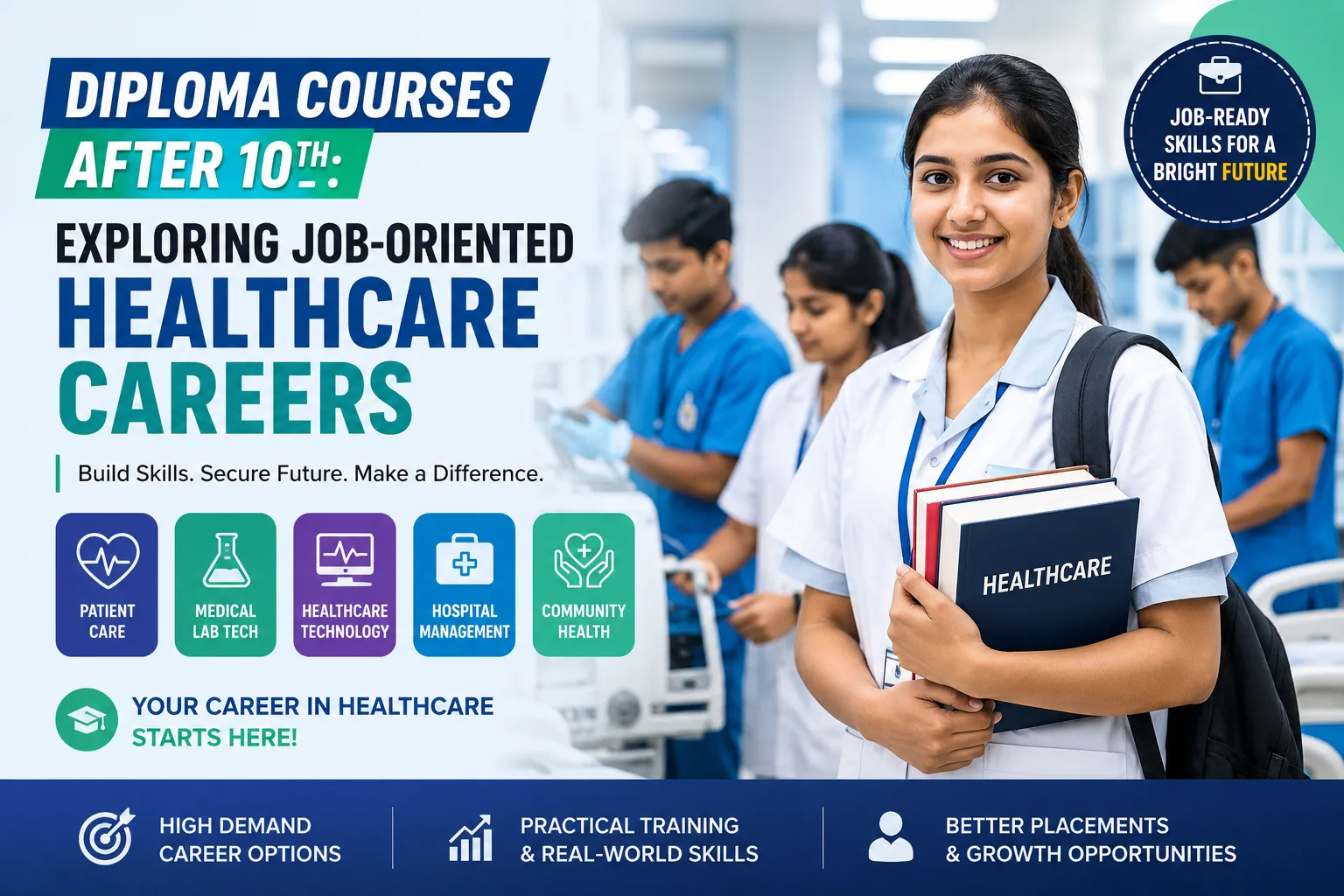
The period after completing 10th standard is an important stage for students. While some students continue with traditional academic education, others prefer skill-oriented programs that allow them to explore professional fields earlier.
Healthcare is one area where students can find a variety of technical and vocational education pathways.
Why Consider a Diploma Program?
Diploma education generally focuses on developing specific knowledge and practical abilities. Students interested in healthcare can explore programs connected with diagnostics, laboratory services, imaging and other technical departments.
When searching for diploma courses after 10th, students should avoid choosing a program solely based on course duration. Understanding the curriculum and future career pathway is equally important.
Healthcare as a Career Area
Healthcare includes far more roles than doctors and nurses. Hospitals and diagnostic centres also depend on technicians and other trained professionals who support clinical operations.
For example, technical teams may be involved in laboratory testing, diagnostic imaging, patient preparation and equipment-related procedures.
This makes healthcare education attractive to students who prefer practical and skill-based learning.
How to Select a Suitable Course
Before applying, students should consider several factors:
1. Personal Interest
Think about whether you prefer laboratory work, medical equipment, imaging technology or patient interaction.
2. Eligibility
Every program can have different admission requirements. Always verify the current eligibility criteria before applying.
3. Practical Training
Look for programs where students receive appropriate practical exposure alongside classroom education.
4. Career Scope
Understand the types of workplaces and roles associated with the qualification.
5. Further Education
Check whether the program can serve as a foundation for advanced studies later.
Laboratory-Based Options
Students interested in diagnostic science can explore a laboratory technician course or related programs. These programs may introduce learners to sample handling, laboratory procedures, equipment and safety practices.
Those interested in imaging technology may instead explore X-ray or radiology-focused education.
Building Professional Skills
Healthcare employers value more than technical knowledge. Students should also develop communication, teamwork, discipline, attention to detail and professional conduct.
These soft skills can become particularly important when working in hospitals and other healthcare environments.
Making an Informed Decision
Choosing a diploma program is an important decision, so students and parents should research the institute, curriculum, facilities, practical exposure and admission requirements before enrollment.
Information about healthcare-focused programs can be explored at Scope College.
Conclusion
A well-selected diploma program can help students begin developing career-specific skills at an early stage. The key is to choose a course based on interest, learning opportunities and long-term career plans rather than selecting a program simply because it appears easy or short.