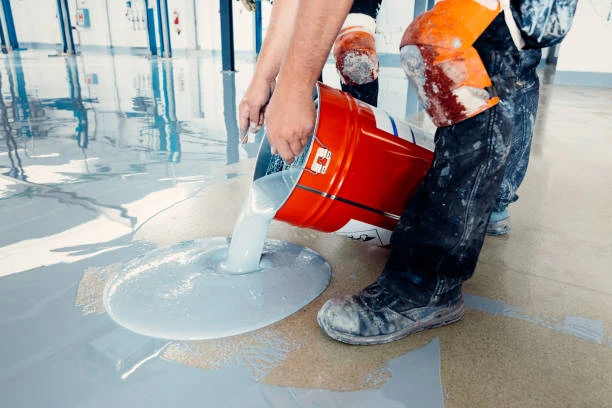
Industrial environments face constant challenges from liquid leaks and harsh chemical contact. Whether it is a manufacturing plant or a storage hub, the floor must act as the first line of defense. Standard concrete is porous and easily damaged, but specialized coatings offer a resilient barrier that prevents deep structural degradation from hazardous substances.
Chemical Resistance in Warehouse Epoxy Flooring
When considering the durability of a facility, the ability to withstand chemical exposure is paramount. High-performance warehouse epoxy flooring is specifically engineered to resist oils, acids, and solvents. This ensures that the underlying substrate remains intact even in the most demanding industrial settings where spills are a frequent occurrence.
How Resinous Barriers Protect Concrete
Concrete acts like a sponge, absorbing liquids that can cause internal cracking or rebar corrosion. By applying a seamless resinous system, you create an impermeable shield. This shield prevents liquids from seeping into the ground, ensuring that your facility meets environmental safety standards while protecting your long-term infrastructure investment from costly liquid-related damage.
Maintaining Hygiene with Seamless Surfaces
In sectors like food processing or pharmaceuticals, chemical resistance goes hand-in-hand with hygiene. Seamless surfaces eliminate the joints and cracks where bacteria and chemicals often collect. Because the surface is non-porous, cleanup becomes a simple task, allowing staff to maintain a sterile environment without needing aggressive scrubbing or specialized deep-cleaning tools.
The Impact of Heavy Use on Warehouse Epoxy Flooring
Industrial floors do more than just sit there; they endure heavy machinery and constant foot traffic. A floor that resists chemicals but fails under weight is useless. Modern epoxy systems are designed to balance chemical inertness with extreme compressive strength, making them ideal for areas where forklifts and heavy pallets are constantly in motion.
Slip Resistance and Employee Safety
Safety is a core pillar of any industrial operation. Chemical spills can create dangerous, slick surfaces that lead to workplace accidents. By incorporating slip-resistant aggregates into the coating, businesses can ensure that their teams remain safe even when the floor is wet. This proactive approach to safety reduces liability and improves overall operational efficiency.
Longevity and Operational Performance
Choosing a high-quality coating is about focusing on long-term performance rather than short-term fixes. A chemical-resistant floor reduces the frequency of repairs and replacements. This reliability allows facility managers to focus on production and logistics rather than worrying about floor failures. Investing in quality materials upfront pays dividends through years of trouble-free service.
Conclusion
Protecting an industrial space requires more than just a coat of paint; it requires a specialized solution designed for rigor. From resisting harsh acids to providing a safe, slip-resistant surface for workers, the right flooring system transforms a facility. By prioritizing durability and chemical resistance, you ensure your warehouse remains functional, safe, and efficient for years to come.