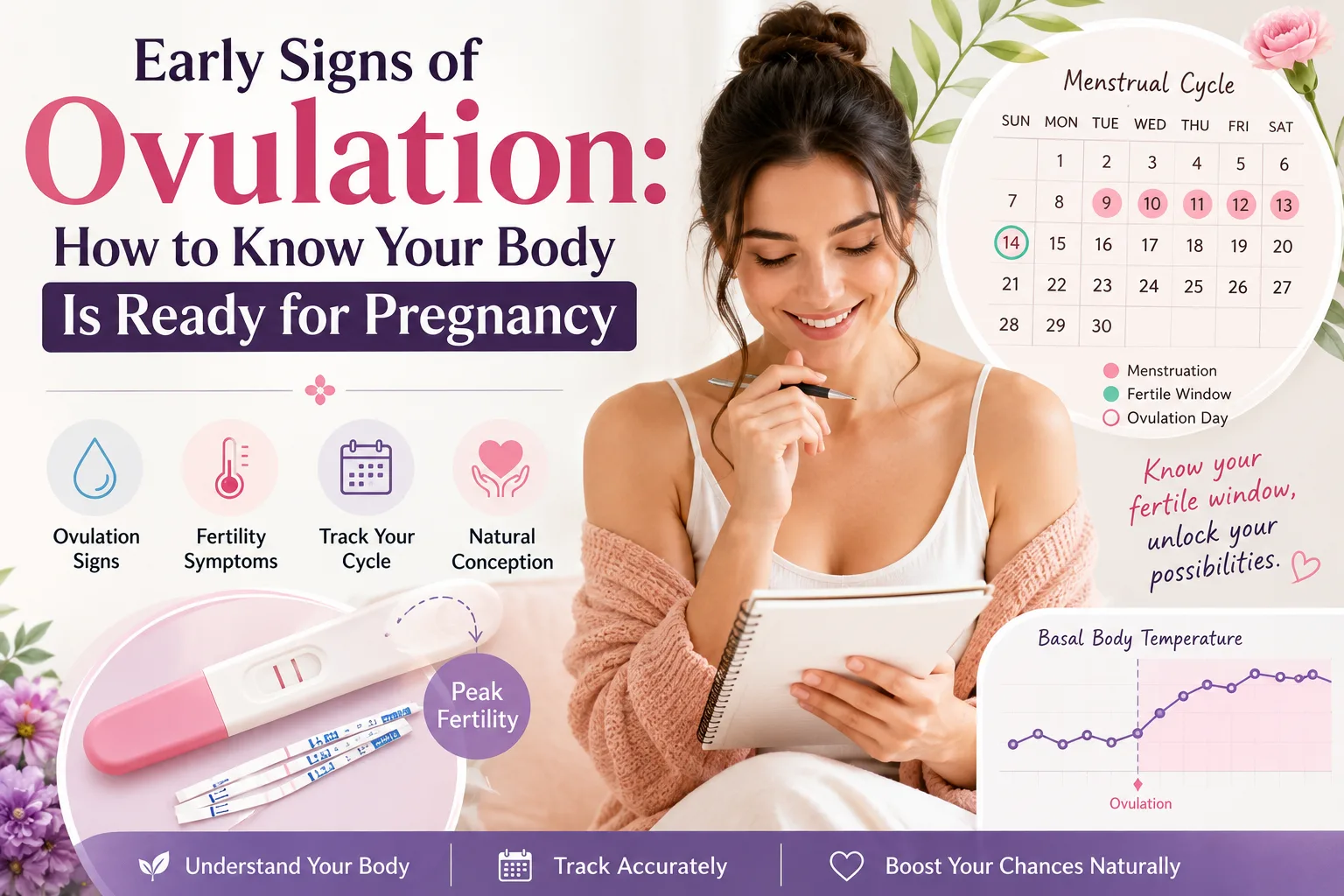
The human body is a quiet storyteller, sending subtle signals long before big events unfold. When it comes to fertility, those signals appear as ovulation signs—gentle clues that your body is preparing for a potential pregnancy. Recognizing these early indicators can help you better understand your cycle, identify peak fertility days, and support natural conception.
In this guide, we’ll explore the most common fertility symptoms, how to track them, and how to confidently know when your body is ready for pregnancy.
🌸 What Is Ovulation and Why It Matters?
Ovulation is the phase in your menstrual cycle when a mature egg is released from the ovary. This egg travels into the fallopian tube, where it can be fertilized by sperm.
This moment marks your most fertile time. Since the egg survives for only about 12–24 hours, recognizing early ovulation signs is essential for timing intercourse during the most effective window for natural conception.
🔍 Early Signs of Ovulation
Your body provides several physical and hormonal cues before ovulation occurs. Learning to identify these fertility symptoms can make a significant difference in your conception journey.
💧 1. Changes in Cervical Mucus
One of the most noticeable ovulation signs is a change in cervical mucus.
- Before ovulation: Dry or sticky
- Approaching ovulation: Creamy or lotion-like
- During ovulation: Clear, stretchy, egg-white consistency
👉 This fertile mucus helps sperm travel more easily, increasing the chances of natural conception.
🌡️ 2. Slight Rise in Basal Body Temperature
Your basal body temperature (BBT) increases slightly after ovulation.
- Track temperature daily in the morning
- Look for a small but consistent rise (0.3–0.5°C)
📌 While this confirms ovulation after it happens, tracking patterns over time helps predict future cycles.
🧠 3. Increased Libido
Many women experience a natural increase in sexual desire just before ovulation.
👉 This is your body’s biological way of encouraging reproduction during peak fertility.
🩺 4. Mild Pelvic or Abdominal Pain
Some women feel slight discomfort or a dull ache on one side of the lower abdomen.
- Known as “mittelschmerz”
- Usually brief and mild
👉 This can be a direct sign that ovulation is about to occur.
💖 5. Breast Tenderness
Hormonal changes around ovulation may cause:
- Mild breast sensitivity
- Slight swelling
These fertility symptoms are often subtle but noticeable with awareness.
😊 6. Heightened Senses
Some women report:
- Increased sense of smell
- Greater sensitivity to taste or light
While not universal, these changes can be part of your body’s ovulation response.
🧪 7. Positive Ovulation Test
Ovulation predictor kits (OPKs) detect a surge in luteinizing hormone (LH).
- A positive test means ovulation is likely within 24–36 hours
👉 This is one of the most accurate ways to confirm early ovulation signs.
📊 How to Track Ovulation Accurately
Recognizing symptoms is powerful, but combining methods improves accuracy.
📅 Track Your Cycle
Keep a record of:
- Cycle length
- Period dates
- Symptom patterns
Over time, you’ll notice trends that help predict ovulation.
📱 Use Fertility Apps
Modern apps analyze your data and provide:
- Ovulation predictions
- Symptom tracking
- Daily reminders
They simplify the process of identifying your fertile days.
📝 Combine Multiple Methods
For best results, use:
- Cervical mucus tracking
- BBT charting
- Ovulation test kits
👉 Think of it as layering clues until the full picture becomes clear.
❤️ Best Time for Natural Conception
The ideal time for natural conception is:
- 2–3 days before ovulation
- The day of ovulation
Since sperm can survive up to 5 days, having intercourse during this period increases the likelihood of fertilization.
⚠️ Common Mistakes to Avoid
Even small missteps can affect your tracking accuracy:
- Ignoring irregular cycles
- Tracking inconsistently
- Misreading cervical mucus changes
- Relying on only one method
Consistency is your greatest ally.
🥗 Lifestyle Factors That Influence Ovulation
Your overall health plays a key role in fertility:
- Eat a balanced, nutrient-rich diet
- Maintain a healthy weight
- Manage stress effectively
- Avoid smoking and excessive alcohol
A well-supported body enhances your chances of successful ovulation and conception.
📌 When to Seek Medical Advice
If you notice irregular or absent ovulation signs, or if conception is taking longer than expected:
- Consult a healthcare professional
- Consider fertility testing if needed
Early guidance can make a significant difference.
🧾 Final Thoughts
Your body communicates in patterns, rhythms, and subtle shifts. Learning to recognize early ovulation signs and understanding your fertility symptoms empowers you to take control of your reproductive journey.
Whether you’re planning for a baby now or simply learning about your cycle, tuning into these natural signals brings clarity, confidence, and a deeper connection with your body 🌿.