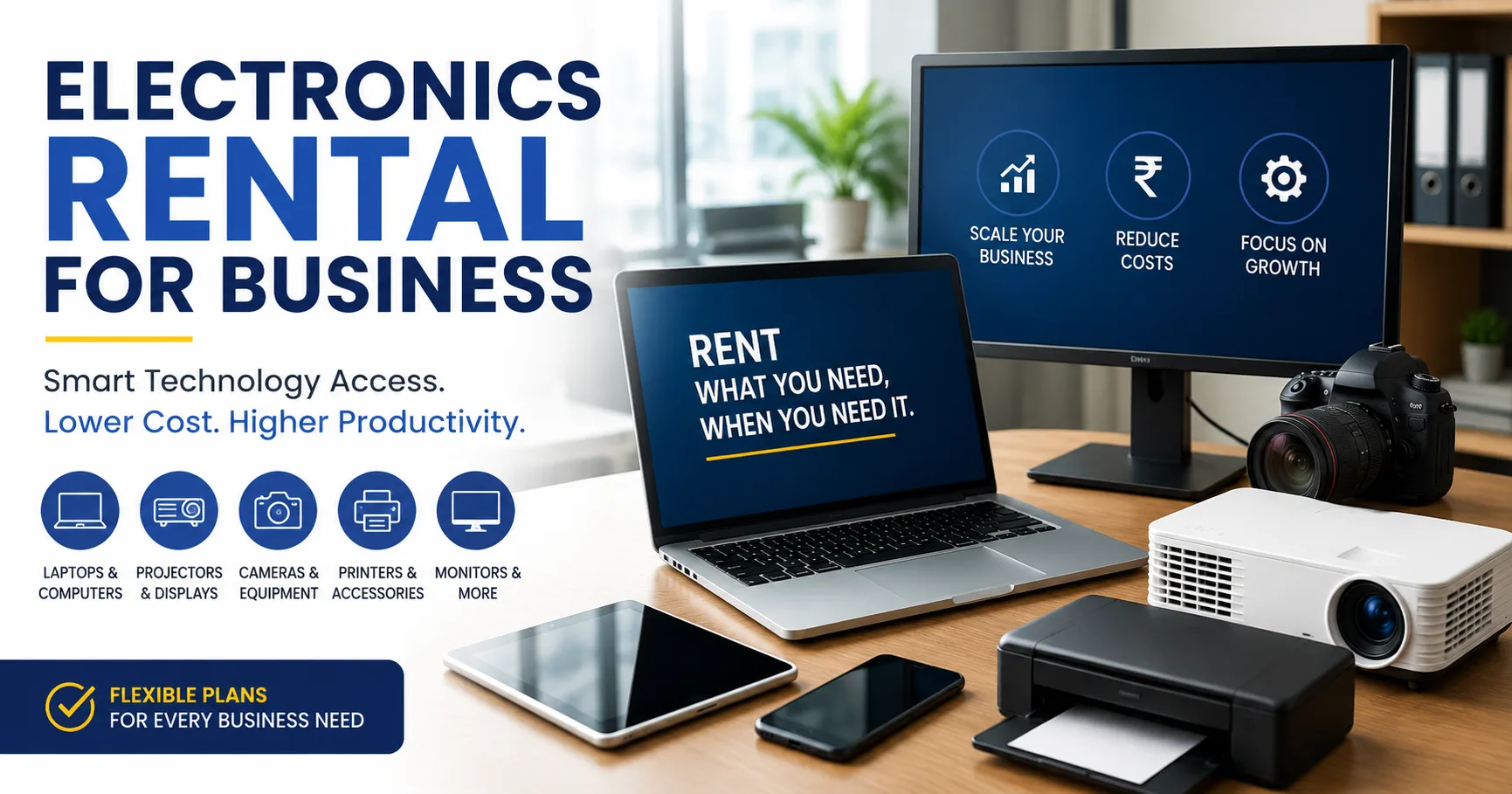
Technology has become an important part of almost every business. Companies need laptops, computers, projectors, cameras, monitors, printers, and other electronic devices for daily work. But buying all these devices can be expensive, especially when a business needs them only for a short period.
This is where electronics rental for business can be a useful option. Instead of buying expensive equipment, businesses can rent the electronics they need for a specific period. This can help companies manage their budget while still getting access to the technology required for their work.
Electronics rental can be useful for startups, small businesses, event organizers, training companies, offices, and businesses working on temporary projects.
What Is Electronics Rental for Business?
Electronics rental for business means renting electronic devices for a specific period instead of purchasing them permanently.
For example, a company may need 10 laptops for a three-month project. Instead of buying 10 laptops, the company can rent them for the project period and return them when the work is completed.
Businesses can also rent electronics for meetings, events, exhibitions, training programs, temporary offices, and other short-term requirements.
The exact products, rental prices, and rental periods depend on the provider and location.
Why Should Businesses Consider Electronics Rental?
There are several reasons why renting electronics can be useful for businesses.
1. Reduce Initial Costs
Buying several electronic devices at the same time can require a large amount of money. This can be difficult for startups and small businesses with limited budgets.
With rental, businesses can access the equipment they need without paying the full purchase price upfront.
For example, a new company may need laptops, monitors, and a projector for its first office. Renting some of these products can help the company manage its initial expenses.
However, businesses should always compare the total rental cost with the purchase cost before making a decision.
2. Useful for Short-Term Projects
Not every business project lasts for years.
A company may work on a project for three months, six months, or one year. During that time, it may need additional electronic equipment.
Buying equipment for a short project may not always be practical.
Electronics rental for business allows companies to get the equipment they need for the project period and return it when the project is finished.
3. Easy to Handle Changing Business Needs
Business requirements can change over time.
A company may have 20 employees today but need 30 laptops for a temporary project. Instead of buying extra laptops that may not be needed later, the company can consider renting additional devices.
This gives businesses more flexibility when their workforce or project requirements change.
4. Less Storage Problems
Electronic devices need storage when they are not being used.
If a company purchases equipment for occasional use, it may need to keep that equipment in an office or storage room.
Renting can reduce the need to keep unused equipment for long periods.
This can be useful for businesses with limited office space.
5. Useful for Events
Businesses often organize events, meetings, conferences, exhibitions, and training programs.
These events may require electronics such as:
- Projectors
- Laptops
- Cameras
- Speakers
- Televisions
- Monitors
- Microphones
Buying this equipment for a single event may not make sense.
Renting allows businesses to use the required equipment for the event and return it afterward.
Popular Electronics Businesses Can Rent
The electronics available for rent can vary by provider and location. Some common options include the following.
Laptops and Computers
Laptops are one of the most useful electronic devices for businesses.
Companies may need additional laptops for:
- New employees
- Temporary workers
- Interns
- Training programs
- Business projects
- Remote teams
Before renting a laptop, check its processor, RAM, storage, operating system, battery condition, and other specifications.
Projectors
Projectors are useful for presentations, meetings, training sessions, seminars, and conferences.
If a company only needs a projector for a few days, renting can be more practical than buying one.
Before renting, check the projector's resolution, brightness, connectivity, and compatibility with your laptop or other devices.
Cameras
Businesses may need cameras for marketing videos, product photography, corporate events, social media content, and other projects.
Professional cameras can be expensive. Renting can provide access to suitable equipment for a specific project without requiring permanent ownership.
Monitors
Extra monitors can be useful when businesses need to create temporary workstations.
For example, a company may need additional monitors for a temporary team working on a large data, design, or software project.
Tablets
Tablets can be useful for presentations, customer demonstrations, events, surveys, and temporary business activities.
Companies can rent tablets when they need several devices for a limited period.
Printers and Other Office Electronics
Temporary offices and events may also require printers and other electronic equipment.
Renting can help businesses get the required devices without purchasing equipment that may not be needed later.
Who Can Benefit From Business Electronics Rental?
Startups
Startups often need to manage their money carefully during the early stages.
Instead of buying every device immediately, startups can consider renting some equipment according to their current requirements.
This can help them focus their available budget on other important business activities.
Small Businesses
Small businesses may not need large amounts of electronic equipment all the time.
Rental can be useful when they experience temporary increases in workload or need equipment for a special project.
Event Organizers
Event organizers may need laptops, projectors, cameras, screens, speakers, and other electronics for only a few days.
Renting can be a practical solution for these short-term needs.
Training Companies
Training companies may need computers and projectors for workshops and training sessions.
If the number of participants changes from one program to another, renting can provide more flexibility.
Businesses With Temporary Employees
Companies that hire interns, freelancers, contractors, or temporary workers may need additional laptops or monitors.
Instead of purchasing devices that may not be needed after the project, businesses can explore rental options.
How to Choose the Right Electronics for Rent
Choosing the right product is important. Do not select equipment only because it has the lowest rental price.
Check the Specifications
Make sure the equipment can handle the work you need it for.
For laptops, check:
- Processor
- RAM
- Storage
- Operating system
- Battery
- Screen size
For projectors, check:
- Resolution
- Brightness
- Connectivity
- Compatibility
Choosing the right specifications can help avoid performance problems.
Check the Condition
Before accepting rented electronics, check their physical and working condition.
Look at the screen, buttons, ports, cables, charger, battery, and other accessories.
If you notice existing damage, inform the rental provider and follow the applicable process.
Understand Maintenance and Repairs
Ask who will be responsible if the equipment stops working during the rental period.
Check whether repair, replacement, technical support, or maintenance is included in the rental agreement.
Calculate the Total Cost
Do not look only at the advertised rental price.
Also check:
- Security deposit
- Delivery charges
- Installation charges
- Maintenance fees
- Repair charges
- Damage fees
- Pickup charges
Knowing the complete cost can help you make a better decision.
Electronics Rental vs Buying
Both renting and buying can be useful depending on the situation.
Renting may be better when:
- You need equipment temporarily.
- Your project has a fixed duration.
- You need extra equipment for an event.
- Your business requirements change often.
- You want to avoid a large upfront expense.
- You have limited storage space.
Buying may be better when:
- You will use the equipment for many years.
- The device is essential for daily business operations.
- Long-term ownership provides better value.
- You want complete control over the equipment.
The best option depends on the length of use, total cost, and business requirements.
How Upleex Can Help Businesses
Upleex is a marketplace where users can explore products available for rent and sale across different categories.
These categories include electronics and gadgets, furniture, home appliances, vehicles, fashion, beauty and personal care, and jewellery.
For businesses, a marketplace like Upleex can be useful when they need products for temporary projects, events, office requirements, or other short-term needs.
Businesses should check each listing carefully and review the product condition, specifications, price, rental duration, availability, and applicable terms before renting.
Tips for Renting Electronics for Business
Here are some simple tips to follow:
- Know exactly what equipment you need.
- Decide how long you need it.
- Compare different rental options.
- Check the technical specifications.
- Inspect the product condition.
- Confirm all included accessories.
- Ask about maintenance and repairs.
- Check the security deposit.
- Understand delivery and pickup charges.
- Read the rental terms before confirming.
Planning in advance can help businesses avoid last-minute problems and unnecessary expenses.
Conclusion
Electronics rental for business can be a simple and flexible way to access technology without purchasing every device permanently.
Laptops, computers, projectors, cameras, monitors, tablets, printers, and other electronics can be useful for temporary projects, events, training programs, startups, and businesses with changing requirements.
Renting may help reduce upfront spending, provide flexibility, and reduce the need to store equipment that is not regularly used.
However, businesses should always compare rental and purchase costs before deciding. Product condition, specifications, rental duration, security deposits, maintenance, repair responsibilities, and return terms should also be checked carefully.
With a marketplace such as Upleex, businesses can explore products available for rent and sale across multiple categories.
Whether you are a startup, small business, event organizer, or company managing a temporary project, renting electronics can help you access the equipment you need while keeping your business requirements flexible.
Frequently Asked Questions
1. What is electronics rental for business?
Electronics rental for business means renting electronic devices such as laptops, projectors, cameras, monitors, and other equipment for a specific period instead of buying them.
2. What electronics can a business rent?
Depending on availability, businesses can rent laptops, computers, projectors, cameras, monitors, tablets, printers, televisions, speakers, and other electronic devices.
3. Is electronics rental good for startups?
Yes. Startups can consider renting electronics when they want to manage their initial spending or need equipment for temporary projects.
4. Can I rent laptops for temporary employees?
Yes. Laptop rental can be useful for interns, contractors, freelancers, and temporary employees who need computers for a limited period.
5. Is renting electronics cheaper than buying?
It depends on how long you need the equipment. Renting can be useful for short-term requirements, while buying may provide better value for long-term use.