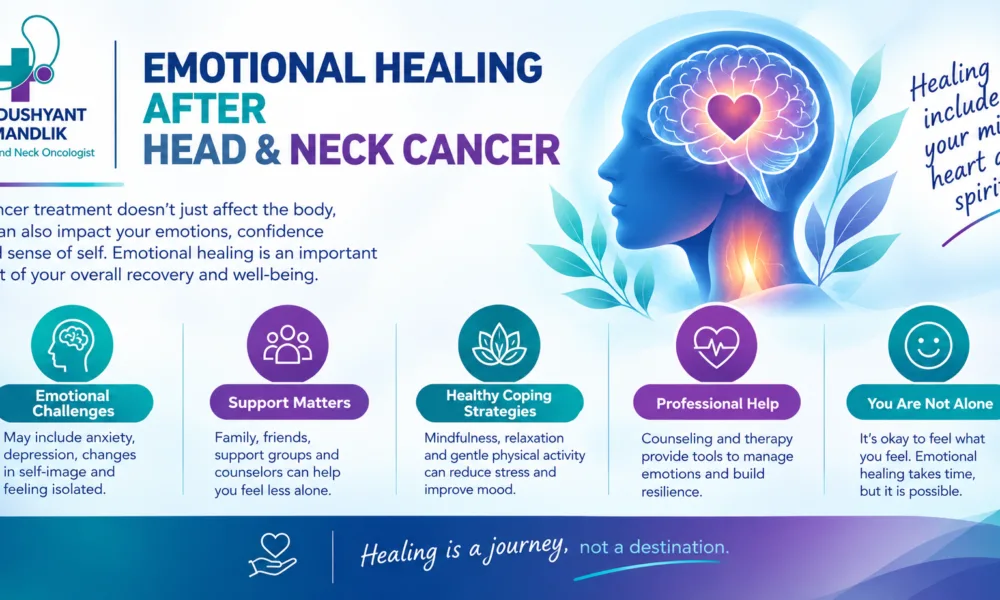
When a patient is diagnosed with head and neck cancer, the immediate focus is understandably on treatment—surgery, radiation therapy, chemotherapy, immunotherapy, or a combination of these approaches.
But cancer treatment is only one part of the journey.
Once treatment is completed, patients and families often expect life to return to normal immediately. In reality, emotional recovery can take much longer than physical healing.
As a head and neck cancer surgeon with more than 20 years of experience, I have seen that recovery is not complete simply because the cancer treatment has finished. Emotional healing deserves the same attention and patience as physical rehabilitation.
Why Can Head & Neck Cancer Have a Strong Emotional Impact?
The head and neck contain many structures that influence how we communicate and interact with the world around us.
Treatment may affect:
- Speech and voice
- Swallowing and eating
- Facial appearance
- Taste and smell
These reactions are understandable. They do not mean that a patient is weak or unable to cope.
The Emotional Journey Can Change Over Time
There is no single emotional response to cancer.
Some patients feel overwhelmed immediately after diagnosis. Others remain focused and emotionally strong throughout treatment and experience difficulties only after treatment has ended.
During active treatment, there may be a clear goal: complete surgery, finish radiation, recover from treatment.
After treatment, that structure can disappear.
Fear of Cancer Recurrence
One of the most common concerns after treatment is:
“What if the cancer comes back?”
This fear can remain even when there is no evidence of disease.
A routine follow-up appointment may cause anxiety. A minor throat irritation, mouth ulcer, cough, or other symptom may immediately make a patient worry about recurrence.
It is important to distinguish between awareness and constant fear.
Changes in Appearance and Self-Confidence
Some head and neck cancer surgeries can alter facial contour, scars, the jaw, or other visible areas.
Even when surgery has been successful from an oncological perspective, a patient may struggle emotionally with changes in appearance.
Looking in the mirror may feel different.
Patients may worry about how others perceive them or feel uncomfortable meeting friends, returning to work, or attending social events.
Speech and Communication Can Affect Confidence
A change in voice or speech can be particularly difficult.
Communication is fundamental to personal and professional relationships. After treatment, some patients may feel self-conscious about speaking in public or talking with people they do not know.
Voice and speech rehabilitation can be extremely valuable.
Eating and Social Life
Food is closely connected with family, culture, celebration, and social interaction.
Difficulty chewing or swallowing can therefore have an emotional impact beyond nutrition.
Patients may avoid restaurants, family meals, or social occasions because eating has become difficult or uncomfortable.
Returning to Work and Everyday Life
Returning to normal activities can be an important milestone.
However, recovery does not always follow a straight line.
A patient may feel physically better but still lack confidence. Another patient may be emotionally ready to return to work but still have speech, swallowing, or fatigue-related difficulties.
he Importance of Support From Family
Family support can make a meaningful difference during recovery.
Sometimes the most helpful thing a family member can do is simply listen.
Instead of repeatedly asking, “Are you okay?”, consider asking:
“What would make today easier for you?”
Practical support can include:
- Accompanying the patient to appointments
- Helping with transportation
- Supporting dietary needs
- Encouraging rehabilitation exercises
Choosing the Right Supportive Care Team
Emotional recovery works best when it is integrated into overall cancer care.
For patients looking for comprehensive support, an experienced head and neck cancer surgeon in Ahmedabad can help coordinate treatment with appropriate rehabilitation and supportive-care professionals.
Finding a New Sense of Normal
After cancer, patients sometimes say:
“I want my old life back.”
That feeling is completely understandable.
But recovery does not always mean returning to exactly the same life that existed before cancer.
Sometimes it means creating a new normal.
Small Steps Matter
Emotional healing does not require patients to feel positive every day.
Some days may be difficult.
Some days may bring frustration or fear.
That is part of the recovery process.
Rather than expecting immediate emotional recovery, focus on achievable steps:
- Follow your rehabilitation plan
- Maintain regular medical follow-up
- Stay connected with supportive people
- Gradually resume meaningful activities
- Ask for help when needed
Life After Head & Neck Cancer
Completing cancer treatment is a major achievement, but it is also the beginning of another phase of recovery.
The medical team continues to monitor for recurrence and manage treatment-related effects. At the same time, patients begin rebuilding their routines, relationships, confidence, and independence.
For some, this process may take weeks.
For others, it may take months or longer.
There is no single definition of successful emotional recovery.
Final Thoughts From Dr. Dushyant Mandlik
As surgeons, our responsibility does not end when the cancer has been removed.
We must also think about how the patient will live after treatment.
Head and neck cancer can affect much more than physical health. It can influence communication, appearance, eating, relationships, confidence, and emotional wellbeing.
That is why rehabilitation and emotional support should be considered an important part of comprehensive cancer care.
If you or someone you love is recovering from head and neck cancer, remember that emotional healing takes time. There is no requirement to “move on” immediately after treatment.
Original Source: https://www.headandneckcancerclinics.in/emotional-healing-after-head-neck-cancer/