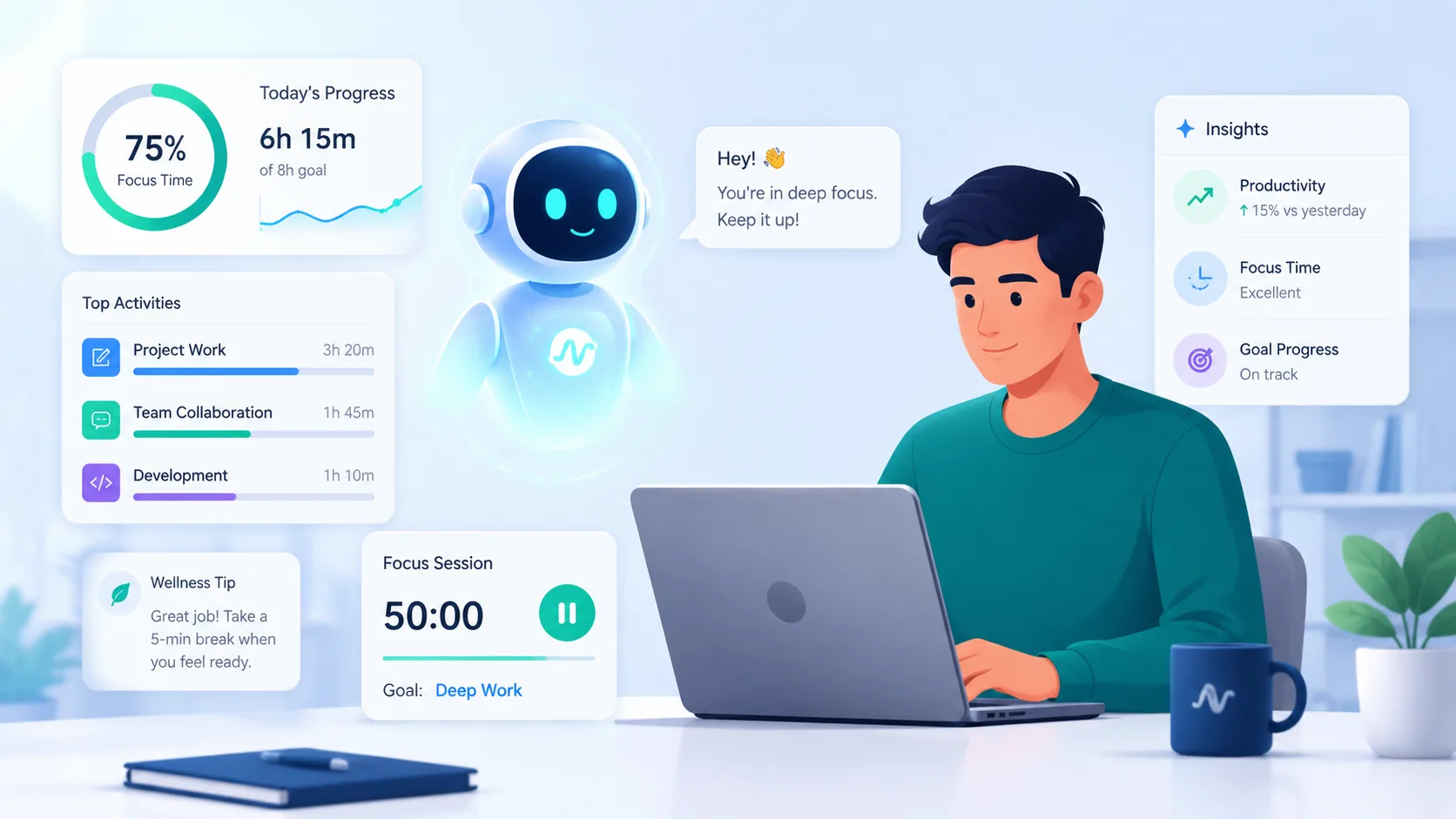
Employee monitoring software can be a useful tool for modern businesses. It can help companies understand work patterns, manage remote teams, track time, identify workflow issues, and improve productivity.
But there’s a catch: the software itself isn't what determines whether monitoring works. How you use it does.
When businesses introduce employee monitoring without a clear strategy, it can quickly turn into micromanagement. Employees may feel they are constantly being watched, managers may become overly focused on activity numbers, and the original goal of improving productivity can get lost.
The good news is that most of these problems are avoidable.
Here are some of the most common employee monitoring mistakes businesses should watch out for and what to do instead.
1. Monitoring Employees Without Explaining Why
Imagine opening your work computer one morning and discovering that your employer has started tracking your activity without telling you.
Your first thought probably wouldn't be, "This is going to improve productivity."
You'd likely have questions.
What are they tracking? Why are they tracking it? Who can see the information? Will it affect my performance review?
That's why transparency should come before implementation.
Employees should understand the purpose of employee monitoring software, what information is collected, and how that information will be used.
When people understand the reason behind a new tool, they are much more likely to accept it.
2. Tracking Everything Just Because You Can
Modern monitoring tools can collect a lot of information. But that doesn't mean your business needs all of it.
Tracking every click, website, application, or minute of inactivity can create a huge amount of data without necessarily providing useful insights.
Instead, ask a simple question:
What information do we actually need to solve our business problem?
If the goal is to understand project hours, time tracking may be enough. If the goal is to identify workflow bottlenecks, broader productivity insights may be useful.
Collect data with a purpose rather than collecting it simply because the technology allows you to.
3. Treating Activity as Productivity
This is one of the biggest mistakes businesses can make.
An employee who is constantly active on their computer isn't automatically more productive than someone who spends an hour thinking through a complex problem.
Similarly, a low activity score doesn't necessarily mean someone is avoiding work.
Employees may spend time in meetings, researching, reading documents, planning projects, speaking with customers, or solving problems away from their keyboard.
Employee monitoring software should provide context, not become the sole definition of productivity.
Quality of work, completed projects, deadlines, collaboration, and business outcomes should also matter.
4. Using Monitoring Data to Micromanage
Monitoring software can give managers more visibility. But too much visibility can sometimes create the temptation to interfere.
A manager who constantly checks dashboards and questions every period of inactivity can make employees feel pressured to appear busy rather than focus on meaningful work.
That's not productivity. That's performance anxiety.
Instead, use monitoring data to identify broader patterns.
For example, if a team consistently works late, the issue may not be employee performance. It could indicate unrealistic deadlines, poor workload distribution, or an inefficient process.
Use the data to ask better questions—not to constantly watch people.
5. Ignoring Employee Privacy
Employee monitoring involves employee data, so privacy shouldn't be an afterthought.
Businesses should clearly define what information is collected, who has access to it, how it is stored, and how long it is retained.
It's also important to consider whether monitoring is appropriate for every role.
Someone working in customer support, for example, may have very different work patterns from a software developer or salesperson.
A thoughtful monitoring strategy considers the nature of the job instead of applying the exact same rules to everyone.
6. Choosing Software Based Only on Features
When comparing employee monitoring software, it's easy to get impressed by a long list of features.
Screenshots. App tracking. Website monitoring. Time tracking. Reports. Alerts. AI analytics. Dashboards.
More features can sound better—but only if they solve a real problem.
Before choosing a platform, identify your actual requirements.
Do you need:
- Time tracking?
- Project tracking?
- Productivity insights?
- Remote team visibility?
- Automated reports?
- Employee self-insights?
- AI-powered recommendations?
- Integrations with your existing tools?
Choose software based on your needs, not simply on the number of features available.
7. Forgetting About the Employee Experience
Employee monitoring software is often purchased with managers in mind.
But employees are the people interacting with the system every day.
If the software is confusing, intrusive, or difficult to use, adoption can suffer.
Look for employee-friendly features such as simple time tracking, personal productivity insights, clear explanations of collected data, and easy access to relevant information.
Giving employees visibility into their own data can also change the conversation.
Instead of thinking, "My company is monitoring me," employees can see how the tool helps them understand their own work habits.
8. Using the Data as the Only Performance Measure
Monitoring data can be helpful, but it shouldn't become the entire performance review.
Imagine an employee has excellent activity numbers but regularly misses deadlines or produces poor-quality work.
Another employee may have lower activity levels but consistently delivers high-quality projects ahead of schedule.
Which employee is actually more productive?
That's why businesses should combine monitoring insights with meaningful performance indicators such as:
- Quality of work
- Project completion
- Customer satisfaction
- Deadlines
- Team collaboration
- Individual goals
- Business outcomes
Numbers are useful when they are placed in context.
9. Failing to Set Clear Policies
A monitoring system without clear policies can create confusion for everyone.
Employees should know what is monitored, when monitoring takes place, who can access the data, and what the information can and cannot be used for.
Businesses should also establish guidelines for managers.
For example, monitoring data shouldn't automatically trigger disciplinary action without understanding the circumstances behind the data.
Clear policies create consistency and help prevent misuse.
10. Not Training Managers
Installing the software is only half the job.
Managers also need to understand how to interpret the information responsibly.
If managers aren't trained, they may focus on the wrong metrics or use monitoring data in ways that damage employee trust.
Training should cover:
- How to interpret productivity data
- What the metrics actually mean
- How to identify patterns rather than isolated events
- When to have a conversation with an employee
- How to avoid micromanagement
- How to respect privacy
Good software can't compensate for poor management practices.
11. Ignoring the Bigger Productivity Picture
Employee monitoring software can show you what is happening, but it may not always explain why it's happening.
For example, an employee may have several hours of low activity.
The easy conclusion is that they're not working.
But perhaps they were attending client meetings, working on paper documents, dealing with an urgent customer issue, or waiting for another team to provide information.
Before making assumptions, look at the bigger picture.
Sometimes the problem isn't the employee. It may be the process, technology, workload, communication, or management structure.
12. Introducing Monitoring as a Surveillance Tool
The language businesses use matters.
If monitoring is presented as a way to "keep an eye on employees," people are naturally going to be uncomfortable.
A better approach is to position it around visibility, support, and productivity.
The objective should be to understand how teams work, identify inefficiencies, improve workloads, and help employees work more effectively.
The difference may sound small, but it can have a major impact on workplace culture.
How to Use Employee Monitoring Software Responsibly
Avoiding these mistakes comes down to a few basic principles.
Be Transparent
Tell employees what you're monitoring and why.
Focus on Outcomes
Use monitoring data alongside project results and quality of work.
Collect Relevant Data
Don't collect information simply because you can.
Protect Privacy
Limit access to employee data and establish clear retention and usage policies.
Give Employees Value
Whenever possible, let employees use their own data to understand and improve their work habits.
Use Data for Conversations
A productivity metric should encourage a discussion—not automatically lead to a judgment.
Final Thoughts
Employee monitoring software doesn't have to mean watching employees every second of the workday.
When used thoughtfully, it can help businesses understand workloads, improve time management, support remote teams, identify inefficient processes, and create better ways of working.
The biggest mistake is treating monitoring as a substitute for trust or good management.
The goal shouldn't be to monitor more. It should be to understand work better.
Businesses that combine useful data with transparency, privacy, employee involvement, and outcome-based performance management are far more likely to get real value from their employee monitoring software.
In the end, the best monitoring strategy is one that gives managers better visibility without taking away employees' sense of trust and autonomy.