In today’s competitive manufacturing landscape, efficiency, cost reduction, and data-driven decision-making are essential for success. Digital Twin technology is revolutionizing the industry by providing real-time virtual replicas of physical assets, enabling manufacturers to optimize processes, improve predictive maintenance, and enhance overall productivity.
What is Digital Twin Technology?
A Digital Twin is a virtual representation of a physical object, system, or process that is continuously updated with real-time data. By leveraging IoT sensors, AI, and advanced analytics, manufacturers can monitor, analyze, and optimize operations more effectively.
Key Benefits of Digital Twins in Manufacturing
1.Predictive Maintenance
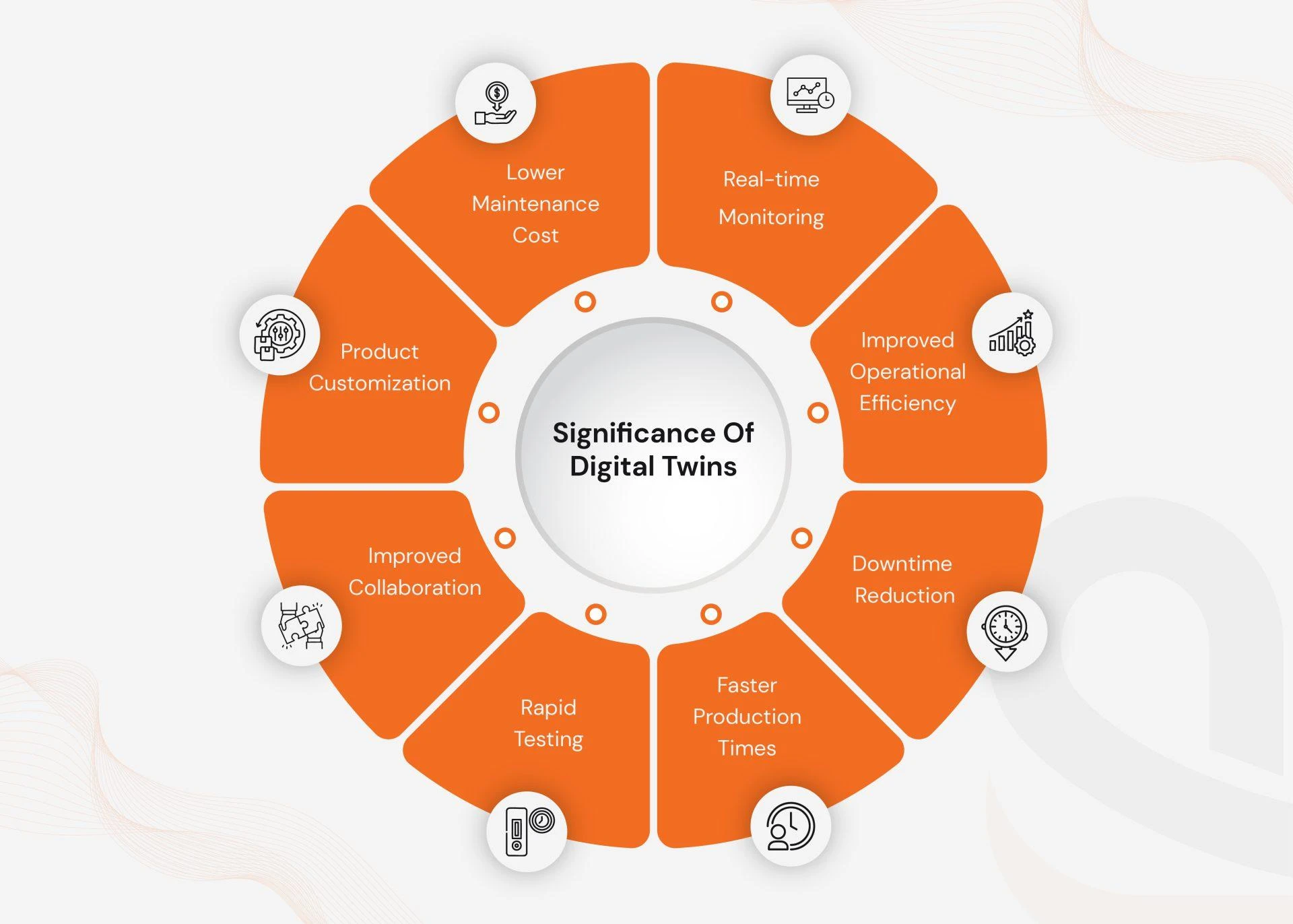
Digital Twins help predict equipment failures before they happen, reducing downtime and maintenance costs. By analyzing sensor data, manufacturers can schedule maintenance proactively, ensuring seamless operations.
2.Process Optimization
With real-time simulations, manufacturers can test process changes in the virtual model before implementing them in the real world. This helps in optimizing workflows, improving production efficiency, and reducing waste.
3.Enhanced Product Quality
Digital Twins allow manufacturers to identify defects and inefficiencies in production processes. Continuous monitoring ensures high-quality output with minimal rework, reducing overall production costs.
4.Improved Supply Chain Management
Manufacturers can use Digital Twins to track inventory, forecast demand, and optimize logistics. This helps in reducing delays, minimizing waste, and ensuring a smooth supply chain flow.
5.Energy Efficiency and Sustainability
By analyzing energy consumption and resource utilization, manufacturers can make data-driven decisions to reduce energy waste and improve sustainability efforts.
Real-World Applications of Digital Twin Technology
- Automotive Industry: Companies like Tesla and BMW use Digital Twins to simulate vehicle performance and optimize production.
- Aerospace: NASA utilizes Digital Twins to monitor spacecraft and predict potential failures before missions.
- Smart Factories: Leading manufacturers implement Digital Twins to streamline operations and improve efficiency.
Future of Digital Twins in Manufacturing
As AI, IoT, and 5G technologies continue to evolve, the adoption of Digital Twin technology will only increase. Manufacturers investing in Digital Twins will gain a competitive edge by improving productivity, reducing costs, and enhancing innovation.
Conclusion
Digital Twin technology is reshaping the manufacturing industry by enabling real-time monitoring, predictive maintenance, and data-driven decision-making. Companies that embrace this technology can significantly enhance efficiency, reduce downtime, and stay ahead in the industry.
📖 Learn more about Digital Twin technology in manufacturing:
https://www.aqedigital.com/blog/digital-twin-manufacturing-efficiency/