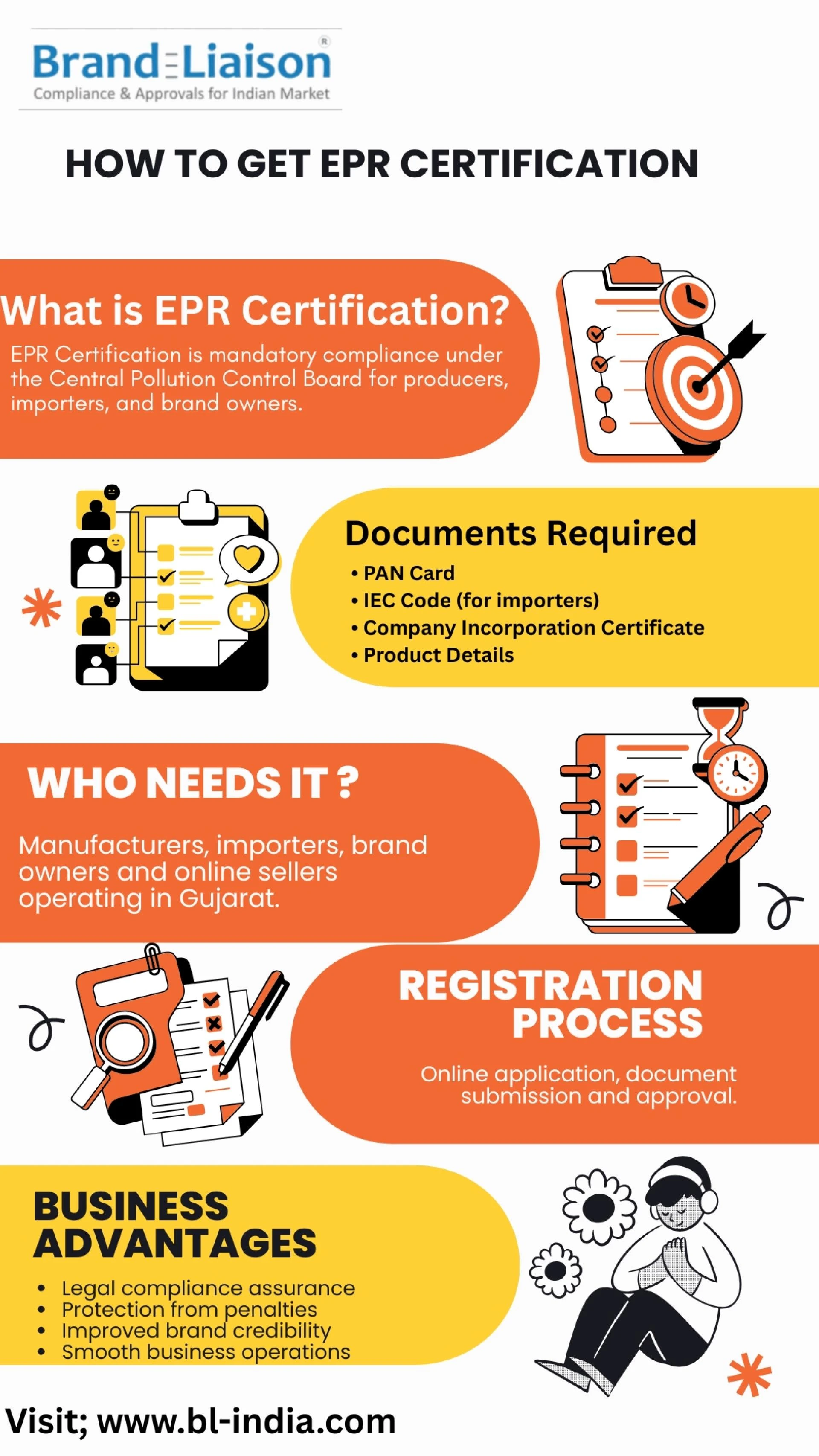
EPR (Extended Producer Responsibility) Certification is a mandatory approval for businesses that manufacture, import, or sell products that generate waste after use. This includes products like electronics, plastic packaging, batteries, tyres, and used oil. If your business deals with such products in Gujarat, you must register under EPR rules to operate legally.
EPR Certification in Gujarat makes businesses responsible for collecting, recycling, or safely disposing of their products after customers finish using them. This helps reduce pollution and supports proper waste management in India.
Who Needs an EPR Licence?
EPR registration is required for:
- Producers
- Importers
- Brand Owners (PIBOs)
- Recyclers
- Co-processors
- Retreaders
If your business generates post-consumer waste, you must obtain an EPR certificate.
Who Issues the EPR Certificate?
The EPR Certification in Gujarat is issued by the Central Pollution Control Board (CPCB), which works under the Ministry of Environment, Forest and Climate Change, Government of India.
Process for EPR Registration in Gujarat
The EPR registration process is simple when handled correctly. It involves the following steps:
1. Registration
Visit the official portal and fill in the required company and product details.
2. Document Preparation and Verification
Prepare necessary documents such as the GST certificate, PAN, company incorporation certificate, product details, and waste management plan. Proper verification is important to avoid rejection.
3. Document Submission
Submit the documents online and pay the applicable government fees.
4. Grant of Certification
After verification by CPCB, the EPR certificate is issued if everything is satisfactory.
Documents Required for EPR Registration
Though documents may vary based on waste type, common documents include:
- Company PAN and GST certificate
- Certificate of Incorporation
- IEC (for importers)
- Product details
- Waste management plan
- Agreement with authorized recyclers
- Brand authorization letter (if applicable)
Proper documentation ensures smooth approval.
Types of EPR Registration
1. EPR for E-Waste
If your business deals with electronic items like mobile phones, laptops, televisions, or home appliances, you must follow the E-Waste Management Rules, 2022. Companies must collect old electronics and ensure proper recycling.
2. EPR for Plastic Waste
Businesses dealing with plastic packaging must comply with Plastic Waste Management Rules, 2016 (amended 2022). Companies must collect and recycle the plastic they introduce into the market.
3. EPR for Battery Waste
Manufacturers and importers of batteries must register under the Battery Waste Management Rules, 2022. Used batteries must be safely collected and recycled.
4. EPR for Waste Tyres
Businesses manufacturing or importing tyres must ensure proper recycling and disposal under hazardous waste rules.
5. EPR for Used Oil
Companies dealing with lubricating oil must collect and recycle used oil safely to prevent environmental damage.
Brand Liaison’s Support for EPR Certification in Gujarat
Brand Liaison is a trusted EPR consultant in Gujarat offering complete support for EPR registration. From document preparation and filing to post-certification compliance, Brand Liaison ensures a smooth and hassle-free process.
With experience serving 500+ brands in India and globally, Brand Liaison helps businesses stay compliant and focus on growth while meeting environmental responsibilities. If you are looking to grow your career in legal compliance jobs, you can also explore exciting opportunities on the Brand Liaison career page.
FAQs
1. Is EPR certification mandatory in Gujarat?
Yes, if your business deals with products that generate waste like electronics, plastic, batteries, tyres, or used oil, EPR registration is compulsory.
2. How long does EPR registration take?
The timeline depends on document accuracy and CPCB verification, but it usually takes a few weeks.
3. Can small businesses apply for EPR?
Yes, small businesses, importers, and brand owners must apply if they fall under EPR rules. Compliance is mandatory regardless of business size.