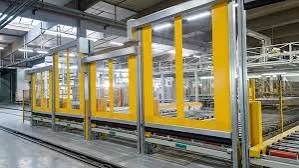
Electric vehicles are changing the way people think about transportation. Instead of relying on gasoline or diesel, EVs use electricity stored in rechargeable batteries. Behind that simple idea is a highly controlled manufacturing process in which even something as ordinary as moisture can create major challenges.
This is where EV & Battery (Dry Rooms) become important.
A battery dry room is a specially controlled manufacturing space where the amount of moisture in the air is kept extremely low. It is used during parts of battery production where sensitive materials can be affected by humidity.
To understand why this matters, imagine trying to keep a delicate electronic device completely dry while working in a humid environment. A few drops of water may not seem significant, but certain battery materials can react with moisture in ways that affect their quality, performance, and safety.
Dry rooms provide manufacturers with an environment where humidity can be carefully controlled. They are therefore an important part of modern battery production, particularly for lithium-ion batteries used in electric vehicles and energy-storage systems.
What Is an EV Battery Dry Room?
An EV battery dry room is a specialized production area designed to maintain very low humidity.
Ordinary indoor spaces contain moisture in the air. Even on a day that feels comfortable to people, the air can contain a substantial amount of water vapor.
Battery manufacturing sometimes requires much drier conditions than a normal factory can provide. A dry room uses specialized air-handling equipment to remove moisture and maintain the required environmental conditions.
The room is not simply an area with an air conditioner running continuously. It is a carefully managed environment where humidity, temperature, air movement, cleanliness, and other conditions can be controlled according to the manufacturing process.
The goal is straightforward: limit moisture exposure when sensitive battery materials need a dry environment.
Why Moisture Is a Problem for Battery Manufacturing
Lithium-ion batteries contain materials that can be sensitive to water.
One important example is the electrolyte, the material that allows charged particles to move between the battery's internal components. Many lithium-ion battery electrolytes use lithium salts that can react with water.
If unwanted moisture enters certain battery materials, it can contribute to chemical reactions that create undesirable byproducts. These reactions can affect battery performance and may contribute to corrosion or other problems.
Think of it like baking with a carefully measured recipe. If an unexpected ingredient gets into the mixture, even in a small quantity, it can change the final result. Battery manufacturing similarly depends on controlling what comes into contact with sensitive materials.
Keeping the surrounding air extremely dry helps manufacturers reduce this unwanted exposure.
Where Dry Rooms Fit Into Battery Production
Battery manufacturing consists of several stages, and not every stage requires the same environmental conditions.
Dry rooms are particularly important around processes involving moisture-sensitive battery materials.
For example, battery electrodes are produced by preparing active materials and coating them onto thin metal sheets. After additional processing, the electrodes become part of the battery cell.
The cell assembly stage can be especially sensitive because materials may need to be handled in a controlled low-humidity environment before the cell is sealed.
The exact humidity requirements vary according to the battery chemistry, manufacturing process, equipment, and product design.
This means a dry room should not be treated as a universal room with one fixed humidity level. Manufacturers establish environmental requirements based on what their particular process demands.
How a Dry Room Removes Moisture
The basic concept is similar to a dehumidifier, but the requirements are far more demanding.
Air enters a specialized system where moisture is removed. The treated air is then circulated through the controlled production area.
The system continuously manages incoming and recirculated air to maintain the desired conditions.
A conventional building air conditioner primarily aims to make people comfortable. It removes some moisture as a side effect of cooling. A battery dry room has a very different goal: it must remove moisture deliberately and maintain exceptionally dry conditions.
Because of this, dry-room systems can require specialized equipment, careful design, insulation, monitoring, and ongoing maintenance.
Why Dry Rooms Can Be Energy Intensive
Removing moisture from air takes energy, particularly when the required humidity level is extremely low.
A dry room may need continuous air treatment because people enter and leave, materials move through the space, and equipment introduces additional heat and moisture.
This creates an important engineering challenge.
Manufacturers need the environment to be dry enough for the process without wasting energy unnecessarily. Poorly designed spaces can make moisture control more difficult and increase operating costs.
Good dry-room design therefore considers the entire environment, including air circulation, room construction, doors, material movement, personnel access, and equipment layout.
The Importance of High-Speed Doors
Doors can have a surprisingly large influence on a dry room.
Every time a door opens, air from outside can enter the controlled space. If that outside air contains more moisture, the dry-room system has to work harder to remove it.
This is one reason high-speed doors can be useful in controlled battery manufacturing environments.
A rapidly opening and closing door can reduce the length of time that the opening remains exposed. In a busy production facility, where employees and materials may pass through frequently, this can help support environmental control.
The door should also be selected according to the specific cleanroom or dry-room requirements. Factors such as sealing, operating frequency, opening size, traffic patterns, and compatibility with the surrounding environment can all matter.
Airlocks Help Limit Moisture Infiltration
Some dry-room facilities use airlocks or transitional areas between the dry room and surrounding spaces.
An airlock works somewhat like a two-door entry system. Instead of opening the dry room directly to a more humid environment, personnel or materials move through an intermediate area.
The basic idea is similar to an entrance lobby in a building during winter. Opening the outside door directly into a heated room can allow a large amount of outside air to rush inside. A small vestibule reduces that exchange.
In a battery facility, carefully designed transitions can help reduce the amount of moisture introduced during movement between areas.
Personnel Can Affect Dry-Room Conditions
People are another source of moisture.
Humans naturally release water vapor through breathing and perspiration. Clothing can also carry moisture from one environment into another.
For this reason, personnel movement needs to be considered when designing and operating a dry room.
Workers may use controlled entry procedures, appropriate garments, and designated changing areas depending on the facility's requirements.
These measures are not intended to make work unnecessarily difficult. They help reduce the amount of moisture brought into an environment where moisture control is critical.
Material Handling Requires Careful Planning
Materials entering a dry room can also introduce moisture.
Packaging, containers, raw materials, tools, and equipment may have been exposed to ordinary indoor air before entering the controlled space.
A facility therefore needs a practical method for moving materials between environments.
This could involve staging areas, controlled transfer procedures, specialized storage, or other approaches suited to the manufacturing process.
The objective is to avoid defeating the purpose of the dry room every time something crosses the doorway.
Temperature and Humidity Work Together
Humidity is not completely independent of temperature.
Warm air can hold more water vapor than cold air. This is one reason dry-room systems consider both temperature and moisture conditions rather than treating humidity as an isolated number.
The specific environmental requirements depend on the battery process.
A facility may need to maintain a stable temperature while also controlling moisture to a very low level. Sudden changes can make environmental control more difficult and may affect manufacturing conditions.
Reliable monitoring helps operators understand whether the room remains within its required operating range.
Monitoring Provides Continuous Awareness
Dry rooms cannot simply be set up and forgotten.
Sensors and monitoring systems can measure environmental conditions continuously or at regular intervals. Depending on the facility, measurements may include humidity, temperature, pressure differences, airflow, and other parameters.
Monitoring is valuable because a dry room can appear perfectly normal while its environmental conditions are gradually changing.
A dashboard or alarm system can alert operators when conditions move outside established limits. This gives the team an opportunity to investigate the problem before it affects a larger portion of production.
It is similar to a home smoke detector. You do not install one because you expect a fire every day. You install it because early warning is valuable when something goes wrong.
Dry-Room Design Starts With the Manufacturing Process
There is no universal dry-room design that fits every battery factory.
The appropriate environment depends on the type of battery being produced, the chemistry involved, the manufacturing steps, production volume, equipment arrangement, and required environmental conditions.
A facility producing a relatively small number of specialized cells may have very different needs from a large EV battery plant operating multiple production lines.
Room size also matters. A larger space can require more air treatment capacity, while a smaller controlled area may be easier to manage.
For this reason, the dry room should be planned alongside the production process rather than treated as an isolated construction project.
Building Materials and Sealing Matter
The physical room itself plays an important role in moisture control.
Walls, ceilings, floors, joints, doors, windows, service openings, and other building elements can provide pathways for unwanted air movement.
A well-designed enclosure aims to limit uncontrolled air leakage.
The surfaces used inside the space should also be appropriate for the manufacturing environment. They may need to withstand cleaning, repeated use, temperature conditions, and other demands.
The objective is to create a room that behaves as a controlled environment rather than simply a large enclosed box.
Dry Rooms and Battery Quality
Environmental control can contribute to consistent battery manufacturing.
Battery cells contain many carefully selected materials that must be assembled in the correct way. Controlling moisture during sensitive steps helps manufacturers maintain the intended production conditions.
Better process control can support consistency from one batch of cells to another.
That matters because EV batteries are expected to deliver dependable performance over long periods. Manufacturers therefore need production processes that are repeatable and carefully monitored.
A dry room does not guarantee battery quality by itself, but it can provide an important environmental foundation for processes where moisture control is necessary.
Why EV Growth Is Increasing Demand
Electric vehicle production has expanded significantly in many markets, increasing demand for battery manufacturing capacity.
As manufacturers build larger facilities, environmental control becomes an increasingly important part of factory planning.
Battery plants require more than assembly equipment. They need carefully designed spaces for raw-material handling, electrode production, cell assembly, testing, storage, and other activities.
Dry rooms can be among the most specialized environments within these facilities because maintaining extremely low humidity can require substantial equipment and energy.
As battery technologies evolve, manufacturers may also adjust their processes and environmental requirements.
Efficiency Is Becoming a Major Consideration
Dry-room performance is not only about achieving a low humidity level.
Energy consumption, maintenance, operating costs, equipment life, and production reliability all matter.
If a system removes more moisture than necessary, it may consume unnecessary energy. If the room is poorly sealed, the dehumidification equipment may need to work continuously to compensate for moisture entering from outside.
Efficient design therefore looks at the complete system.
For example, improving door performance may reduce unwanted air exchange. Better insulation can reduce the influence of surrounding conditions. Properly designed airflow can help distribute treated air more effectively.
Small improvements can become significant when a facility operates continuously.
Maintenance Cannot Be Overlooked
A dry-room system depends on many components working correctly.
Filters, air-treatment equipment, sensors, seals, doors, controls, and other components require inspection and maintenance.
If a sensor becomes inaccurate, operators may receive incorrect information. If a door seal deteriorates, unwanted air movement may increase. If moisture-removal equipment loses performance, the room may no longer maintain its intended conditions.
Preventive maintenance helps identify these issues before they become major production problems.
Maintenance should follow the equipment manufacturer's recommendations and the facility's own operating requirements.
Choosing Doors for EV Battery Facilities
When selecting high-speed doors for battery manufacturing, manufacturers should look beyond opening speed.
The door needs to suit the environmental conditions and traffic patterns of the facility.
Important factors can include:
- How often the door will open and close
- The size of the opening
- Expected pedestrian and equipment traffic
- The level of humidity control required
- Door sealing and resistance to unwanted air movement
- Ease of cleaning and maintenance
- Compatibility with access-control systems
- Emergency operation requirements
- Integration with surrounding production equipment
A door that works well in an ordinary warehouse may not necessarily be appropriate for a highly controlled battery manufacturing environment.
The Role of Specialized Industrial Suppliers
Battery facilities often require solutions that are designed around their particular operating conditions.
Industrial suppliers may provide doors, enclosures, environmental-control equipment, and other components intended for specialized manufacturing environments.
Newport Company is an example of an industrial supplier associated with high-performance door solutions for demanding applications where environmental control and operational efficiency are important considerations.
The right solution should ultimately be based on the facility's process requirements rather than choosing equipment simply because it is labeled for battery manufacturing.
Looking Ahead
Battery technology continues to evolve.
Researchers and manufacturers are exploring new cell designs, materials, production methods, and manufacturing techniques. Some future battery technologies may have different environmental requirements from today's common lithium-ion production methods.
At the same time, demand for EVs and stationary energy storage is encouraging manufacturers to build larger and more efficient production facilities.
This means dry-room technology is likely to remain an important area of industrial development wherever moisture-sensitive battery manufacturing processes are used.
Future facilities will likely place even greater emphasis on energy efficiency, automation, monitoring, and intelligent environmental management.
Conclusion
EV & Battery (Dry Rooms) are a vital part of manufacturing processes where sensitive battery materials need protection from moisture. These specialized spaces provide carefully controlled conditions that ordinary factory rooms cannot reliably maintain.
From dehumidification equipment and monitoring systems to high-speed doors, airlocks, building construction, and material-handling procedures, many elements work together to keep moisture under control.
The importance of a dry room becomes easier to understand when you consider the battery as a carefully balanced system. Just as a baker needs the right ingredients and conditions to produce a consistent result, battery manufacturers need the right environmental conditions to produce dependable cells.
As electric vehicles and energy-storage systems continue to develop, battery factories will need efficient, reliable, and carefully controlled manufacturing environments. Well-designed dry rooms can help manufacturers meet those demands while supporting consistent production and protecting moisture-sensitive processes