
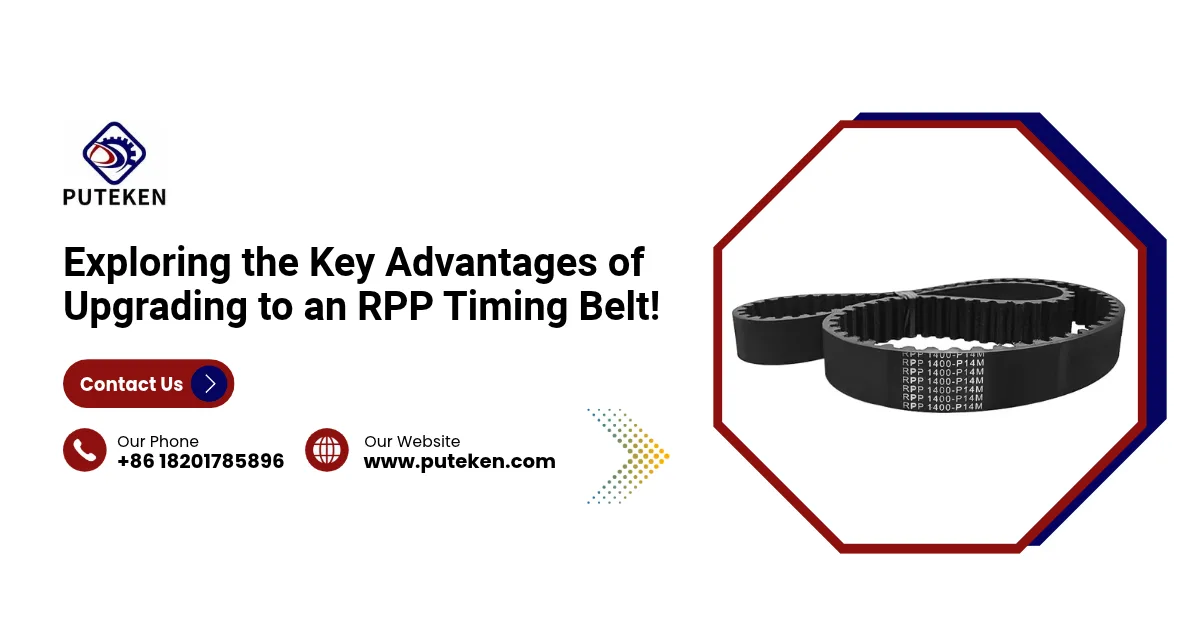
In today’s rapidly evolving industrial world, machinery performance and reliability sit at the heart of every successful operation. As manufacturing facilities, processing plants, and automated lines become more complex, the need for advanced, low-maintenance, and high-accuracy power transmission solutions has never been higher. Among the top options available to businesses seeking to optimize mechanical power transmission is the RPP timing belt—a technology that continues to revolutionize synchronous drive systems across countless industries.
At Shanghai Puteken Transmission System Co., Ltd., we strive to equip our customers with the highest level of expertise and reliable products to drive productivity and reduce overall operating costs. Over the years, we’ve witnessed many organizations transition from traditional power transmission methods to innovative solutions that deliver superior performance and enhanced efficiency. Of these, the upgrade to an RPP timing belt stands as a choice with remarkable benefits.
But what exactly is an RPP timing belt, and why are so many businesses making the switch? From its exceptional tooth profile to its ability to maintain precise synchronization under heavy loads, the RPP (Reinforced Parabolic Profile) timing belt offers a series of competitive advantages that go beyond simple belt replacement. In fact, the right timing belt can significantly prolong equipment life, lower downtime, and support smoother, more energy-efficient operations.
What Is an RPP Timing Belt?
To properly appreciate the advantages of an RPP timing belt, it's critical to understand what makes this design unique. “RPP” stands for Reinforced Parabolic Profile. Unlike conventional trapezoidal timing belts, the RPP timing belt features a true parabolic (rounded) tooth profile. This profile is specifically engineered to optimize the distribution of stress in the tooth as it engages with the pulley, providing improved power transmission performance and reducing the risk of premature tooth wear.
Also Read: What is an RPP Timing Belt? Everything You Need to Know!
The Core Structure of an RPP Timing Belt
An RPP timing belt generally consists of:
- High-Strength Polymer Body: Usually made of abrasion-resistant rubber or polyurethane, forming the belt’s outer carcass.
- Embedded Reinforcement Cords: Often made of steel, fiberglass, or aramid (Kevlar®), these cords deliver strength, flexibility, and resistance to elongation.
- Parabolic Tooth Profile: A curved, low-friction profile that ensures better engagement, reduced stress concentration, and quieter operation.
Shanghai Puteken Transmission System Co., Ltd. engineers and supplies RPP timing belts rated for demanding applications—with customizable sizes, cord materials, and rubber compounds to meet industry-specific requirements.
Key Advantages of Upgrading to an RPP Timing Belt
Switching to an RPP timing belt can deliver a host of advantages—both immediate and long-term. Let’s explore these in depth:
1. Superior Power Transmission and Load Distribution
The parabolic tooth shape of the RPP timing belt is designed to provide a larger contact area between the belt and the pulley teeth. As a result, forces are distributed more evenly across the tooth, reducing local stress concentrations.
Key Benefits:
- Higher load-carrying capacity—especially critical for high-torque, high-speed drives.
- Reduced tooth deformation—providing longer belt life and lowering overall maintenance.
- Consistent synchronous motion—supporting accurate timing, crucial for robotics, CNC machinery, printing, and packaging.
2. Exceptional Wear Resistance and Durability
Because of the advanced materials and optimal geometry, RPP timing belts are significantly less prone to wear. The reduced friction and lower heat buildup at the tooth interface help prolong the life of both the belt and pulleys.
Key Benefits:
- Longer service intervals and fewer replacements.
- Lower risk of tooth jump (ratcheting)—even with sudden machine overloads.
- Minimal elongation over time, ensuring highly reliable timing.
3. Higher Efficiency and Energy Savings
Unlike chain drives, the toothed configuration of the RPP timing belt ensures non-slip transmission, eliminating power losses associated with belt slip and chain slack.
Key Benefits:
- Greater energy transfer efficiency—typically over 98%.
- Reduction in system noise and vibration thanks to the parabolic profile.
- Lower operating temperatures—translating to less energy lost as heat.
4. Compact, Lightweight, and Clean Operation
RPP timing belts are often lighter and more flexible than chains or older-style belts. This means drive systems can be designed in a more compact, lightweight form factor.
Key Benefits:
- No lubrication required—RPP timing belts run dry and do not contaminate products or work environments.
- Cleaner and more hygienic, ideal for food processing, packaging, and electronics manufacturing.
- Reducing wear particles compared to chains or V-belts, benefiting cleanroom and pharmaceutical setups.
5. Quiet, Smooth Operation
A hallmark advantage of the RPP tooth design is its whisper-quiet performance. The rounded tooth geometry enables smooth transition in and out of engagement, while minimizing vibration and harmonics.
Key Benefits:
- Reduced workplace noise—improving operator comfort.
- Minimized vibration—protects sensitive equipment and extends bearing/pulley life.
6. Greater Customizability and Availability
At Shanghai Puteken Transmission System Co., Ltd., RPP timing belts can be manufactured in a broad selection of sizes, pitches, and backings. This allows easy matching, retrofitting to existing systems, and custom solutions for applications with tight design constraints.
How RPP Timing Belts Improve Industrial Applications
Automation & Robotics
Precise movement is essential in automation. The zero-slip, robust engagement of the RPP timing belt assures exact positioning with little backlash—vital for pick-and-place robotics, CNC axes, and multi-axis actuators.
Food & Beverage Manufacturing
The RPP belt’s non-lubricated, abrasion-resistant qualities make it perfect for hygienic, contamination-free operations. Plus, the quietness and reduced dust generation help maintain a safe, clean workspace.
Packaging and Printing
Here, consistent timing ensures clean cuts, accurate folding, and image registration. RPP timing belts maintain their profile even after thousands of cycles.
Energy, HVAC, and Conveyors
RPP timing belts transmit power reliably over longer spans without sag or slip, providing cost-effective solutions to fans, blowers, and conveyor lines—often leading to reduced downtime and energy usage.
Considerations When Upgrading to an RPP Timing Belt
Shanghai Puteken Transmission System Co., Ltd. helps businesses assess and complete their RPP timing belt upgrade by considering:
- Pulley Compatibility: Though RPP belts often fit existing HTD pulleys, optimal performance comes with matched RPP pulleys.
- Environment: Application environment (chemical exposure, temperature, humidity) affects belt material choice.
- Tensioning and Alignment: Correct installation is essential for long life and top efficiency.
- Load Calculations: Ensuring the RPP belt specification matches the drive load prevents slippage and premature failure.
- Professional Support: From calculations to prototyping, expert guidance speeds up successful implementation.
Installation and Maintenance Best Practices
Installation Steps
- Inspect Pulleys: Clean and check for burrs or damage.
- Fit Belt: Place the RPP timing belt over pulleys, avoiding force or kinks.
- Adjust Tension: Use manufacturer-recommended tension figures for optimal grip and life.
- Align System: Ensure pulleys are perfectly parallel and in plane; misalignment is a major cause of premature wear.
- Perform Trial Run: Observe operation, check for unusual noise or vibration, and make final adjustments as needed.
Maintenance Tips
- Visual inspections: Check for wear, cracks, or debris buildup.
- Tension checks: Periodic tension adjustment (if necessary) keeps timing accurate.
- Pulley checks: Well-maintained pulleys reduce belt stress.
- Cleanliness: Keep the system dust- and oil-free to maximize belt life.
Why Partner with Shanghai Puteken Transmission System Co., Ltd.?
We are recognized for our technical expertise, innovative product line, and uncompromising quality standards. Our team provides:
- Comprehensive product selection: A vast range of RPP timing belts, including custom options.
- Technical support: From selection advice to troubleshooting and retrofitting assistance.
- Fast delivery and logistics: Keep your project schedules on track.
- Ongoing customer support: Your success remains our mission long after the sale.
Power Up Your Operations With RPP Timing Belts
Upgrading to an RPP timing belt is far more than a simple component swap—it’s an investment in reliability, efficiency, and operational excellence. From its robust parabolic profile to its industry-leading durability and precision, the RPP timing belt helps unlock new levels of performance across automation, manufacturing, packaging, and beyond.
Frequently Asked Questions (FAQ)
1. What does RPP stand for in RPP timing belt?
RPP stands for Reinforced Parabolic Profile, indicating a specialized tooth shape designed for optimal load distribution and durability.
2. Can I replace my old timing belt with an RPP timing belt?
In many cases, RPP timing belts can retrofit into existing HTD systems but achieve best results with matched RPP pulleys.
3. What materials are available for RPP timing belts?
Our RPP belts are supplied in high-quality rubber or polyurethane, reinforced with steel, fiberglass, or aramid cords.
4. How do RPP timing belts reduce maintenance requirements?
The advanced tooth profile distributes forces evenly, minimizing wear and elongation and extending belt and pulley service life.
5. Are RPP timing belts suitable for food-grade or cleanroom applications?
Yes, food-grade and dust-free options are available, making RPP belts perfect for sensitive production environments.
6. How do I know what size RPP timing belt I need?
Contact our technical team at Shanghai Puteken Transmission System Co., Ltd. with your system’s specifications—we’ll provide expert advice and sizing.
7. Can RPP timing belts operate at high speeds?
Absolutely. RPP belts are engineered for high-speed, high-torque applications without risk of slip or tooth jump.
8. Is it necessary to lubricate an RPP timing belt?
No, RPP timing belts are designed for dry running, and lubrication is neither necessary nor recommended.
9. What is the typical lifespan of an RPP timing belt?
With correct installation and maintenance, RPP timing belts can last significantly longer than traditional belts—often several years depending on load and operating conditions.
10. How can I purchase RPP timing belts from Shanghai Puteken Transmission System Co., Ltd.?
Reach out via our website, email, or phone. Our team will provide quotes, product information, and after-sales service tailored to your needs.