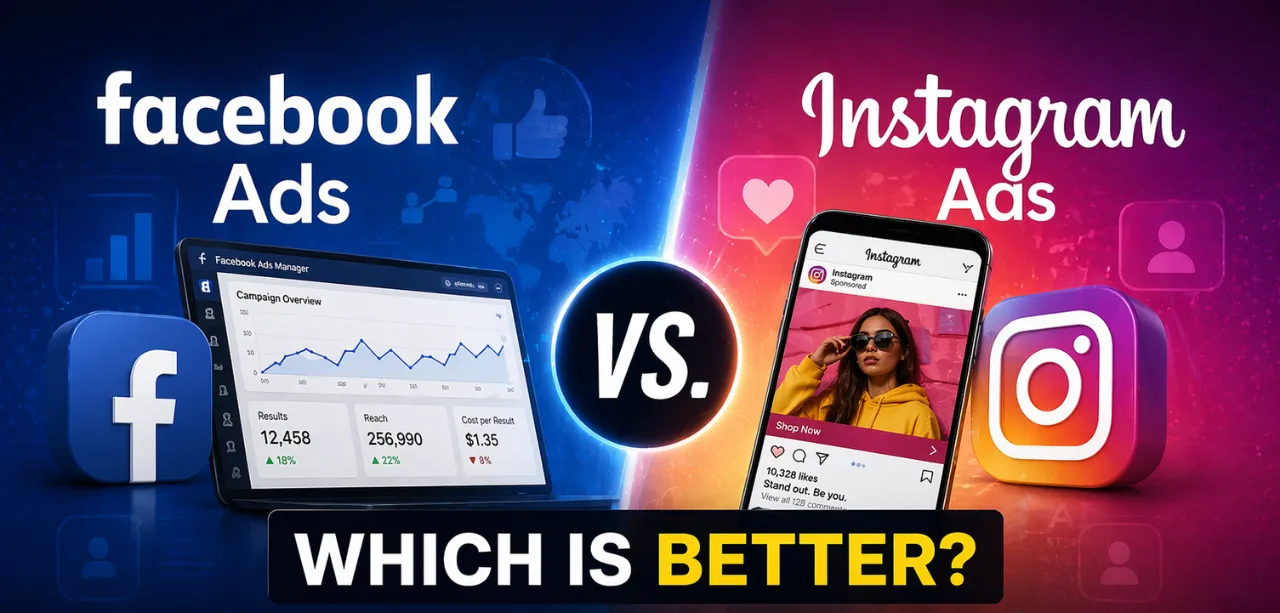
If you’re planning to invest in social media advertising, you’ve likely faced this question: should you run ads on Facebook or Instagram?
Both platforms are owned by Meta Platforms and share the same advertising system, but they don’t deliver results in the same way. Each platform attracts a different audience, favors different content styles, and supports different marketing goals.
Before diving deeper, it’s worth noting that tools like Dilogs AI are helping marketers simplify ad creation—making it faster to produce engaging visuals and persuasive copy without starting from scratch.
Let’s break everything down so you can choose the platform that actually moves the needle.
What Are Facebook Ads?
Facebook Ads are paid campaigns that appear in multiple placements such as the news feed, stories, video feeds, and even external apps.
They are widely used because they offer:
- Highly specific audience targeting
- Flexible campaign objectives
- Strong performance for conversions
With its massive user base, Facebook is especially effective for reaching a broad range of people across different age groups.
What Are Instagram Ads?
Instagram Ads are seamlessly integrated into the app experience. You’ll find them in feeds, stories, reels, and the explore tab.
They stand out because:
- Content is visually driven
- Users interact more frequently
- The audience skews younger
Instagram is ideal for brands that can communicate through visuals rather than long-form text.
Major Differences Between Facebook Ads and Instagram Ads
1. Audience Type
- Facebook attracts users across all age groups, including older demographics
- Instagram is more popular among younger users, especially Gen Z and Millennials
If your target audience is more mature or professional, Facebook tends to perform better. For trend-focused or younger audiences, Instagram is usually the stronger option.
2. Content Style
- Facebook Ads allow a mix of visuals and detailed text
- Instagram Ads rely heavily on images and short videos
On Instagram, strong design and creativity are essential. On Facebook, messaging and clarity often matter more.
3. Engagement vs. Action
- Instagram typically generates higher engagement (likes, shares, comments)
- Facebook is more effective at driving actions like clicks, sign-ups, and purchases
In simple terms:
- Instagram grabs attention
- Facebook converts that attention into results
4. Advertising Formats
Both platforms support:
- Image ads
- Video ads
- Carousel ads
- Story placements
However, short-form video—especially reels—has become a major driver of performance on Instagram, while Facebook remains a strong choice for link-based campaigns.
5. Cost and Performance
- Facebook Ads often have a lower cost per click
- Instagram Ads may cost more but can deliver better engagement
If your focus is efficiency and conversions, Facebook is often more budget-friendly. If you’re building a brand presence, Instagram can offer better visibility.
When Should You Use Facebook Ads?
Facebook is a better fit if your goal is to:
- Generate leads or inquiries
- Drive traffic to a website
- Target specific audiences using detailed filters
- Promote services or B2B offers
When Should You Use Instagram Ads?
Instagram works best when you:
- Have visually appealing products or content
- Want to connect with younger audiences
- Run an eCommerce or lifestyle brand
- Focus on engagement and brand awareness
The Smarter Strategy: Combine Both
Treating this as a competition can limit your results.
Instead, use both platforms together:
- Start with Instagram to attract attention and build interest
- Follow up with Facebook to retarget users and drive conversions
This approach covers the full customer journey—from discovery to decision.
How Dilogs AI Improves Your Ad Performance
Managing ads across platforms can be time-consuming. Dilogs AI helps streamline the process by:
- Creating ad creatives quickly
- Generating compelling copy
- Testing multiple variations efficiently
- Saving time while improving campaign output
It allows you to focus more on strategy instead of manual work.
Final Verdict
There’s no single winner between Facebook Ads and Instagram Ads—they serve different purposes.
- Choose Facebook for conversions, targeting, and lead generation
- Choose Instagram for engagement, visuals, and brand building
The real advantage comes from knowing how to use each platform effectively.
Conclusion
Your choice between Facebook and Instagram Ads should depend on your audience, your content, and your business goals. Both platforms are powerful when used correctly.
And if you want to stay competitive, combining smart strategy with tools like Dilogs AI can help you create better campaigns faster and more efficiently.