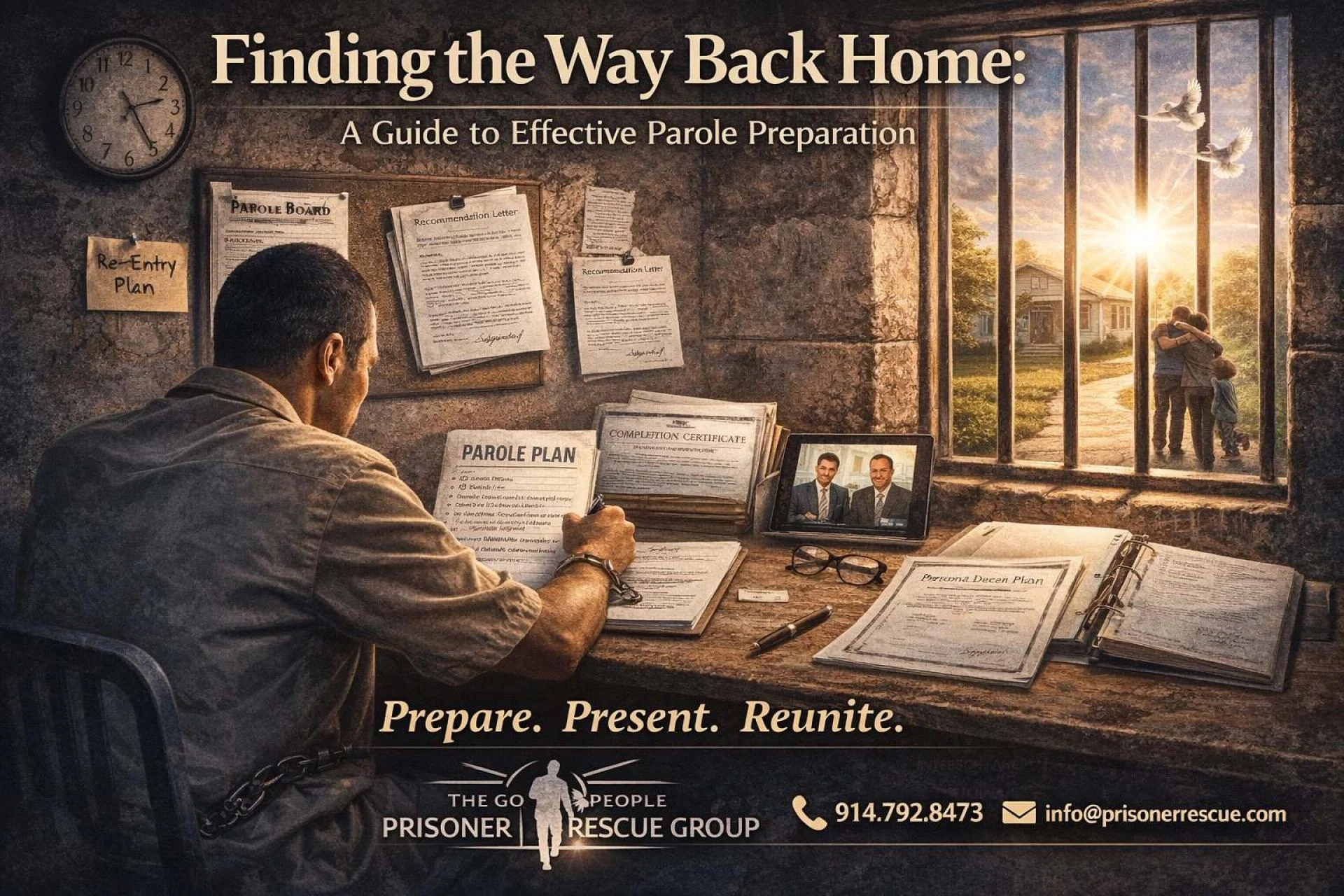
You can see yourself in a small room, where all those years of your life have managed to lead to one conversation. To a significant number of the prisoners who are in custody, the parole board hearing serves as the most important occasion of their sentence. It is the connection point between a cell and a living room, a number and a name. With no map, though, it is easy to get lost in walking onto that bridge. That is why parole preparation cannot be taken as a mere logistical procedure; it is the crucial tool of demonstrating that you are prepared to earn your way back to the community.
Why Preparation is the Key to Re-Entry
The re-entry process takes place way before the gates open, and it is a process that is started long before the inmate returns to the community. It is not that most people are completely wrong when they assume that parole is granted based on good behavior or time served. As a matter of fact, the parole board seeks a lot more. They are seeking signs of self-development, responsibility, and a definite outlook on the future.
Lack of proper preparation may leave one in a position where he or she cannot explain how they have reformed or how they intend not to fall into the traps which kept them in prison. Preparation gives the courage to be frank about the past and show a pro-social vision of the future. It makes an interrogation of a stressful experience into an organized report of a changed life.
Key Steps in Effective Parole Preparation
The process of preparing to go on parole is a complex task that requires both internal and external preparation. The following are the most important steps:
· Participation in Facility Programs: One must make his/her way through the diverse programs and opportunities of the prison system. This involves educational programs, vocational training and therapeutic programs which deal with the causes of previous behavior.
· Developing a Re-Entry Plan: The successful applicant should demonstrate where he or she will live and how he or she will sustain themselves. This may include providing movement or acceptance into sentence reduction and halfway houses.
· Advocacy and Documentation: A good track record of successes and recommendation letters can go a long way. Advocacy entails taking the offender and his family through the maze of the incarceration process so that all avenues of release are tapped.
· Professional Advice: As one would never enter the court without a lawyer, it is worthwhile for many not to enter into the world of prison and parole without a specific coach.
Trusted Parole Consultant in New York for Professional Guidance
A parole consultant in New York plays an important role in helping inmates and their families prepare for the parole process with confidence and clarity. At Prisoner Rescue Group, experienced consultants provide structured guidance to help individuals understand parole procedures, prepare for parole board reviews, and organize the necessary documentation for hearings. Working alongside legal counsel, a parole consultant in New York offers professional support focused on preparation, strategy, and informed decision-making. Through careful planning and personalized assistance, Prisoner Rescue helps clients approach the parole process with greater readiness and a clearer path toward successful release and reintegration.
How PRISONER RESCUE GROUP Supports Your Journey
The journey to freedom can be a solitary and disorienting journey, but you need not do it alone. The PRISONER RESCUE GROUP is known as "The Go Home People". This group focuses on offering the support and resources that will enable the prison experience to be as short and manageable as legally possible.
They provide guidance to individuals on how to manage the myriad choices and programs within the individual prison systems since they are professional coaches and consultants of prisoners-inmates. Their services cut across the board as they attend to all categories of people, including the white-collar offenders, the drug offenders, and the violent offenders.
They assist clients by:
Customizing Guidance: They understand that each person is unique and faces different circumstances and challenges, and therefore offer coaching and advocacy that is more specific to the needs of that person.
Programs Lobbying: They assist in making programs available to clients and assist them in requesting a move to the lower security level facilities or halfway houses.
For instance, Providing Constant Support: They have office in Connecticut, and with 24-hour electronic communication monitoring, provide a constant connection with those they serve anywhere in the United States.
According to Bishop Dr. James B. Jones III, a Chaplain who has done 34 years of service in the New York State Department of Correctional Services, they referred to their work as a unique professional use of their skills, knowledge and experience to most successfully bring the inmate home.
A Future Built on Preparation
The path to parole is not very easy to follow. It is a journey that is full of self-reflection, hard work, and strategic planning. But a second chance is found under the correct parole preparation.
Be it a person who is already serving a sentence or a family member seeking a means by which they can coax a loved one out of prison, do not forget that you can find a way to get them back home. With the emphasis on growth and the professional advocacy application, the dream of re-entry may be realized. If you are ready to find out more, you can reach out for a free evaluation at 914-792-8473 or via email at [email protected] to begin your specific journey home.