
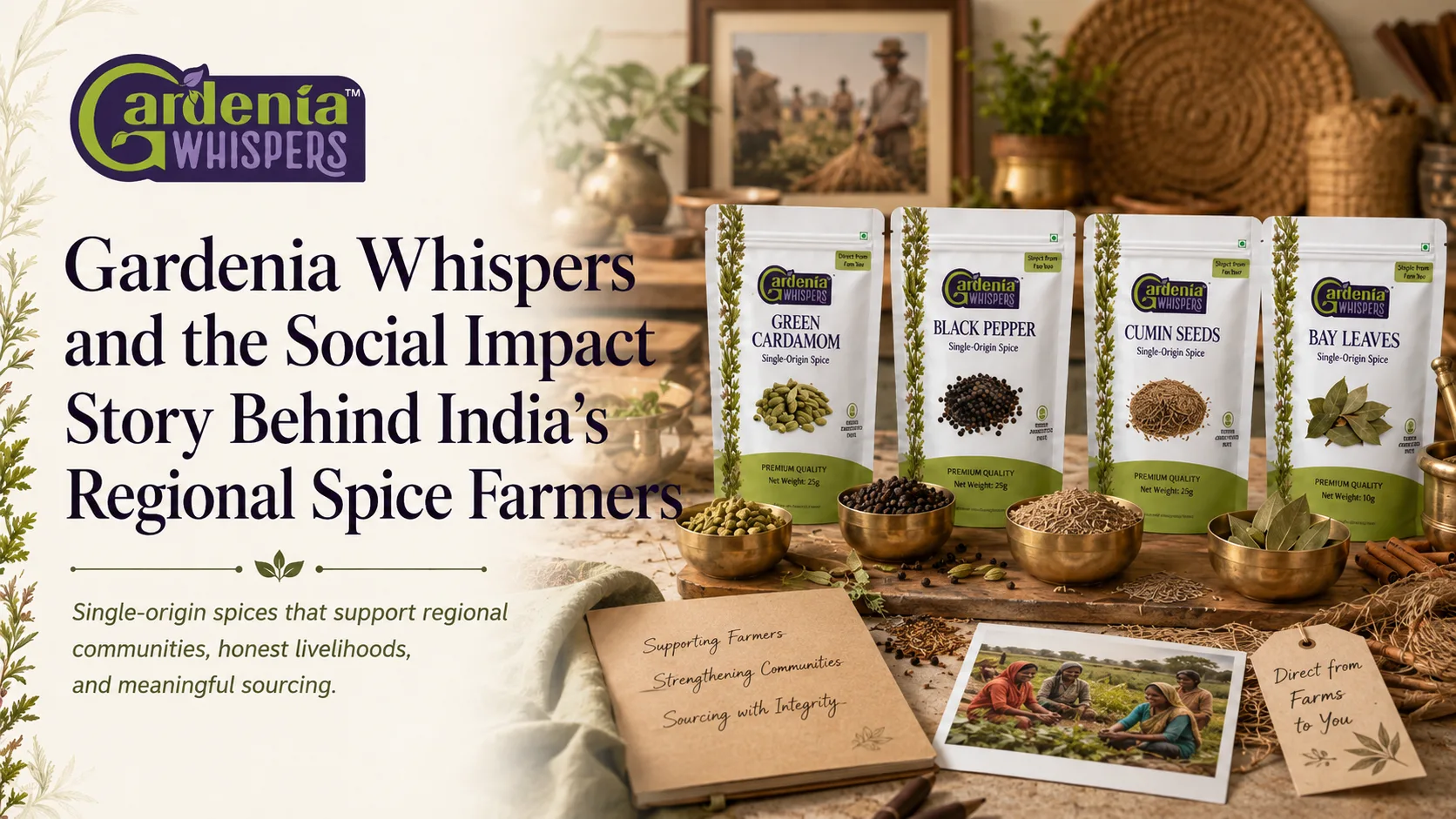
Social impact sourcing has become a fairly common phrase in food marketing, and unfortunately, a fairly common one to see used loosely a vague mention of "supporting farmers" printed on packaging with no real detail behind it. It's worth being a bit skeptical of the phrase by default, which makes it more useful to look at what it actually means when a brand can point to something specific rather than a generic claim.
Gardenia Whispers is a reasonable example to examine here, since its sourcing model is built directly around named farming communities rather than an abstract supply chain.
What "Direct From Farmers" Actually Requires
Sourcing genuinely direct from farmers, rather than through several layers of middlemen and wholesalers, requires a brand to actively build and maintain relationships in specific regions, rather than simply buying whatever's cheapest through a distributor. Gardenia Whispers works this way across several regions cardamom growers in Idukki, Kerala, cumin farmers in Jodhpur, Rajasthan, coriander growers in Ramganj Mandi, and the tribal farming communities of the Jaintia Hills in Meghalaya who cultivate their Lakadong Turmeric Powder.
Why Lakadong Turmeric Is a Particularly Clear Example
The Lakadong turmeric story is a useful case study precisely because it's independently documented, not just brand marketing. Approximately 14,000 farmers across dozens of villages in Meghalaya's Jaintia Hills cultivate this specific turmeric variety, largely using traditional, low-intervention methods rather than heavy synthetic fertiliser use. The variety received formal GI recognition in 2024, which exists specifically to protect these farming communities' claim to the name and, by extension, the premium the variety can command compared to ordinary turmeric.
When a brand sources this turmeric directly rather than through a distant, anonymous supply chain, more of that premium has a chance to actually reach the farmers who grew it, rather than being absorbed by several layers of middlemen along the way.
Why This Model Matters Beyond a Single Region
This same structure extends across Gardenia Whispers' broader catalogue. Their Whole Spices collection and Powdered Spices range are both built around this same principle a small number of direct relationships with specific farming regions, rather than bulk purchasing designed purely to minimise cost regardless of source.
What to Actually Check Before Trusting a Social Impact Claim
Given how loosely the phrase gets used across the food industry, it's worth applying a bit of scrutiny before taking any brand's claim at face value. A reasonable check is whether a brand can name specific regions and farming communities, rather than making a vague, unverifiable statement about "supporting local farmers" in general. Independently documented facts, like GI tag registrations or published farmer numbers, are generally a stronger signal than marketing copy alone.
Why This Kind of Sourcing Is Getting More Attention Now
Part of the reason this conversation is gaining traction is that consumers, particularly younger ones, are increasingly willing to pay a bit more for products where they can see a genuine, traceable connection to the people who actually produced them. This mirrors a similar shift that happened earlier in coffee, where single-origin, farmer-direct sourcing moved from a niche interest into a mainstream expectation for anyone buying above the cheapest available option.
A Story Worth Telling Properly
Social impact sourcing only means something when it's specific and verifiable, rather than a phrase used to justify a higher price tag without much behind it. Gardenia Whispers' connection to farming communities in places like Meghalaya's Jaintia Hills holds up to that kind of scrutiny reasonably well, mostly because the underlying facts a GI-tagged variety, thousands of documented farmers, a specific, named region exist independently of anything the brand says about itself.