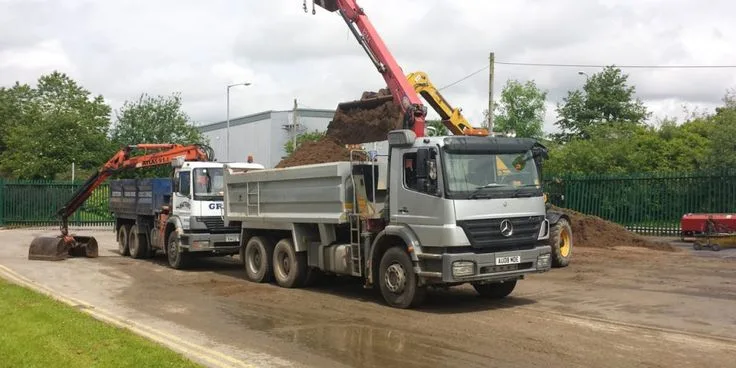
Construction waste builds up faster than most people expect. A few tonnes of broken concrete, soil and old bricks can turn a workable plot into a cramped mess. That’s where grab hire site clearance comes in. Instead of loading a skip by hand, a grab lorry collects loose material using a hydraulic arm and takes it away. Quick, fairly straightforward, and useful when access isn’t perfect.
For building contractors, landscapers and homeowners across the UK, it can save hours of labour. Sometimes days. The real question is whether it suits your particular site and what you’ll pay for it.
What does grab hire site clearance actually include?
A grab lorry is a heavy goods vehicle fitted with a long hydraulic arm and a bucket, often called the grab. The driver positions the vehicle near the waste pile, lifts the material into the lorry and removes it from the property.
A typical grab hire site clearance job can deal with soil, rubble, concrete, bricks, hardcore and mixed construction waste. Some providers also collect green waste, though you’ll need to mention this when booking. Plasterboard, asbestos, paint, chemicals and other hazardous materials usually need separate handling.
The reach of the arm makes the service useful on awkward plots. Waste can often be lifted over a low wall, hedge or fence. The lorry doesn’t always need to enter the site, which is handy when the ground is soft or there’s a freshly laid driveway you don’t want ruined.
Is a grab lorry better than hiring a skip?
It depends on how the waste has been collected.
A skip works well when rubbish is produced gradually, and workers can load it as the job moves along. Grab hire makes more sense when loose waste is already sitting in a pile. There’s no need for wheelbarrows, ramps or repeated lifting. The machine does that bit.
I watched a six-wheel grab clear roughly nine tonnes of broken paving and subsoil from a renovation on Manningham Lane, Bradford. The collection took about 25 minutes. Loading the same material into a skip by hand would’ve occupied two labourers for most of the morning, possibly longer because the access was narrow.
Skips can also need a council permit when placed on a public road. A grab lorry normally arrives, loads and leaves, so a permit may not be required. Parking restrictions and road access still matter. Best to check rather than assume.
How much waste can a grab lorry carry?
Capacity varies by vehicle size and the weight of the material. An eight-wheel grab lorry can commonly carry around 12 to 16 tonnes, while smaller vehicles take less. Heavy soil and concrete can bring the lorry to its legal weight limit before the body looks completely full.
Don’t judge the pile by eye if you can avoid it. Measure its approximate length, width and height, then send photographs to the hire company. A decent operator will give you a practical estimate, though it’s never millimetre-perfect.
On one garden clearance I priced in Pudsey, the owner expected one load. The wet clay alone came to nearly 14 tonnes, then there were old concrete edging blocks underneath. It needed a second, smaller collection. Nobody had noticed those blocks at first, and there it was.
Can Aggregates Bradford suppliers deliver replacement materials too?
Many companies that remove construction waste also supply stone, sand, topsoil and recycled hardcore. Using one firm for collection and delivery can cut down on separate journeys.
Some Aggregates Bradford suppliers will remove spoil in the morning and return with MOT Type 1, building sand or screened topsoil. Ask whether the delivery can happen during the same visit. Not every lorry is set up to carry the exact material you need, and mixing loads may affect the schedule.
For driveway work, check the specification before ordering. “Hardcore” can mean different things depending on who’s speaking. If the drawings call for certified MOT Type 1, order that exact product. Cheap mixed rubble isn’t automatically a suitable substitute.
What access does the lorry need at the site?
Grab lorries are large. The operator needs enough road width, safe parking space and clear overhead reach. Low cables, tree branches and scaffolding can prevent the hydraulic arm from working.
The waste should be placed within reach of the road or hard standing. Depending on the vehicle, that’s often around six to eight metres, but ask the supplier for the actual figure. Don’t put the pile against a parked car or directly beneath power lines.
Soft verges cause trouble too. I once saw a driver refuse to pull onto a saturated grass edge near Shipley after three days of rain. Fair decision—the rear wheels were already starting to sink. The pile was moved closer to the tarmac, not ideal, but sorted.
Tell the company about narrow streets, school-time restrictions, controlled parking zones and gates before the booking. A quick photo from the road helps a lot.
How should waste be prepared before collection?
Keep acceptable construction waste together and separate anything restricted. Soil mixed with bricks is often fine, but plasterboard, insulation, paint tins and general household rubbish may change the waste category and price.
Create one accessible pile where possible. Several small heaps around the site take longer to collect, and the grab arm may not reach all of them. Loose material shouldn’t spill across a pavement or block drains.
For smoother grab hire site clearance, confirm these points before the lorry arrives:
- The estimated volume and type of waste
- Whether the soil is clean or contaminated
- The distance between the pile and the road
- Any overhead cables, branches or structures
- Parking limits and suitable arrival times
- Whether labour or machinery will be available if material needs moving
It sounds like a lot, though most of it takes five minutes over the phone.
Do Aggregates Bradford companies recycle collected waste?
Many licensed operators take loads to authorised transfer stations, where concrete, brick and soil can be sorted and processed. Recoverable material may become recycled aggregate or screened soil rather than going straight to landfill.
Ask where your waste will be taken and request a waste transfer note. UK businesses have a duty of care for the waste they produce, even after a contractor collects it. Check that the carrier holds a valid waste carrier registration.
A low quote isn’t much of a saving if the material ends up fly-tipped and traced back to your project. That headache can get expensive very quickly.
How much does grab hire site clearance cost?
Pricing depends on lorry size, waste type, weight, location and disposal charges. Clean soil or separated hardcore may cost less than mixed waste. Waiting time can be charged if access isn’t ready when the driver arrives.
For an accurate grab hire site clearance quote, provide photos and a clear description of the load. Mention if the soil is wet, because water adds weight. Ask whether VAT, disposal fees and waiting time are included. A quote that looks cheap before those extras can shift quite a bit.
Don’t book purely on the lowest number. Vehicle availability, legal waste handling and reliable time slots matter on an active construction site. One missed collection can leave trades working around a heap of rubble all day.
What should you ask before booking?
Confirm the vehicle size, carrying capacity and grab-arm reach. Ask what materials are accepted and what must be separated. You’ll also want to know whether the price covers one full load or is based on weight.
Check the cancellation policy. Weather, concrete deliveries and delayed excavators have a habit of changing site plans. If the operator needs 24 hours’ notice, put that in the diary.
The final check is simple: make sure someone can meet the driver or provide precise collection instructions. “Pile behind the fence” isn’t quite enough when there are three fences.
FAQs
Can a grab lorry collect waste from behind a wall?
Usually, yes. The hydraulic arm can reach over many walls and fences, provided the pile is within range, and there are no overhead obstructions. Send the operator photos and measurements before booking.
Do I need to be on-site during collection?
Not always. Some companies can complete the collection using written instructions and site photos. Access must be clear, and the driver needs to know exactly which material should be removed.
Can wet soil be collected?
Yes, but wet soil is heavier and may reduce the amount carried in one load. Tell the hire company about the condition of the soil so they can recommend the right vehicle.
Need the site cleared without losing half a day to manual loading? Speak to a licensed local grab hire company, send over a few photos, and request a written quote before work begins.