
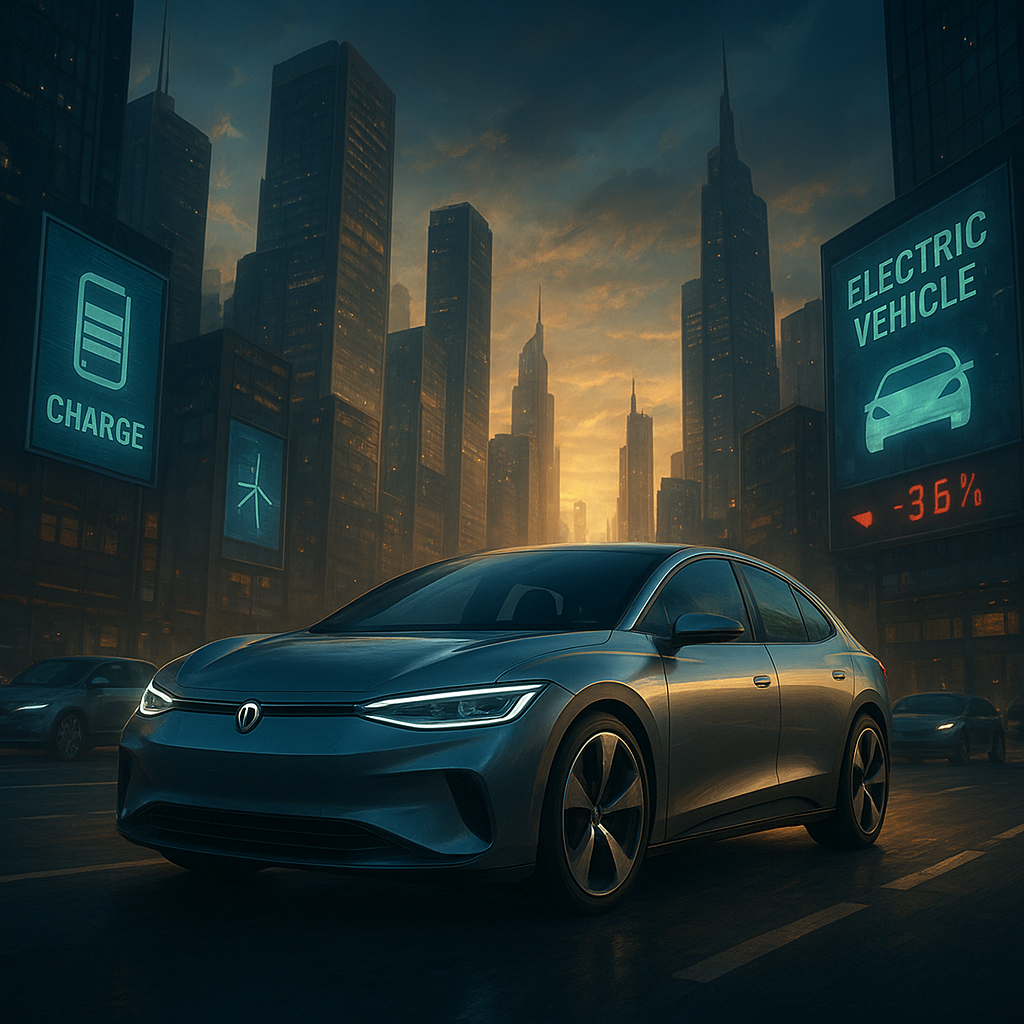
Unfolding Crisis: The Oil Shock That Reawakened Electric Vehicles
In early 2026, global oil prices surged beyond $150 per barrel, a peak not seen since the tumultuous energy crises of the early 1980s. This spike was precipitated by a confluence of geopolitical tensions, supply chain disruptions, and accelerated post-pandemic demand. Consumers and industries felt the immediate financial sting at gas pumps worldwide, sparking renewed urgency around the transition to alternative fuels. The automotive sector, a barometer of energy trends, experienced a remarkable pivot as electric vehicles (EVs) moved from niche products to mainstream contenders almost overnight.
To understand the magnitude of this shift, consider that in the first quarter of 2026 alone, EV sales grew by over 40% compared to the same period in 2025, according to industry analysts. Charging infrastructure investments soared in parallel, creating a positive feedback loop that further eroded barriers to EV adoption.
This article examines the multifaceted impact of the 2026 oil shock on the electric vehicle market, tracing the evolution of key trends, dissecting current data, and projecting the future trajectory of the automotive landscape.
Historical Context: From Early Enthusiasm to Market Challenges
The resurgence of electric cars in 2026 cannot be fully appreciated without revisiting the sector’s past. The early 2010s witnessed a surge of optimism fueled by breakthroughs in lithium-ion battery technology and supportive regulatory environments, particularly in Europe, China, and parts of North America. Governments introduced subsidies, tax breaks, and stringent emission targets, propelling EVs from experimental prototypes to competitive alternatives.
However, by the early 2020s, the EV market faced headwinds. Supply chain bottlenecks, especially for critical minerals like lithium, cobalt, and nickel, slowed production growth. Battery costs, while still declining, plateaued temporarily, limiting affordability for many consumers. Meanwhile, fluctuating oil prices between 50 and 90 dollars per barrel during 2023–2025 kept internal combustion engine (ICE) vehicles comparatively attractive in some markets, delaying mass adoption.
Environmental concerns continued to grow, but skepticism about EV range, charging infrastructure, and lifecycle emissions persisted. This complex backdrop set the stage for the oil shock of 2026 to act as a catalyst, radically reshaping market dynamics.
Data-Driven Analysis: Market Shifts and Economic Implications
The 2026 oil shock accelerated the EV market through several interlinked mechanisms:
- Cost Parity and Consumer Behavior: The spike in gasoline prices made the total cost of ownership (TCO) for ICE vehicles uncompetitive compared to EVs. BloombergNEF data from mid-2026 shows that in 18 major markets, EVs reached or surpassed TCO parity with gasoline cars for the first time without subsidies.
- Investment Surge in Charging Infrastructure: Governments and private enterprises committed over $120 billion globally in 2026 alone to build fast-charging networks, a 60% increase over 2025. The U.S. and European Union spearheaded efforts, with China continuing aggressive expansion.
- Supply Chain Adaptation: Battery manufacturers diversified sources and ramped recycling programs, reducing dependence on volatile mineral markets. Solid-state battery prototypes entered limited production, promising higher energy density and safety.
- Corporate Fleet Electrification: Major logistics and ride-sharing companies accelerated EV fleet conversions. Amazon, DHL, and Uber announced plans to electrify 80-90% of their vehicles by 2030, citing operational cost savings amid fuel price volatility.
- Secondary Market Growth: Used EVs became more accessible, broadening the consumer base beyond early adopters and affluent buyers.
“The oil shock shattered complacency. It rapidly redefined the economic calculus for millions of drivers, turning electric vehicles from aspirational to essential,” remarked Dr. Helena Marcus, an energy economist at the International Energy Agency.
These developments collectively created a tipping point. The electric car market, which had been growing steadily but predictably, entered a phase of exponential expansion.
2026 Developments: Policy, Innovation, and Market Response
In response to the 2026 oil crisis, policymakers worldwide recalibrated strategies to accelerate EV adoption and energy independence. The European Green Deal was revised to increase EV mandates, with penalties for manufacturers missing fleet emission targets becoming more severe. The U.S. Inflation Reduction Act of 2025 saw expansions in EV tax credits, especially for vehicles produced with sustainable materials and in unionized factories.
Meanwhile, automakers raced to diversify their electric portfolios. Tesla, which had dominated the market earlier in the decade, faced mounting competition from legacy players like Volkswagen, Ford, and Hyundai, alongside emerging startups such as Rivian and Nio. Notably, Volkswagen's ID series and Hyundai's Ioniq models reported record deliveries in the first half of 2026.
Battery technology made significant strides. Solid-state batteries, long anticipated, began scaling from pilot to commercial production. These batteries promise faster charging times and longer lifespans, addressing two major consumer concerns. Additionally, hydrogen fuel cell vehicles, though still niche, gained traction for heavy-duty and long-haul applications.
Charging infrastructure also received a boost from innovative business models. Subscription services and battery swapping stations emerged, reducing upfront costs and charging times for consumers.
- Global EV sales reached an estimated 15 million units in 2026, up from 10.5 million in 2025.
- Charging stations worldwide grew by 35%, with fast chargers accounting for 60% of new installations.
- Battery recycling capacity doubled compared to 2024 levels, easing raw material supply concerns.
“Electric vehicles have shifted from being a niche solution to a central pillar of global energy security,” said Maria Lopez, CEO of a leading EV battery maker.
Industry Perspectives and Broader Economic Impact
The automotive industry’s landscape has shifted dramatically. Legacy automakers acknowledge that electrification is no longer optional but a necessity. Investment in EV platforms now dominates R&D budgets, leading to a wave of new models across price segments and vehicle types, from compact cars to SUVs and commercial trucks.
Energy companies, traditionally reliant on oil, are diversifying portfolios. Many have invested heavily in renewable energy generation and EV charging infrastructure. Shell and BP, for instance, have expanded their EV charging networks by over 300% since 2024, aiming to capture revenue streams beyond fossil fuels.
The oil shock also accelerated innovation in battery chemistry, vehicle-to-grid (V2G) technologies, and smart charging solutions, enabling EVs to act as distributed energy resources. This development has implications for electricity grids, which must adapt to increased load and bidirectional energy flows.
Labor markets are adapting too. New jobs in battery manufacturing, recycling, software development, and infrastructure installation are growing rapidly, partially offsetting declines in traditional automotive sectors.
However, challenges remain. The environmental impact of battery production, mineral extraction ethics, and grid capacity constraints require ongoing attention.
Future Outlook: What Lies Ahead for Electric Mobility?
The 2026 oil shock set in motion a structural acceleration of electric vehicle adoption that is expected to sustain for the next decade. Analysts forecast that by 2030, EVs could comprise over 60% of new vehicle sales globally, driven by continued technological advances, policy support, and consumer preferences.
Key factors to monitor include:
- Battery Innovation: The commercial viability of solid-state and alternative battery chemistries will influence cost and performance trajectories.
- Grid Infrastructure: Investments in smart grids and renewable energy integration will be critical to support EV growth sustainably.
- Supply Chain Resilience: Recycling, mining diversification, and geopolitics will shape raw material availability and prices.
- Regulatory Landscape: Emission standards, incentives, and urban policies will continue to evolve, affecting market dynamics.
Consumer acceptance is also maturing. Increasing familiarity with EV technology, broader model availability, and improved charging convenience are eroding previous barriers.
For policymakers and industry leaders, the imperative is clear: facilitate this transition responsibly and inclusively to capitalize on economic and environmental benefits, while mitigating potential social and ecological risks.
For a deeper dive into the initial impact of the oil shock on electric vehicles, see our related analysis Oil Shock Propels Electric Cars Back to Center Stage and How The 2026 Oil Shock Ignited Electric Vehicles’ Rapid Revival.