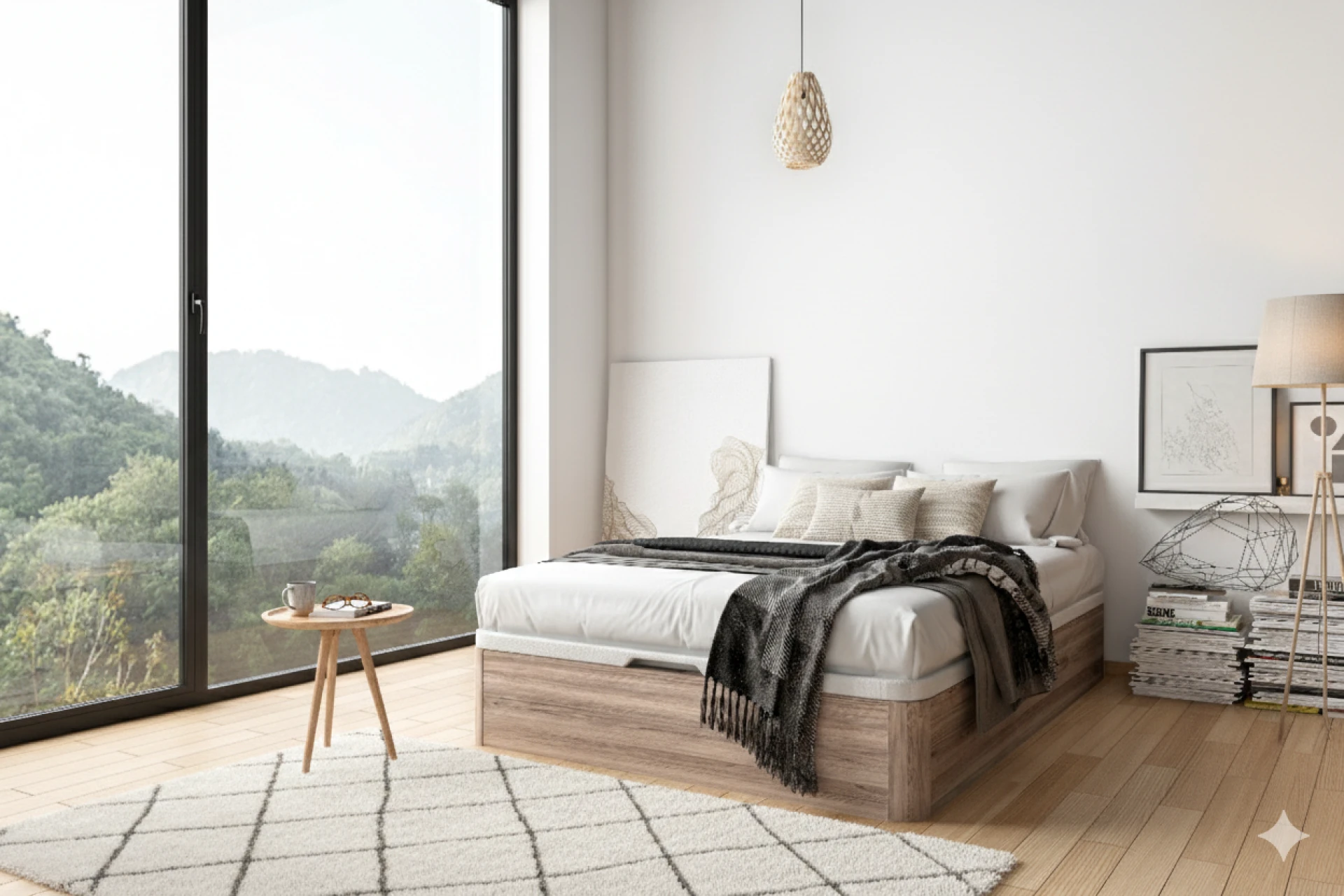
The traditional furniture manufacturing cycle is undergoing a digital revolution. For decades, the process was linear and rigid: design, prototype, photograph, and finally, market. This "wait-and-see" approach often left brands vulnerable to shifting trends and high overhead costs. However, as we move through 2026, 3d furniture visualization has emerged as the ultimate shortcut, allowing manufacturers to showcase products with stunning realism long before the first piece of wood is cut.
In this comprehensive guide, we will explore how high-fidelity 3D assets are transforming the industry. We’ll dive into the logistical freedom of digital twins, the psychology of "confidence-building" visuals, and how your brand can leverage these tools to drive a massive ROI. Whether you are a custom furniture boutique or a large-scale manufacturer, the ability to visualize your catalog digitally is no longer a luxury; it’s a survival strategy.
Breaking the Prototype Bottleneck
The traditional method of staging a photoshoot for a new collection is a logistical nightmare. It involves shipping heavy prototypes, hiring stylists, and building physical sets that are dismantled hours later. If you want to show a single chair in twenty different fabric options, the physical cost becomes prohibitive.
Shifting from Freight to Data
By adopting 3d furniture visualization, brands move from a world of freight to a world of data. A visualization studio creates a "Digital Twin"—a hyper-realistic 3D file that serves as a master asset. From this one file, you can generate thousands of photorealistic images across every fabric, wood grain, and hardware configuration in your library.
The "Sell-Before-You-Build" Advantage
This digital-first approach enables a "sell-before-you-build" model. Marketing teams can begin A/B testing lifestyle scenes and gathering pre-orders months before production begins. This significantly reduces the risk of overstocking unpopular designs and ensures that your manufacturing line is always focused on high-demand items.
Closing the "Confidence Gap" in E-commerce
The biggest barrier to online furniture sales is the "Confidence Gap"—the consumer’s fear that the product won't look or fit as expected in their home. Static photography often fails to provide the spatial context needed for high-ticket purchases.
Immersive 360-Degree Interaction
When a brand provides a 360-degree product spin, they give the customer control. This interactivity replaces the physical "walk-around" in a showroom. High-quality visualization allows customers to inspect the "micro-textures" of a weave or the "reflection" on a polished surface, building immediate trust.
Augmented Reality (AR): The Virtual Test Drive
Augmented Reality for furniture has become the gold standard for closing deals. By allowing customers to "place" a true-to-scale 3D model in their actual living room via a smartphone, brands eliminate the "will it fit?" anxiety.
Unique Insight: In 2026, the most successful brands are using "Dynamic Shadow AR," where the digital model's shadows react in real-time to the actual light sources in the user's room, making the digital asset feel physically present.
Scaling Mass Customization Without the Overhead
Personalization is the primary driver of modern consumer loyalty. Today’s buyers want to be the "designer" of their own pieces. Managing this level of variety with traditional photography is financially impossible.
One Master Asset, Infinite Variations
A specialized 3d furniture visualization workflow uses a single master 3D model that can be instantly re-textured. Through a 3D product configurator, a customer can toggle between different finishes and configurations in real-time. This ensures that every potential SKU in your catalog is visually represented without a single additional photoshoot.
Maintaining Omnichannel Consistency
Whether a customer sees your product on Instagram, your website, or a third-party marketplace, 3D assets ensure perfect visual consistency. Centralized 3D asset management prevents the "visual drift" that occurs when products are photographed at different times or in different studios, reinforcing a premium brand image.
The Financial Impact: Analyzing ROI and Sustainability
While the initial investment in 3D modeling might seem comparable to a high-end photoshoot, the long-term ROI is where the math truly changes.
Upfront Investment vs. Asset Reusability
A physical photograph is a static asset; once it’s taken, it cannot be changed. A 3D asset is "evergreen." Two years later, if you want to see that same sofa in a new "Color of the Year" setting, a studio can re-render it in hours. Brands using 3D visualization report up to 70% savings in content production costs over a three-year lifecycle.
Reducing Returns and Carbon Footprint
Returns are a silent profit-killer in the furniture industry. By providing high-fidelity visuals and AR tools, brands have seen return rate reductions of up to 40%. Furthermore, eliminating the need to ship prototypes back and forth for photoshoots significantly reduces your brand's carbon footprint, a key selling point for the modern, eco-conscious consumer.
Top 3D Tools for Professional Visualization
For manufacturers looking to understand the tech stack behind these visuals, these are the industry leaders used by high-end rendering firms:
SketchUp Pro 2025 is a world-class tool for architectural and furniture modeling. It is favored for its intuitive design and the massive "3D Warehouse" library that allows for rapid lifestyle staging.
D5 Render is a powerful real-time rendering software. It uses GPU ray tracing to create photorealistic animations and 4K stills instantly, allowing brands to see lighting changes in real-time.
Adobe Substance 3D Painter is the gold standard for creating hyper-realistic textures. It allows artists to apply "Smart Materials" that mimic real-world wear, wood grains, and fabric weaves with microscopic accuracy.
Professional Software Comparison
Conclusion: Investing in Your Digital Infrastructure
The transition to 3d furniture visualization is more than a marketing trend; it is a fundamental shift in how furniture is designed, manufactured, and sold. As we have seen throughout 2026, the brands that are winning are those that treat their visual content as a scalable infrastructure.
By investing in high-fidelity 3D assets, furniture manufacturers solve their three biggest pain points: high content costs, online purchase hesitation, and the logistical burden of physical prototypes. The result is a more agile, profitable, and customer-centric brand that is ready for the "hybrid" shopping era. If you are still relying on traditional photoshoot cycles, the gap between you and your digital-first competitors is widening. Now is the time to build your digital library and sell with confidence.