
Managing advertising budgets effectively is one of the biggest challenges businesses face when running Google Ads. Many companies invest significant amounts of money into campaigns, expecting consistent leads and sales, but often find themselves questioning where their budget is going. Clicks increase, impressions grow, yet conversions remain inconsistent or too expensive.
The problem is rarely the platform itself. Google Ads is highly effective when used correctly. The issue usually lies in how campaigns are structured, targeted, and optimized.
This is where a Google Ads management company plays a critical role. Instead of simply running ads, they focus on optimizing ad spend—ensuring that every dollar contributes to meaningful results. Their goal is not just to reduce costs, but to increase efficiency and maximize return on investment.
Understanding Ad Spend Optimization
Ad spend optimization is the process of using your advertising budget in the most efficient way possible. It involves allocating resources to high-performing areas, eliminating waste, and continuously improving campaign performance.
Many businesses believe that increasing the budget leads to better results. While this can sometimes be true, it is only effective when campaigns are already optimized. Otherwise, increasing spend can amplify inefficiencies.
A Google Ads management company focuses on improving performance first, ensuring that your campaigns are ready to scale without unnecessary costs.
Identifying and Eliminating Wasted Spend
One of the first steps in optimizing ad spend is identifying where money is being wasted.
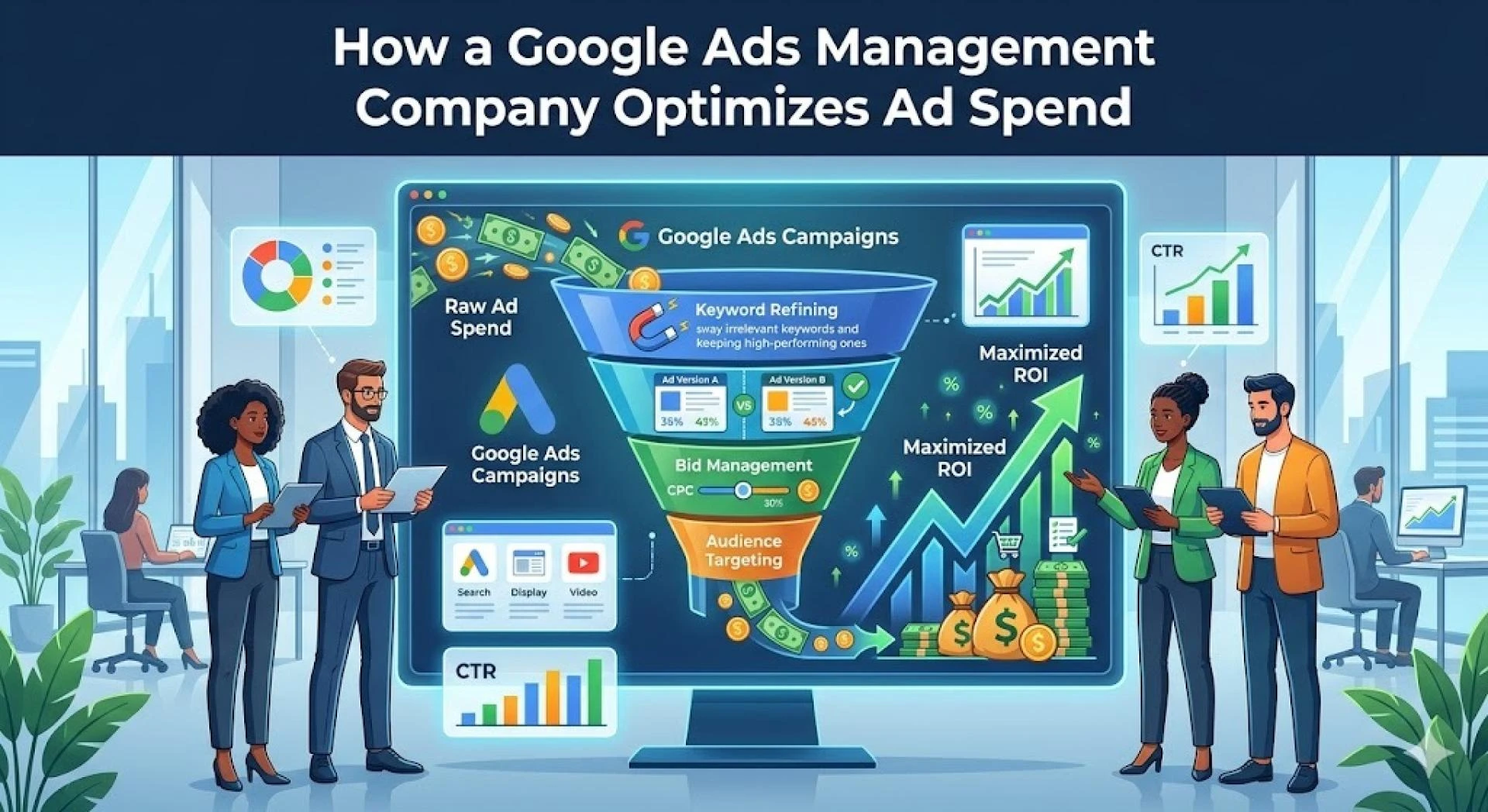
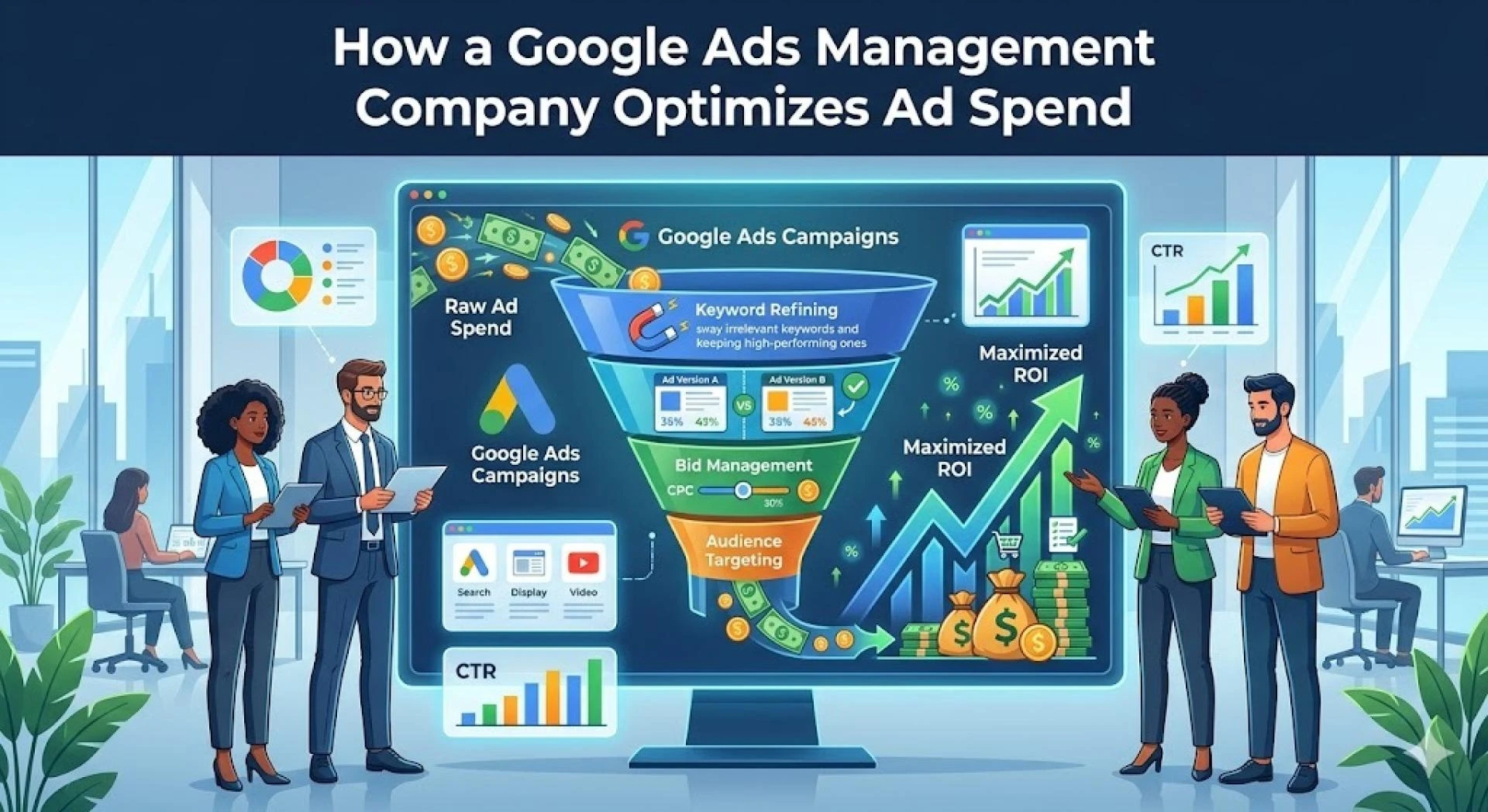
A Google Ads management company analyzes campaign data to find inefficiencies such as irrelevant keywords, low-performing ads, and poor targeting. They review search term reports to understand how users are interacting with your ads.
By removing or refining these elements, they ensure that your budget is no longer spent on traffic that does not convert.
This immediate reduction in waste improves overall efficiency and sets the foundation for better results.
Focusing on High-Intent Keywords
Not all keywords are equally valuable.
A Google Ads management company prioritizes high-intent keywords—search terms used by people who are ready to take action. These users are more likely to convert, making them more valuable to your business.
Instead of targeting broad keywords that attract general traffic, they focus on specific terms that align with user intent.
This approach ensures that your budget is spent on users who are more likely to become customers.
Using Negative Keywords to Improve Efficiency
Negative keywords play a crucial role in optimizing ad spend.
A Google Ads management company uses negative keywords to prevent ads from appearing for irrelevant searches. This helps filter out low-quality traffic and ensures that your ads are shown only to the right audience.
For example, if your business offers premium services, excluding searches related to “cheap” or “free” can significantly improve efficiency.
This simple yet powerful strategy reduces wasted spend and improves campaign performance.
Improving Quality Score to Lower Costs
Quality Score is a key factor in determining how much you pay for clicks.
A Google Ads management company works to improve Quality Score by aligning keywords, ad copy, and landing pages. When your ads are relevant and provide a good user experience, Google rewards you with lower costs and better positioning.
This means you can achieve better results without increasing your budget.
Improving Quality Score is one of the most effective ways to optimize ad spend.
Creating Targeted and Relevant Ad Copy
Ad copy influences both engagement and efficiency.
A Google Ads management company creates ads that are clear, relevant, and aligned with user intent. By addressing specific needs and including strong calls to action, they attract users who are more likely to convert.
At the same time, well-crafted ad copy discourages irrelevant clicks.
This ensures that your budget is spent on meaningful interactions rather than wasted traffic.
Optimizing Landing Pages for Better Conversions
Driving traffic is only part of the equation.
If users click on your ads but do not convert, your cost per acquisition increases. A Google Ads management company ensures that landing pages are optimized to convert visitors into customers.
They improve page speed, simplify navigation, and align content with ad messaging. When users find what they expect and can take action easily, conversion rates increase.
Higher conversions mean more value from the same ad spend.
Leveraging Data for Smarter Decisions
Data is the foundation of effective ad spend optimization.
A Google Ads management company tracks performance metrics such as conversions, cost per click, and user behavior. This data provides insights into what is working and what needs improvement.
By analyzing these insights, they make informed decisions about where to allocate budget.
This data-driven approach ensures that your campaigns are continuously improving.
Implementing Smart Bidding Strategies
Bidding strategy has a direct impact on how your budget is spent.
A Google Ads management company uses data-driven bidding strategies that focus on conversions rather than just clicks. They adjust bids based on performance to ensure that you are not overpaying.
This allows your budget to be directed toward high-performing areas.
Smart bidding improves efficiency and helps maximize ROI.
Continuous Monitoring and Optimization
Ad spend optimization is not a one-time process.
A Google Ads management company continuously monitors campaign performance and makes adjustments as needed. They test new strategies, refine targeting, and adapt to changes in the market.
This ongoing optimization ensures that your campaigns remain efficient and competitive.
Scaling Campaigns Without Increasing Waste
Once campaigns are optimized, the next step is scaling.
A Google Ads management company increases your budget strategically, focusing on areas that are already delivering strong results. This allows you to grow your campaigns without introducing inefficiencies.
Scaling becomes controlled and sustainable, ensuring that performance remains strong as your budget increases.
A Real-World Perspective
Consider a business that is spending heavily on Google Ads but not seeing consistent results. Their campaigns generate traffic, but conversions are low, and costs continue to rise.
After working with a Google Ads management company, their campaigns are analyzed and optimized. Irrelevant keywords are removed, targeting is refined, and landing pages are improved.
Over time, their cost per conversion decreases, and their results improve. The same budget begins to generate more leads and sales.
This transformation highlights the impact of proper ad spend optimization.
Why Optimizing Ad Spend Is Essential
Optimizing ad spend is not just about saving money—it’s about improving efficiency and profitability.
When your campaigns are optimized, you can generate more results without increasing your budget. This allows you to scale your business confidently and invest in growth.
A Google Ads management company helps you build a system that delivers consistent and measurable results.
Conclusion
Optimizing ad spend is one of the most important aspects of successful Google Ads campaigns.
A Google Ads management company ensures that your budget is used effectively by improving targeting, eliminating waste, optimizing campaigns, and using data-driven strategies.
Instead of spending more to achieve results, you learn how to achieve better results with the budget you already have.
Ready to Optimize Your Ad Spend?
If your campaigns are costing more than they should, it may be time to focus on efficiency.
Working with a Google Ads management company can help you reduce waste, improve performance, and turn your advertising into a profitable growth channel.
Frequently Asked Questions
1. What does optimizing ad spend mean in Google Ads?
Optimizing ad spend means using your budget efficiently by focusing on high-performing areas and reducing waste.
2. How does a Google Ads management company reduce wasted spend?
They use negative keywords, refine targeting, and remove low-performing elements from campaigns.
3. Can optimizing ad spend improve ROI?
Yes, by increasing efficiency and conversions, optimizing ad spend directly improves return on investment.
4. How long does it take to see improvements?
Some improvements can be seen within weeks, but consistent results develop over time with ongoing optimization.
5. Is ad spend optimization important for small businesses?
Yes, it helps small businesses maximize results from limited budgets and compete effectively.