
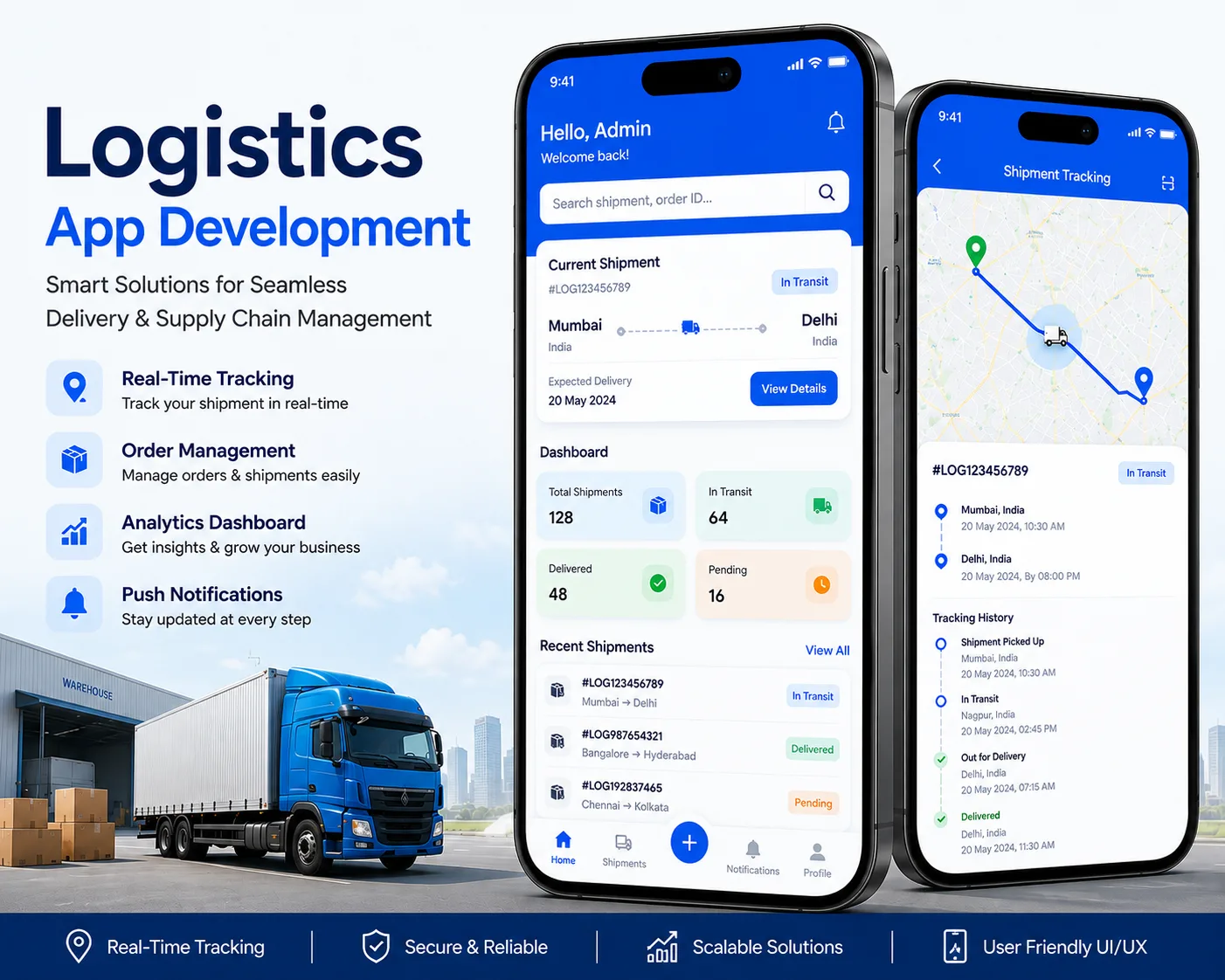
The logistics industry depends on accurate information, timely deliveries, efficient fleet coordination, and clear communication between multiple stakeholders. As shipment volumes increase, managing these activities through spreadsheets, phone calls, and disconnected systems can create delays and operational challenges.
A logistics app development company can help businesses create digital platforms that bring transportation, delivery, fleet, shipment, and customer management into a centralized system. With the right technology and business requirements, logistics applications can improve visibility across daily operations while making information easier to access.
What Is Logistics App Development?
Logistics App Development involves designing and building mobile or web applications that support transportation and supply chain activities. These applications can be developed for logistics companies, courier businesses, fleet operators, distributors, retailers, and other organizations involved in moving goods.
A logistics application may support:
- Shipment and order management
- Driver and fleet coordination
- Real-time vehicle tracking
- Delivery scheduling
- Route planning
- Customer notifications
- Proof of delivery
- Payment processing
- Performance reporting
- Warehouse coordination
The exact functionality depends on the company's operational model. A courier business, for example, may prioritize delivery tracking, while a freight company may require shipment management and fleet coordination.
Why Businesses Need Logistics Applications
Logistics operations involve multiple people, vehicles, shipments, locations, and deadlines. Without a centralized system, information can become difficult to track and update.
A well-designed application can help businesses:
- Reduce manual data entry
- Monitor shipments more efficiently
- Track vehicles and drivers
- Improve delivery coordination
- Provide customers with timely updates
- Organize delivery schedules
- Maintain digital delivery records
Analyze operational performance
For customers, real-time shipment information can also reduce the need to repeatedly contact support teams for delivery updates.
Essential Features of a Logistics App
The features of a logistics application should be based on actual operational requirements. Some of the most useful features include the following.
1. Shipment Management
Businesses can create, update, assign, and monitor shipments through a centralized dashboard. Important information such as shipment status, destination, delivery date, and assigned driver can be maintained digitally.
2. GPS and Real-Time Tracking
GPS integration allows businesses and customers to monitor vehicle locations. Real-time tracking can provide information about the current location and progress of a shipment, depending on the available device and network connectivity.
3. Route Planning
Route planning tools can help drivers identify suitable routes based on destinations and operational conditions. More advanced systems may use traffic information and multiple delivery points to support route optimization.
4. Driver Management
A logistics platform can maintain driver profiles, assignments, schedules, documents, and delivery records. Managers can assign deliveries and monitor completed or pending tasks.
5. Delivery Scheduling
Scheduling functionality allows businesses to organize pickup and delivery activities according to available drivers, vehicles, locations, and customer requirements.
6. Push Notifications
Notifications can keep customers, drivers, and managers informed about important events such as shipment confirmation, dispatch, delivery status changes, and completed deliveries.
7. Proof of Delivery
Drivers can confirm completed deliveries using digital signatures, photographs, timestamps, or other verification methods. This can reduce paperwork and provide a digital record of delivery completion.
Benefits of Logistics Software Development
Logistics Software Development can connect different parts of transportation operations through a shared digital system. Instead of maintaining information across separate tools, businesses can centralize important workflows.
Key benefits include:
- Better shipment visibility
- Faster communication
- Improved fleet coordination
- Reduced paperwork
- Easier access to operational data
- More organized delivery processes
- Improved customer communication
- Better performance monitoring
However, software alone does not solve every operational problem. Businesses should first identify workflow gaps and then select technology that addresses those specific requirements.
Custom Logistics App Development for Different Business Models
Every logistics business operates differently. A standard application may not provide the workflows, integrations, or controls required by a particular organization.
Custom Logistics App Development allows businesses to create functionality around their specific processes.
For example, a company may require:
- Multi-warehouse management
- Multiple delivery zones
- Driver attendance tracking
- Fuel expense management
- Vehicle maintenance records
- Automated customer notifications
- ERP or CRM integration
- Digital invoicing
- Advanced reporting
- Role-based access controls
Custom development can also make it easier to integrate existing business systems, provided the APIs and technical architecture support the integration.
How Logistics App Development Services Work
Professional Logistics App Development Services generally cover several stages of product development.
Requirement Analysis
The development team studies business processes, target users, required features, integrations, and technical requirements.
UI/UX Design
Designers create user flows and interfaces for customers, drivers, managers, and administrators. Since logistics applications may be used while users are working in the field, interfaces should remain clear and easy to operate.
Development
Developers build the application, backend services, APIs, database, dashboards, and required integrations. Security controls should be considered throughout development rather than added only at the end.
Testing
Testing should cover functionality, performance, security, compatibility, and real-world workflows. GPS tracking, notifications, payments, and integrations require particular attention because failures can affect daily operations.
Deployment and Maintenance
After testing, the application is deployed to the required platforms. Ongoing maintenance helps address bugs, operating-system updates, security issues, and changing business requirements.
How to Choose a Logistics App Development Company
Choosing the right development partner requires more than comparing project costs. Businesses should evaluate technical capabilities and relevant experience.
Consider these factors:
- Experience with logistics and transportation applications
- Previous project case studies
- Knowledge of GPS and mapping technologies
- API and third-party integration experience
- Data security practices
- Testing and quality assurance processes
- Post-launch maintenance and support
- Clear project communication
- Transparent pricing and timelines
It is also useful to ask potential development partners how they handle scalability, data security, system integrations, application monitoring, and future feature additions.
Final Thoughts
Digital applications are becoming an important part of modern logistics operations. From shipment tracking and driver management to route planning and proof of delivery, the right technology can help businesses organize complex transportation workflows more effectively.
Whether a company needs a basic delivery platform or a comprehensive logistics management system, Logistics App Development should begin with clear business requirements and practical workflows. Working with an experienced logistics app development company can help businesses build a solution that fits their operations, integrates with existing systems, and provides a reliable experience for employees and customers.
The most effective approach is to focus on useful functionality, secure architecture, accurate data, and long-term maintainability rather than simply adding features.