
Modern buildings are incredibly complex structures. Behind the painted drywall and acoustic ceilings, an intricate network of mechanical, electrical, and plumbing (MEP) systems keeps everything functioning smoothly. Coordinating these overlapping systems in tight ceiling spaces and utility corridors used to be a logistical nightmare for construction teams.
Building Information Modeling (BIM) has completely transformed how engineers and contractors approach these vital systems. By creating a highly detailed, 3D digital representation of a building's physical and functional characteristics, teams can visualize exactly how ducts, pipes, and conduits will interact before construction even begins. This early visibility is crucial for avoiding expensive delays and material waste on the job site.
Utilizing professional MEP BIM Modeling Services streamlines the entire construction lifecycle. From the initial design coordination to the final, clash-free installation, this technology ensures that projects stay on schedule, remain within budget, and meet the highest quality standards.
Understanding BIM MEP Modeling
BIM for MEP involves creating intelligent 3D models of a building's mechanical, electrical, and plumbing infrastructure. Unlike traditional 2D CAD drawings, which only show flat lines and symbols, a BIM model contains rich data about every single component. A pipe in a BIM model is not just a cylinder; it includes information about its material, manufacturer, flow rate, and maintenance requirements.
Industry professionals rely on specialized software and tools to build these models. Autodesk Revit is widely used for creating the actual geometry and data parameters of the MEP systems. Once the individual discipline models are built, they are brought together in coordination software to evaluate how they fit within the architectural and structural framework.
The benefits of utilizing this technology span the entire project lifecycle. During the design phase, engineers can perform accurate load calculations and energy analyses. In the documentation phase, the model generates precise construction drawings automatically. Finally, during construction, contractors use the model to guide their physical work.
The Journey from Coordination to Clash-Free Installation
Turning an architectural concept into a fully functioning, clash-free building requires a systematic approach. The journey relies heavily on early planning and open communication among all project disciplines.
Initial Design and Collaboration
BIM creates a central environment where architects, structural engineers, and MEP designers can collaborate effectively. When the mechanical engineer routes a large HVAC duct, the electrical engineer can immediately see it and route their cable trays accordingly. This early identification of potential spatial conflicts prevents major headaches later on.
Clash Detection and Resolution
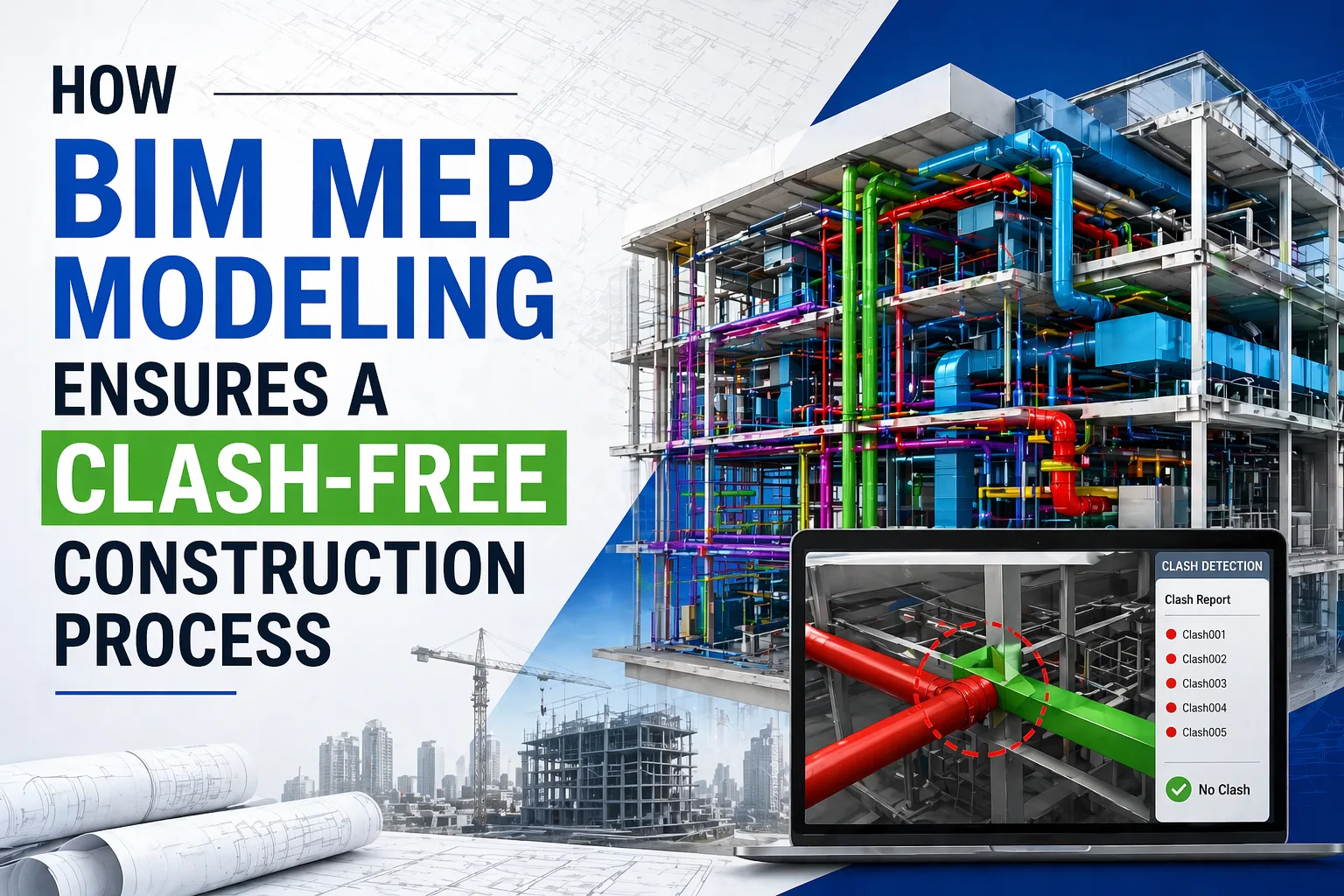
The most significant advantage of digital modeling is clash detection. While manual clash detection involves visually scanning 2D drawings to guess where pipes might hit steel beams, automated clash detection uses software like Autodesk Navisworks to find hard clashes mathematically.
The software generates a comprehensive report of every instance where two elements intersect. The coordination team then reviews these reports and develops strategies for resolving the clashes pre-construction. They might adjust the elevation of a water line, re-route a duct, or request a penetration through a structural beam.
The Role of Data and Information Exchange
Seamless collaboration requires robust data exchange. Industry Foundation Classes (IFC) and other open standards allow different software platforms to communicate with each other. By maintaining centralized data models, any update made by the plumbing team is instantly reflected across the entire project, ensuring everyone is working from the latest information.
Prefabrication and Modular Construction
Because the 3D model is mathematically precise, contractors can confidently use it for prefabrication. Instead of measuring, cutting, and welding pipes on a crowded job site, workers can assemble large, complex MEP spools in a controlled factory environment. This off-site assembly drastically improves installation efficiency, enhances worker safety, and reduces material waste.
On-site Installation and Verification
When the prefabricated components arrive on site, the installation team uses the BIM model for accurate guidance. Using tablets and augmented reality tools, workers can see exactly where each piece belongs. Teams also use laser scanning to verify that the installed components match the digital model, ensuring rigorous quality control.
Advantages of BIM MEP for Project Stakeholders
The implementation of a coordinated digital model delivers distinct benefits to everyone involved in a construction project.
For contractors, the primary advantages are reduced rework and faster project timelines. When clashes are resolved on a computer screen rather than in the field, teams avoid tearing down finished work. Companies like Archdraw Outsourcing provide the detailed models that contractors need to keep their field teams moving efficiently.
Owners benefit directly from cost savings and better facility performance. A clash-free installation means fewer change orders and a more predictable construction budget. Furthermore, the final "as-built" BIM model serves as a valuable manual for future facility maintenance and renovations.
Designers enjoy enhanced accuracy and greater design flexibility. They can test multiple system layouts quickly to find the most efficient and aesthetically pleasing solutions. For example, in a recent complex hospital project, early MEP coordination allowed the design team to raise the ceiling heights by several inches, vastly improving the feel of the patient rooms without compromising the mechanical systems above.
Challenges and Future Trends
While the benefits are clear, adopting this technology does come with hurdles. The initial investment in software licenses and high-performance computers can be significant.
Additionally, there are training requirements; transitioning a team from 2D drafting to 3D data management takes time and dedication. Managing the sheer volume of data within a centralized model also requires strict protocols and experienced BIM managers.
Looking ahead, the future of construction technology is incredibly promising. Artificial intelligence is beginning to assist in automated clash resolution, suggesting the most efficient routing options instantly.
The concept of "digital twins" is also gaining traction, where the building model receives real-time data from IoT sensors after construction is complete, allowing owners to monitor energy usage and equipment health continuously.
Building a More Efficient Future
The transition from 2D blueprints to intelligent 3D models represents a massive leap forward for the construction industry. By utilizing advanced modeling techniques, teams can visualize complex systems, detect spatial conflicts early, and prefabricate components with absolute confidence.
Embracing this technology is no longer just a competitive advantage; it is essential for successfully delivering modern, complex construction projects. By prioritizing early coordination and data sharing, the industry is moving steadily toward a more efficient, cost-effective, and entirely clash-free future.