

Children learn best when education is combined with fun. Games that challenge the mind while keeping kids engaged can significantly improve their thinking skills. One such activity is guess in 10, a question-based card game designed to make learning interactive and exciting.
This educational game encourages kids to ask thoughtful questions, analyze clues, and use logic to identify the correct answer. Instead of simply memorizing facts, children actively engage their minds to solve problems and make decisions.
With a simple format and exciting gameplay, guess in 10 has become a favorite among families and educators who want to promote learning through play.
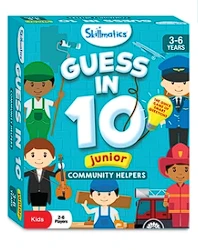
Understanding How Guess in 10 Works
The game follows a straightforward concept. Players take turns asking up to ten yes-or-no questions to figure out what is on the opponent’s game card. The goal is to guess correctly before using all ten questions.
Each set contains game cards with interesting topics such as animals, countries, cities, professions, and more. Players must think carefully about the questions they ask in order to narrow down the possibilities.
The game also includes clue cards that provide hints and add an extra layer of strategy to the gameplay.
Because every round requires analysis, deduction, and strategic thinking, guess in 10 naturally supports the development of critical thinking skills in children.
Encourages Strategic Questioning
One of the most important aspects of critical thinking is asking the right questions. In this game, children must carefully decide what questions to ask in order to identify the mystery card.
For example, instead of asking random questions, kids learn to start with broader questions and gradually narrow down the possibilities. This process teaches them how to organize their thoughts and approach problems logically.
By practicing this skill regularly, children become better at evaluating information and forming effective questions.
Develops Logical Reasoning
Logical reasoning is another key component of critical thinking. During the game, players listen to answers and use that information to eliminate incorrect options.
For instance, if a player learns that the animal does not live in water, they can remove aquatic animals from their list of possibilities. This step-by-step elimination process helps children understand how logical reasoning works.
Games like guess in 10 encourage children to think carefully about each clue and use reasoning to reach the correct conclusion.
Improves Decision Making
In every round of the game, players must decide which question will provide the most useful information. Choosing the right question requires quick thinking and smart decision making.
Children begin to evaluate different possibilities and predict which question will help them solve the puzzle faster.
This type of thinking builds confidence in decision making, which can benefit kids in many areas of life including academics and daily problem solving.
Strengthens Communication Skills
Communication is a vital part of critical thinking. In guess in 10, players must clearly ask questions and carefully listen to the responses.
When children play with friends or family members, they learn how to express their ideas effectively and understand others’ answers.
The game naturally promotes conversations, teamwork, and social interaction while strengthening communication skills.
Enhances Memory and Knowledge
Many versions of the game feature educational themes such as animals, landmarks, professions, and geography. These topics introduce children to new facts and information.
As kids play repeatedly, they begin to remember details about the different cards. This improves both memory and general knowledge.
Because learning happens through play rather than memorization, children often retain the information more easily.
Encourages Creative Thinking
While logic plays a big role in the game, creativity is also important. Players often think of unique questions that help them identify the correct answer faster.
For example, instead of asking direct questions, children may ask creative questions that eliminate several possibilities at once.
This balance between logic and creativity makes guess in 10 a powerful learning tool for developing flexible thinking.
Promotes Teamwork and Collaboration
The game can be played individually or in teams. When kids play in teams, they discuss ideas, share strategies, and decide together which questions to ask.
This collaboration teaches children how to work together, listen to different viewpoints, and reach decisions as a group.
Team play also encourages patience and respect for others’ ideas, which are important social skills.
Keeps Kids Engaged Without Screens
Many parents look for activities that keep children away from screens while still supporting learning. Card games like guess in 10 provide an engaging alternative.
The fast-paced rounds and interesting themes keep kids interested and excited to continue playing. Because each round is different, the game remains fresh and challenging.
This type of interactive play stimulates the brain in a way that passive entertainment cannot.

Makes Learning Fun and Interactive
One of the biggest advantages of the game is that it turns learning into a fun activity. Instead of feeling like a lesson, children experience learning as a challenge or puzzle.
The combination of guessing, questioning, and strategy creates a dynamic environment where kids are constantly thinking.
Educational games that blend fun with skill development help children build confidence and motivation to learn new things.
A Great Activity for Families and Classrooms
Another benefit of guess in 10 is its versatility. It can be played at home during family game nights, in classrooms as an educational activity, or even while traveling.
Because the rules are simple and the rounds are quick, players of different ages can participate together. This makes it an excellent activity for siblings, friends, and parents to enjoy together.
The game supports both learning and bonding, making it a valuable addition to any family or classroom environment.
Final Thoughts
Critical thinking is one of the most important skills children can develop. It helps them analyze information, solve problems, and make smart decisions.
Games like guess in 10 provide a fun and effective way to build these abilities. By encouraging children to ask thoughtful questions, analyze clues, and work through challenges, the game strengthens logical reasoning and problem solving skills.
At the same time, it promotes communication, teamwork, and curiosity about the world. Through interactive play, children learn that thinking deeply and asking the right questions can lead to exciting discoveries.