Hay is widely used as livestock feed, but loose hay can be difficult to transport, store, and handle. For farms and feed producers with a steady supply of grass hay or other forage materials, pelletizing offers a practical way to make the material more compact and uniform.
However, producing quality hay pellets requires more than simply compressing dry grass. Moisture, particle size, fiber length, and pellet specifications all influence the final result.
Why Pelletize Hay?
Loose hay occupies considerable storage space and can be inconvenient to transport.
Pelletizing compresses the material into a denser form, making feeding, handling, and storage easier. Uniform pellets can also make it easier for producers to control feeding quantities.
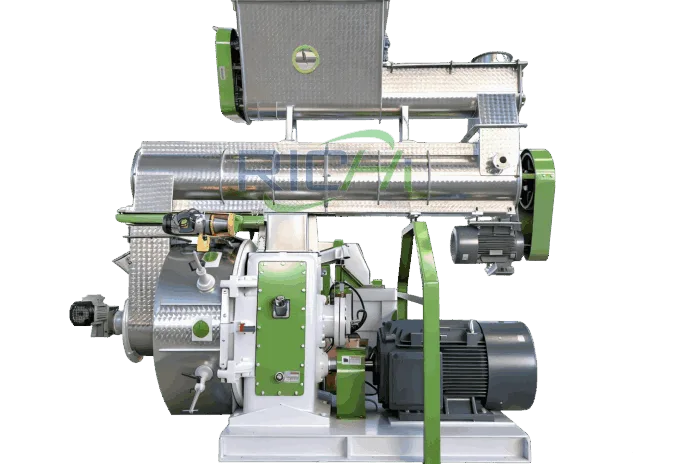
A hay pellet machine for sale can be considered for farms, livestock operations, and commercial forage feed producers looking to process their own raw materials.
The appropriate machine depends on the type and condition of the hay as well as the required production capacity.
Prepare the Hay Properly
Long hay fibers should normally be reduced before pelletizing.
A crusher or hammer mill can cut the material into smaller particles that are easier to mix and compress.
Particle size should not be unnecessarily fine, however. Excessive grinding can increase energy consumption and may not provide additional benefits.
Moisture is another important factor.
Hay that is too wet may require drying, while extremely dry material may also be difficult to pelletize effectively.
Testing the raw material before equipment selection can help determine the appropriate processing conditions.
A Simple Production Process
A basic hay pellet production process can follow:
Hay → Crushing → Grinding → Mixing → Pelletizing → Cooling → Screening → Packaging
If the hay is already at a suitable moisture level and particle size, some preparation stages may be simplified.
For larger commercial projects, automatic feeding and conveying systems can reduce manual handling.
What About Different Livestock?
Hay pellets can be produced for different livestock applications, including cattle, sheep, goats, and other herbivorous animals.
The formulation can be adjusted according to the target animal.
For example, a producer focusing on sheep may also compare a 2-ton-per-hour sheep feed pellet machine when planning a larger forage feed project.
Although hay is an important ingredient, other materials such as alfalfa, corn, grain products, and mineral supplements can also be incorporated into suitable feed formulas.
Pellet Size Should Match the Application
Different animals and feeding systems may require different pellet diameters.
Small pellets can be useful for certain younger animals, while larger pellets may be suitable for mature livestock.
The die should therefore be selected according to the intended application.
If a producer needs several pellet sizes, interchangeable dies can provide additional flexibility without purchasing completely separate machines.
Is Mixing Necessary?
Pure hay can sometimes be pelletized directly after appropriate preparation.
However, mixed forage feed may contain several ingredients.
A mixer helps distribute materials more evenly before pelletizing.
This can be particularly useful when adding grain, protein sources, minerals, or other nutritional ingredients.
Accurate batching also helps maintain a consistent formula from one production batch to another.
Cooling and Screening
Fresh pellets leave the pelletizing chamber at a relatively high temperature.
Cooling reduces the temperature before storage and packaging.
Screening then removes fines and broken pellets.
The qualified pellets can be packed into bags or transferred to bulk storage.
Fines can often be returned to the production process, helping reduce material waste.
How Much Capacity Is Needed?
Capacity should be based on actual raw material availability and feed demand.
A small farm may only require several hundred kilograms of pellets per day.
A commercial feed producer may need several tons per hour.
Purchasing a machine that is much larger than the available hay supply can create unnecessary costs.
At the same time, insufficient capacity may restrict future growth.
A practical calculation should consider daily hay availability, operating hours, seasonal supply, and expected expansion.
What Should Buyers Check Before Purchasing?
Before selecting equipment, it is useful to provide:
- Hay type
- Moisture content
- Fiber length
- Daily raw material supply
- Target output
- Pellet diameter
- Feed formulation
- Packaging method
Photos or samples of the hay can also help determine whether additional crushing or drying is necessary.
Final Thoughts
Hay pellet production can provide a practical way to improve the handling and storage of forage materials.
The most effective system is not necessarily the largest one. It should be matched to the raw material, livestock application, pellet size, and production target.
A small farm can begin with a relatively simple system, while a commercial operation can gradually add automation and larger material-handling equipment.
For businesses evaluating different pelletizing technologies, pellet machine for sale information can help compare equipment configurations and production capabilities.
For additional research into feed processing, check my source resources can provide another reference when comparing different production approaches.