One royal train can help travellers explore Rajasthan without changing hotels by combining private accommodation, onboard dining, planned sightseeing and overnight travel within a single itinerary. Guests visit several major destinations during the day and return to the same train rather than repeatedly packing their luggage, checking out and moving between separate hotels.
The seven-night and eight-day royal journey begins and concludes in New Delhi. It covers Jaipur, Sawai Madhopur, Chittorgarh, Udaipur, Jaisalmer, Jodhpur, Bharatpur and Agra, allowing travellers to experience royal cities, wildlife, forts, desert landscapes and Mughal heritage through one organised route.
Why Is Repeated Hotel Changing Difficult on a Rajasthan Tour?
Rajasthan is a large state, and its major destinations are spread across considerable distances. A conventional tour may require travellers to stay in several hotels while moving from one city to another by road or regular train.
Every change involves packing, checking out, loading luggage, travelling, checking in and reorganising personal belongings. This process can consume valuable holiday time and become tiring, particularly for elderly guests, families and international visitors.
Frequent changes also increase the possibility of leaving items behind or experiencing delays at different properties. Travellers must become familiar with a new room, dining arrangement and local schedule every few days.
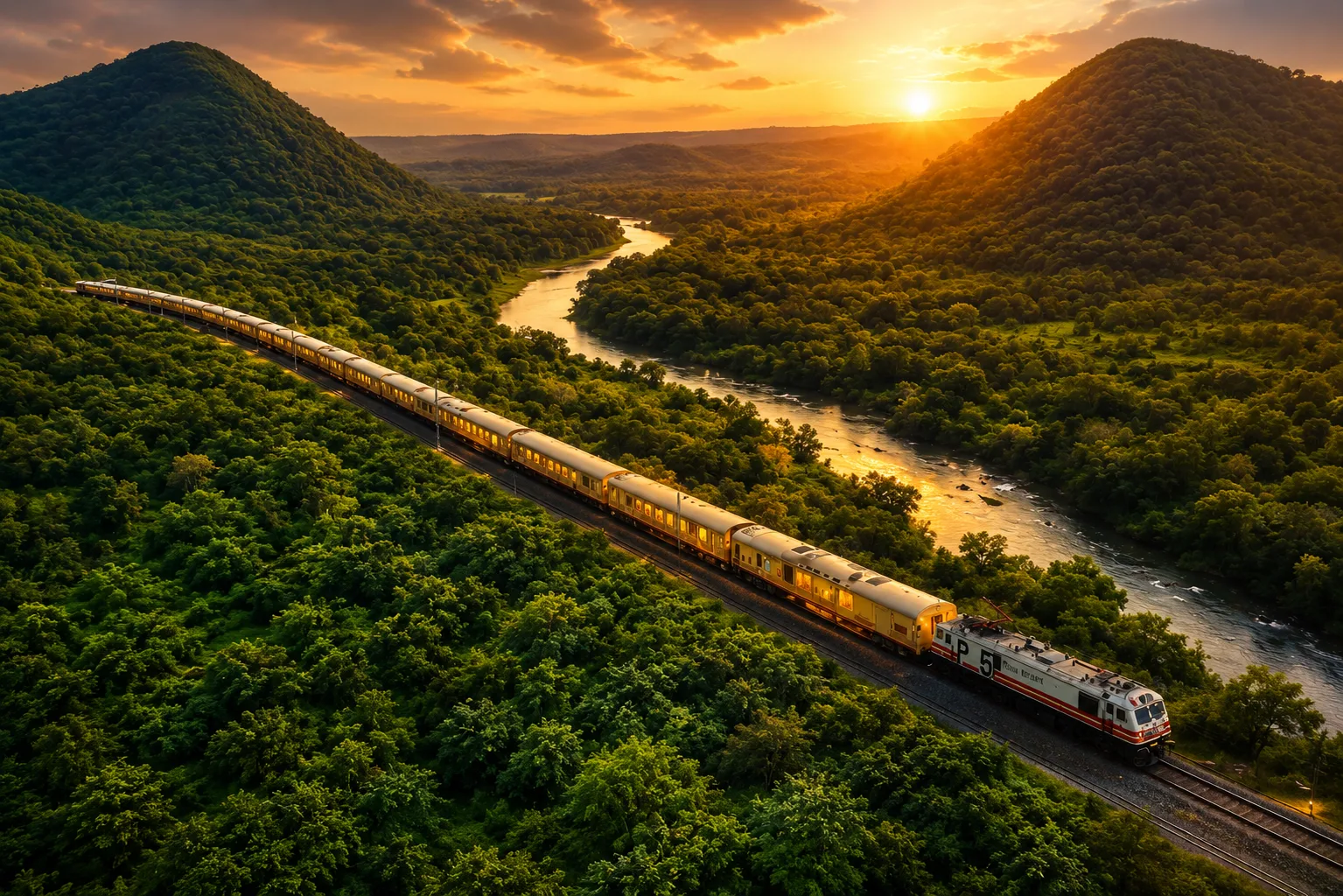
A royal train changes this pattern. Guests keep the same private cabin throughout the journey while the train moves to the next destination, often during the night. They can unpack their essential belongings once and use the train as their travelling hospitality base.
How Does a Royal Train Function Like a Moving Hotel?
The train provides private cabins, dining facilities, lounge areas and onboard hospitality while travelling across the itinerary. Guests sleep onboard, have meals according to the programme and receive assistance from the train’s service team.
The Palace on Wheels is inspired by the royal railway coaches historically associated with rulers of princely states. Its saloons and interiors reflect Rajasthan’s cultural character, allowing the accommodation experience to remain connected with the destinations.
Unlike a conventional hotel, the view and location change as the train moves. Guests may leave one region at night and wake closer to the next city on their itinerary.
This arrangement turns travel time into part of the holiday. Instead of spending long daytime hours transferring between hotels, guests can dine, rest and socialise onboard while covering the distance.
What Is Included in the Seven-Night Route?
The official route follows this sequence:
New Delhi → Jaipur → Sawai Madhopur → Chittorgarh → Udaipur → Jaisalmer → Jodhpur → Bharatpur → Agra → New Delhi.
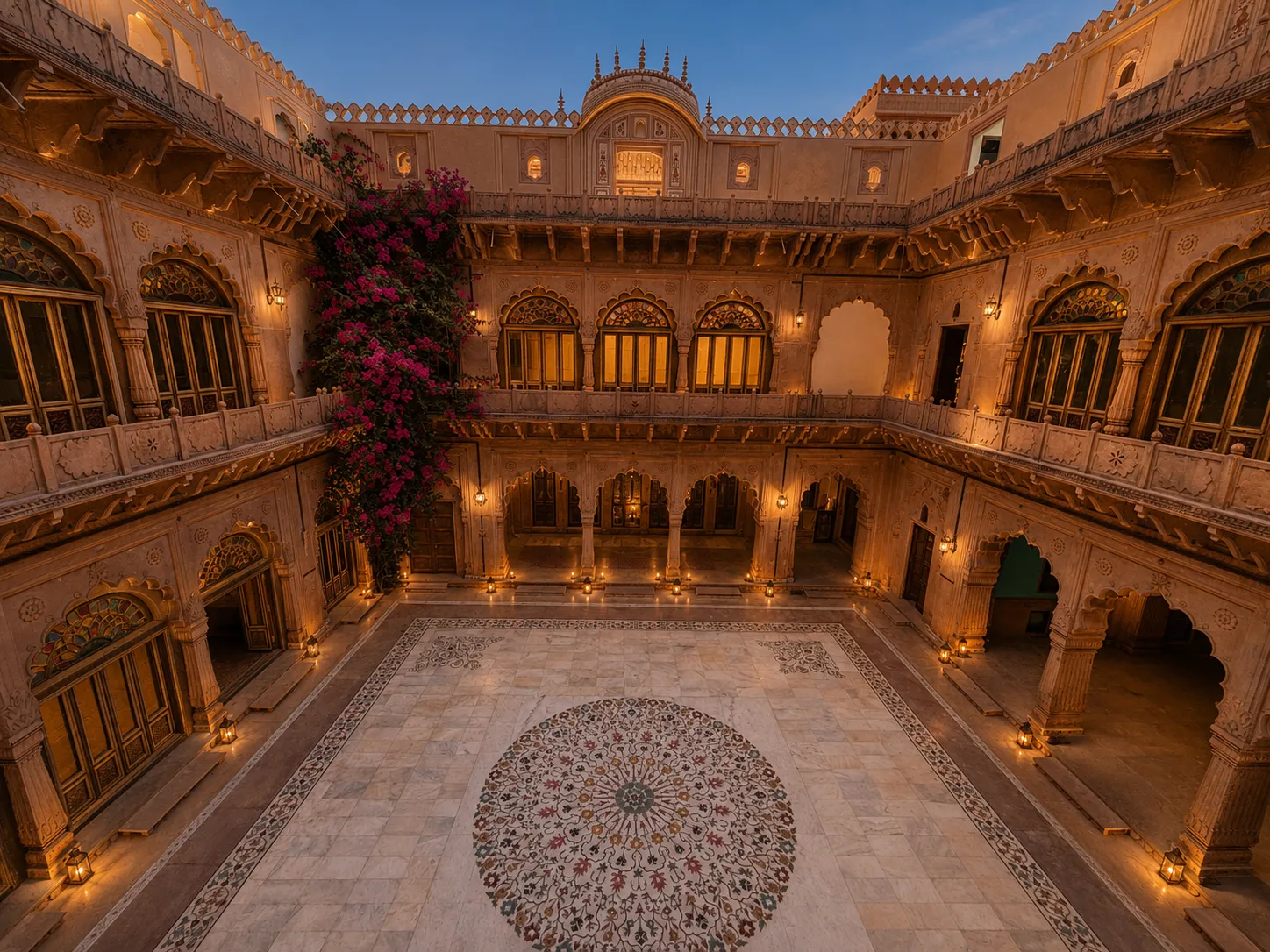
Each destination introduces a different part of the region’s identity. Jaipur is known for royal architecture and its Pink City character. Sawai Madhopur connects travellers with the Ranthambore region, while Chittorgarh represents Rajput history through its remarkable fort.
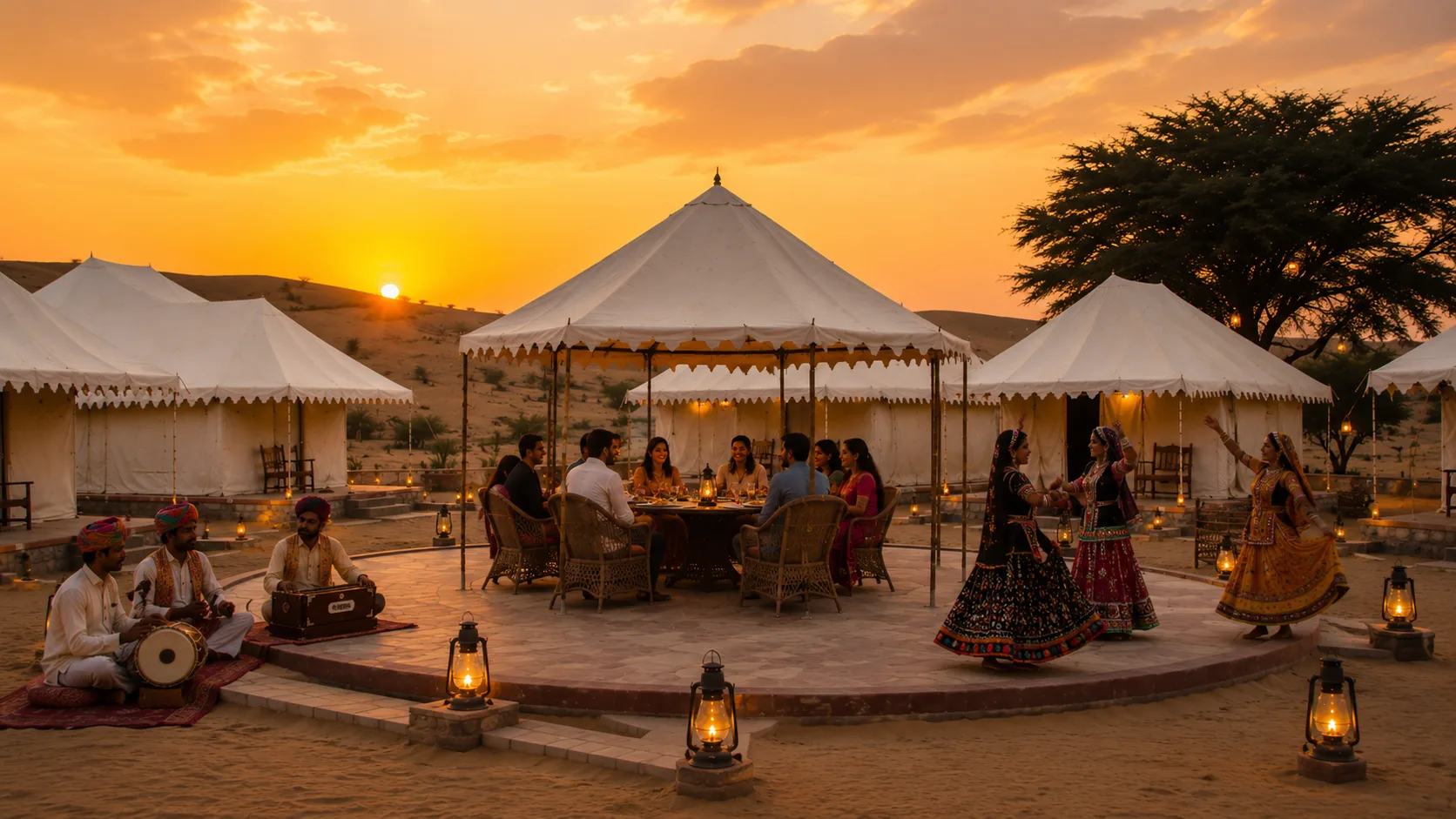
Udaipur offers lakes and elegant palaces. Jaisalmer brings the golden architecture and desert landscape of western Rajasthan, while Jodhpur presents its fort and blue cityscape.
Bharatpur adds an important wildlife and nature dimension through its renowned bird sanctuary. Agra then introduces Mughal heritage, including the Taj Mahal, before the train returns to New Delhi.
The route enables travellers to experience several contrasting landscapes and historical traditions without independently building a complex transport plan.
How Does Overnight Travel Save Holiday Time?
Conventional road tours often use a major part of the day for intercity transfers. Even when the landscape is interesting, long drives can reduce the time available for sightseeing and rest.
A luxury train can cover much of the distance while guests are dining or sleeping. Travellers may complete an excursion, return onboard, have dinner and wake near another destination.
This does not mean that every minute is free. The itinerary remains active, and guests should expect planned departures and sightseeing. However, the transportation process becomes more integrated with accommodation.
Overnight movement also allows the journey to cover a broad route within eight days. Travellers can experience several major cities while maintaining one consistent hospitality environment.
Does the Journey Remove All Travel Planning?
The train reduces much of the complexity, but guests still need to prepare properly. They must arrange travel to the departure point, organise documents, choose a cabin and understand the itinerary before arriving.
International guests may require flights, visas, travel insurance and hotel accommodation before or after the journey. Domestic travellers may need connecting rail or air transport to New Delhi.
Guests should also review the reporting time, luggage guidance, payment conditions and package inclusions. The train organises the central journey, but personal travel before departure and after arrival remains the guest’s responsibility.
Reading the detailed itinerary helps travellers understand how active each day may be and what clothing or equipment they should carry during excursions.
What Cabin Choices Are Available?
According to the official train information, the accommodation inventory includes Deluxe Cabins, Suite Cabins, Super Deluxe Cabins and a Presidential Suite cabin.
The right category depends on budget, desired space, occupancy and the purpose of the journey. Couples celebrating an anniversary may prioritise a more exclusive category, while other travellers may focus on receiving the complete itinerary experience within a suitable cabin.
Guests should examine current photographs and written cabin details before booking. The layout of a heritage train cabin differs from a large modern hotel room, so expectations should remain realistic.
The primary advantage is not simply the size of the room. It is the ability to retain the same private accommodation while travelling through multiple destinations.
Cabin availability is limited, making early planning helpful when travellers have fixed dates or a preferred category.
How Does Onboard Dining Support the Journey?
Dining onboard reduces the need for guests to search for restaurants in every city. Meals become part of the organised hospitality experience and allow travellers to spend time with fellow passengers.
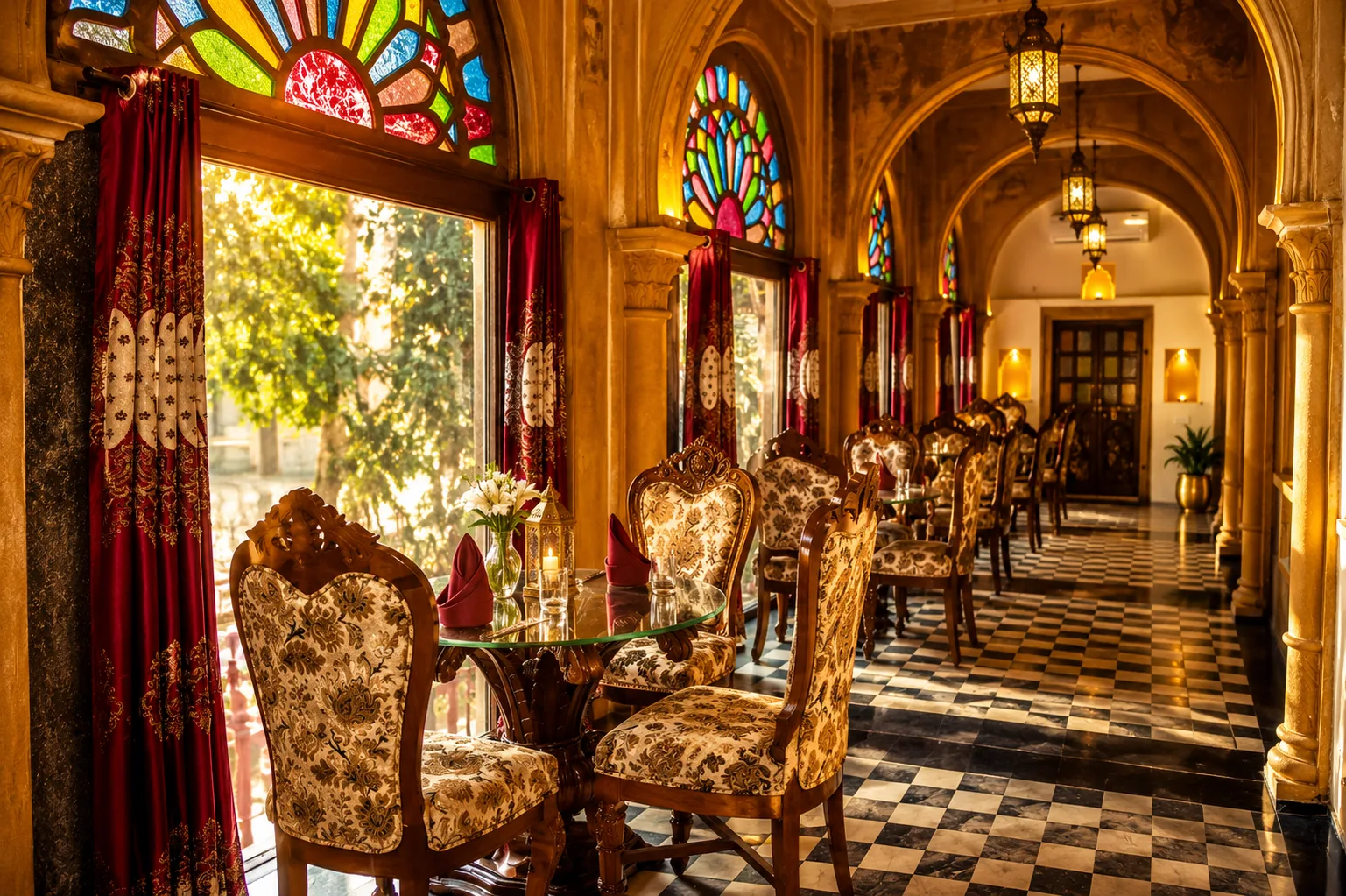
The train includes elegantly designed restaurant facilities inspired by royal Rajasthan. Guests can enjoy their meals while the service team coordinates the broader travel schedule.
Travellers with dietary restrictions should share their requirements before departure. Vegetarian preferences, allergies and other important needs should not be left until the journey has already begun.
Guests should also check which beverages and special items are included in their selected package. Not every food or drink offered during a luxury journey is necessarily part of the standard fare.
Onboard dining creates continuity. Even though the destinations change, guests return to a familiar environment for meals and service.
Is the Journey Suitable for Travellers Who Dislike Packing?
The itinerary is particularly useful for people who want to visit several cities but dislike repeatedly packing and unpacking. Guests can organise essential items inside their cabin and prepare a smaller day bag for sightseeing.
The day bag may contain water, sun protection, medicines, a camera, travel documents and weather-appropriate accessories. Larger luggage can remain onboard according to the train’s storage arrangements.
Travellers should still pack efficiently because train cabins have a different spatial layout from large hotel suites. Bringing excessive luggage may make organisation less convenient.
Clothing should support both active excursions and the elegant onboard atmosphere. Comfortable footwear is essential, while one or two smart outfits may be appropriate for dinners and photographs.
Can Elderly Guests Benefit from the Moving-Hotel Format?
Elderly travellers may appreciate avoiding repeated road transfers and hotel changes. Returning to the same cabin after excursions can create greater familiarity and reduce the effort involved in reorganising belongings.
However, the destination programme may include walking, steps and uneven surfaces at historical sites. The convenience of the train does not remove the physical requirements of every excursion.
Guests with mobility concerns should discuss their needs before booking. They should ask about cabin access, boarding, local transport and the expected walking involved at important destinations.
A traveller may decide to skip or shorten a particular excursion, subject to operational guidance. Such choices should be discussed with the official team rather than assumed.
Regular medicines and essential health items should remain easily accessible throughout the journey.
How Does the Train Maintain a Rajasthan Experience Between Cities?
A conventional tour may lose its connection with the destination during hotel transfers. The royal train maintains that connection through Rajasthan-inspired saloons, cabins, décor and hospitality.
Each saloon is themed around the heritage of a former princely state. This allows guests to continue experiencing regional character even while travelling between destinations.
The atmosphere also brings the route together as one complete story. Jaipur, Udaipur, Jaisalmer and Jodhpur are not treated as unrelated city breaks; they become chapters within a continuous royal journey.
This cultural continuity is a major reason travellers consider the experience more meaningful than using ordinary transport between luxury hotels.
Can Travellers Explore Wildlife and Heritage on the Same Journey?
The route is not restricted to palaces and forts. It also includes destinations connected with wildlife and natural landscapes.
Sawai Madhopur introduces the Ranthambore region, while Bharatpur is known for its celebrated bird sanctuary. These stops give nature enthusiasts and photographers experiences that contrast with the architectural focus of other cities.
The journey then includes desert surroundings in Jaisalmer, lake landscapes in Udaipur and significant royal fortifications in Chittorgarh and Jodhpur.
Agra adds Mughal history through globally recognised monuments. This variety helps the itinerary appeal to travellers whose interests extend beyond one theme.
Guests should understand that wildlife sightings can never be guaranteed. Natural experiences depend on season, timing and environmental conditions.
Which Is the Official Website of Palace on Wheels?
The Official Website of Palace on Wheels is palaceonwheels.rajasthan.gov.in. It is the RTDC website travellers should use to check the current itinerary, departure information, cabin options, contact details and booking guidance.
The website lists the official Jaipur head office at C-66, near Airport, Siddharth Nagar, Sector 9, Malviya Nagar, Jaipur, Rajasthan 302018.
This verification is important because multiple websites may use similar train names or present themselves as booking sources. Some may show outdated prices, previous itineraries or expired offers.
Before making payment, travellers should confirm the website domain, total fare, cabin category, departure date and cancellation conditions. Written records of booking communication and payment should be retained.
Why Should Current Details Be Checked Before Every Booking?
Luxury train schedules, cabin availability and seasonal offers can change. A blog or travel article may provide useful general guidance but should not replace current official information.
Travellers should verify:
- Available departure dates
- Selected cabin category
- Occupancy conditions
- Total fare and taxes
- Package inclusions
- Personal expenses
- Sightseeing arrangements
- Cancellation policy
- Reporting time and location
- Required documents
- Official payment method
This verification protects travellers from planning flights and hotel stays around incorrect information. It also helps them create a realistic total budget.
Any offer should be reviewed carefully for travel dates, occupancy rules and exclusions rather than understood only through its headline.
Why Is the Train Considered a Complete Luxury Journey?
Luxury comes from the way multiple travel requirements are coordinated. Accommodation, meals, transportation, destination visits and hospitality are brought together so that guests can focus more fully on the experience.
The train’s Rajasthan-inspired interiors give it a strong identity, while the multiday route delivers variety. Travellers move from royal cities and forts to wildlife regions, desert landscapes and Mughal monuments.
This integrated format supports its position as a leading Luxury Train in India for guests who want to explore several destinations without sacrificing comfort or changing hotels repeatedly.
The experience may be especially valuable for international visitors making their first Rajasthan trip, couples celebrating an occasion and elderly travellers seeking a more organised itinerary.
How Should Guests Prepare for Each Day?
Although the same cabin remains available throughout the journey, guests should prepare a practical day bag for each excursion.
Useful items may include comfortable walking shoes, sun protection, water, medicines, a camera, binoculars and a light outer layer. Clothing should respect the requirements of heritage and religious sites.
Guests should review the next day’s programme in advance and be ready at the communicated departure time. Delays by individual travellers can affect the broader group schedule.
After returning onboard, essential devices should be charged and clothing prepared for the following day. Small daily preparations help the active itinerary feel more manageable.
What Is the Main Advantage of the Journey?
The main advantage is continuity. Travellers experience many destinations while retaining one accommodation base, one hospitality team and one organised itinerary.
They do not need to negotiate with different hotels, arrange a series of drivers or research every intercity connection independently. The logistical structure is handled as part of the journey.
This does not remove the need for personal preparation, but it substantially reduces the effort involved in creating a comparable multi-city Rajasthan tour.
More importantly, the train itself becomes one of the experiences. Guests remember not only the destinations but also the cabins, dining, service and feeling of travelling through Rajasthan in a royal setting.
Wrap-Up
A royal train allows travellers to explore Rajasthan efficiently by functioning as a moving hotel. Guests retain the same cabin while visiting Jaipur, Sawai Madhopur, Chittorgarh, Udaipur, Jaisalmer, Jodhpur, Bharatpur and Agra within one seven-night itinerary.
By reducing hotel changes and shifting much of the intercity movement to overnight hours, the journey saves time and creates continuity. Travellers can focus on forts, palaces, wildlife, desert landscapes and cultural experiences while returning to a familiar luxury environment after each destination visit.