
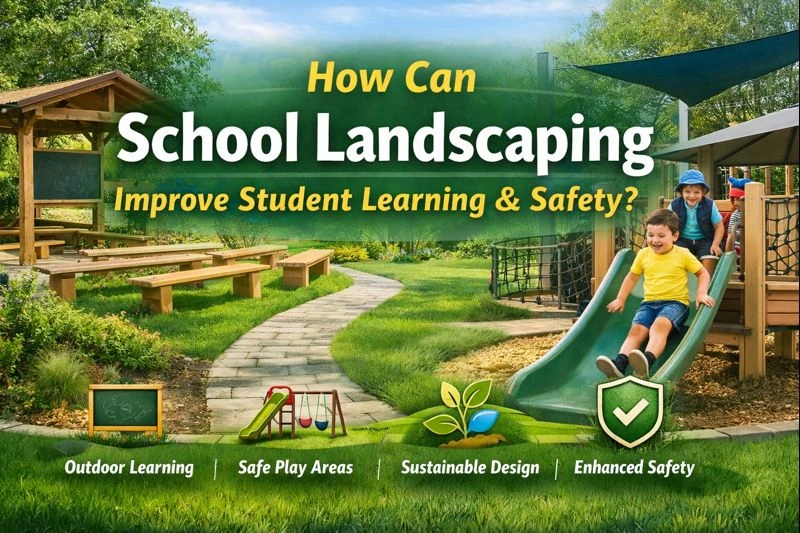
School environments shape how students learn, interact, and grow. While classrooms play a vital role, outdoor spaces are equally important in supporting education, wellbeing, and safety. Professional school landscaping services focus on designing functional, engaging, and secure outdoor areas that enhance learning experiences while meeting compliance standards. From playground design to outdoor learning spaces, landscaping has a direct impact on student development and school culture.
This blog explores how school landscape design can transform educational environments, the key features involved, and why investing in landscaped school grounds is a long-term benefit for schools.
Why Is School Landscaping Important?
School landscaping is far more than planting trees or installing play equipment. A well-planned landscape supports learning outcomes, encourages physical activity, and ensures student safety.
1. Supports Learning Beyond the Classroom
Outdoor learning spaces give students the opportunity to engage with lessons in a natural setting. These areas can be used for reading, science activities, group discussions, and creative play. Research shows that outdoor environments improve concentration, creativity, and student engagement.
2. Promotes Physical Activity and Social Interaction
Modern playground design encourages movement, teamwork, and problem-solving. Open lawns, play zones, and recreational areas motivate students to stay active, reducing sedentary behaviour and supporting overall health.
3. Enhances Safety and Accessibility
Professional school landscaping services prioritise safety through non-slip surfaces, compliant playground equipment, clear pathways, and age-appropriate play areas. Landscapes are designed to be inclusive, ensuring accessibility for all students, including those with mobility needs.
4. Builds a Positive School Identity
Attractive, functional landscaped school grounds create a welcoming environment for students, parents, and staff. Schools with well-maintained outdoor spaces often experience increased community pride and engagement.
Key Elements of Effective School Landscape Design
Outdoor Learning Spaces
Purpose-built outdoor classrooms allow teachers to conduct lessons outside, encouraging experiential learning and environmental awareness.
Playgrounds and Recreational Areas
Playgrounds designed for different age groups support physical development, coordination, and social skills.
Pathways and Circulation Areas
Clear, durable pathways improve movement across the campus, reduce congestion, and enhance safety during peak times.
Soft Landscaping
Lawns, gardens, and shaded green areas improve aesthetics, reduce heat, and provide calming spaces for students.
Hard Landscaping and Structures
Seating, shelters, retaining walls, and fencing help define spaces and provide comfort and protection from weather conditions.
How School Landscaping Improves Student Wellbeing
A thoughtfully landscaped school environment positively affects student mental and emotional health. Green spaces reduce stress, improve mood, and help students feel more connected to their surroundings. Quiet garden areas and shaded seating offer students a place to relax, reflect, or socialise peacefully.
In addition, landscaped school grounds can support behavioural management by offering structured play zones and calming spaces, reducing overcrowding and conflicts during breaks.
Sustainability in School Landscaping
Sustainable landscaping is increasingly important for modern schools. Incorporating native plants, water-efficient irrigation systems, and durable materials helps reduce environmental impact while lowering maintenance costs. Sustainable landscapes also serve as practical learning tools, teaching students about ecology, conservation, and responsible resource use.
Schools that invest in sustainable outdoor spaces demonstrate environmental leadership and encourage students to adopt eco-friendly values from an early age.
Conclusion
School landscaping plays a crucial role in creating safe, engaging, and inspiring educational environments. By investing in professional school landscaping services, schools can support student learning, wellbeing, and sustainability while enhancing their overall campus appeal. From outdoor learning spaces to safe playground design, thoughtful landscaping turns school grounds into valuable educational assets that benefit students, teachers, and the wider community for years to come.
Frequently Asked Questions (FAQ)
1. What are school landscaping services?
School landscaping services involve planning, designing, and constructing outdoor areas such as playgrounds, gardens, pathways, and outdoor learning spaces tailored specifically for educational environments.
2. How does school landscaping improve learning outcomes?
Outdoor environments promote active learning, creativity, and engagement. Students often concentrate better and participate more when lessons extend beyond the classroom.
3. Is playground safety included in school landscape design?
Yes. Professional school landscape design follows strict safety guidelines, ensuring compliant surfaces, age-appropriate equipment, and safe layouts.
4. Can landscaping projects be customised for different school sizes?
Absolutely. School landscaping services can be adapted for early learning centres, primary schools, secondary schools, and large campuses.
5. How long does a school landscaping project take?
Project timelines depend on size and complexity, but experienced providers plan construction carefully to minimise disruption to school operations.
6. Are landscaped school grounds easy to maintain?
Well-designed landscapes use durable materials and sustainable planting to reduce ongoing maintenance while remaining visually appealing.
7. Does landscaping improve school property value?
Yes. Professionally landscaped grounds enhance the overall appearance, functionality, and long-term value of school properties.