Choosing the right home insulation upgrade in Bremerton requires balancing indoor thermal comfort with aggressive dampness management. At Cascadia Spray Foam Insulation of Seattle, we help local property owners inspect their home envelope, locate active air leakage points, and select insulation materials suited for Western Washington weather. We clear away the confusion around wall insulation, crawl spaces, and attic retrofits so you can make informed decisions about your living space.
Having evaluated hundreds of properties across the Kitsap Peninsula, our team knows how cold coastal air and long rainy seasons compromise residential heating efficiency. We developed this guide to explain how we guide homeowners through material selection, energy goals, and proper installation planning.
Understanding Bremerton's Climate and Thermal Needs
Bremerton experiences nearly 50 inches of rainfall every year, alongside cool, damp conditions that persist from autumn through late spring. Standard fiber batt materials frequently absorb ambient humidity over time. When batts trap moisture, their resistance to heat flow drops, creating damp conditions inside wall cavities and attics.
Market data reveals that homes in maritime environments can lose up to 40% of their heating energy through improperly sealed attics and crawl spaces. Cold air enters through foundation cracks and soffit edges, forcing heating systems to work double duty. When we inspect Bremerton homes, we look beyond simple thickness measurements. We evaluate existing moisture levels, air movement patterns, and current roofline ventilation to determine where heat escapes.
By using high-density materials that combine continuous thermal protection with air sealing, homeowners stop heat loss while protecting structural framing from rot.
Evaluating Insulation Options for Puget Sound Homes
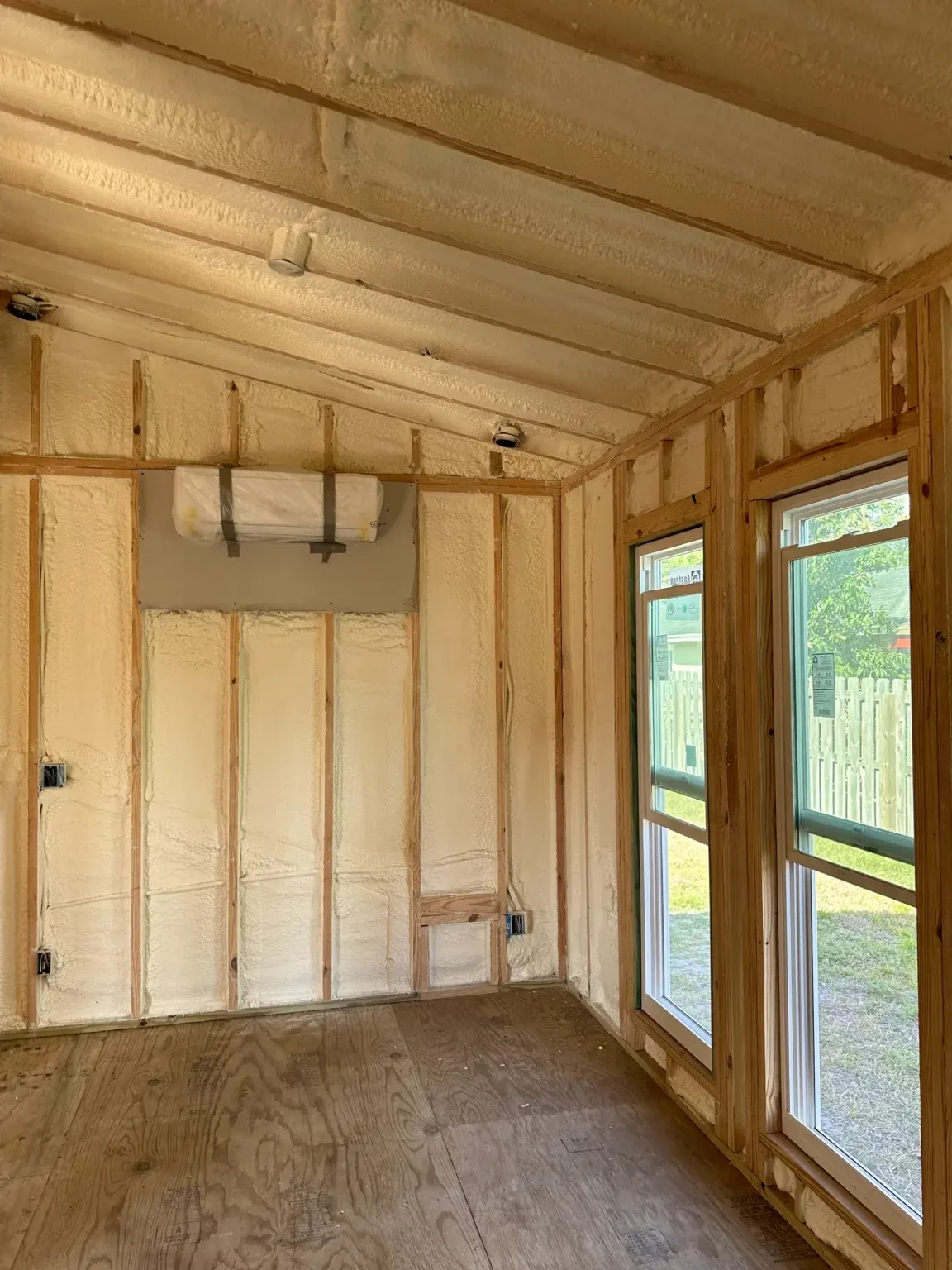
Selecting materials depends on where you plan to install them and what environmental conditions exist in that space. Open-cell spray foam works well for internal walls and upper attic spaces where sound dampening and high expansion are priorities. Closed-cell spray foam provides a dense barrier that rejects water absorption, making it the preferred choice for crawl spaces, rim joists, and concrete foundations.
Industry statistics demonstrate that closed-cell foam can increase a structure's wall racking strength by up to 300% while serving as an air and vapor barrier. The table below illustrates how different insulation materials compare across key performance categories relevant to Pacific Northwest homes:
Material TypeR-Value Per InchVapor ResistanceAir Sealing CapabilityIdeal Application AreaClosed-Cell Spray FoamR-6.0 to R-7.0High (Built-in Vapor Barrier)Complete Air BarrierCrawl Spaces, Rim Joists, FoundationsOpen-Cell Spray FoamR-3.5 to R-3.8Moderate (Requires Vapor Retarder)Excellent Air SealRoof Decks, Interior Walls, AtticsBlown-In CelluloseR-3.2 to R-3.8Low (Permeable)Minimal (Requires Manual Sealing)Open Attic FloorsFiberglass BattsR-2.9 to R-3.8Low (Permeable)None (Air Passes Through)Standard Stud Cavities
Bonus Tip: Before picking any material density, check your rim joists and attic top plates for dark dust lines. These lines signal air drafts where indoor heat escapes into unconditioned spaces.
Structured Insulation Project Planning
As an experienced insulation contractor Bremerton homeowners rely on, we structure every project into defined phases to ensure consistent results. Successful insulation project planning begins with removing damaged, contaminated, or damp material from existing cavities. Installing new energy-efficient insulation over wet or degraded fiber batts traps moisture against structural wood framing.
Our professional insulation installers follow four practical stages on every job:
- Comprehensive Assessment: We test indoor humidity, inspect thermal boundaries, and measure square footage across attics, walls, and crawl spaces.
- Site Preparation and Air Sealing: We seal plumbing penetrations, electrical wire pass-throughs, and structural gaps before applying fresh insulation.
- Precision Material Application: We apply open-cell or closed-cell foam to target depths, ensuring complete coverage around irregular framing.
- Final Thermal Verification: We inspect target surfaces to confirm complete expansion and uniform thickness.
Data shows that combining precise air sealing with proper thermal barriers lowers annual heating costs by 15% to 25% for homes in Western Washington. Delivering consistent Bremerton insulation services means focusing on details like rim joists and wall top plates, where air leakage occurs most frequently.
Things to Consider Before Making a Decision
Evaluating your home's requirements before starting work prevents costly mistakes and ensures long-term comfort. Here are the practical factors we review with homeowners:
- Moisture History and Drainage: Homes near Puget Sound waters or built on sloped lots often encounter damp soil conditions under floor joists. These environments require non-porous barriers like closed-cell foam.
- Structural Cavity Depth: Narrow 2x4 wall framing offers limited depth, requiring higher R-value per inch materials to meet energy codes compared to deeper 2x6 framing.
- Air Sealing vs. Insulation Depth: Adding extra material without sealing baseplates and light fixtures leaves pathways open for drafty air movement.
- HVAC and Ventilation Setup: Changing how tightly your home seals impacts indoor air exchange. Proper roof venting and bathroom exhaust routing must be verified.
- Long-Term Utility Savings: While advanced foam options require a larger upfront investment than standard batts, their lifetime thermal stability eliminates future material sagging and replacement costs.
Bonus Tip: Always ensure soffit vents remain open and unobstructed during attic upgrades. Continuous airflow above your insulation layer prevents damp air from collecting on the underside of your roof deck.
Final Thoughts on Upgrading Your Insulation
Selecting the right thermal setup comes down to evaluating your home's structure, managing regional weather impacts, and choosing products that maintain their shape for decades. By closing hidden draft points and selecting foam densities matched to specific spaces, you build a drier, quieter, and more comfortable living space that costs significantly less to heat throughout the year.
Work With Our Bremerton Insulation Team
If you are looking for trusted insulation companies in Bremerton, WA homeowners rely on, our team is ready to assist you. At Cascadia Spray Foam Insulation of Seattle, we provide complete residential insulation, commercial insulation, attic insulation, spray foam roofing, wall insulation, and foundation insulation using high-performing open-cell spray foam and closed-cell spray foam products.
Contact our team today at [email protected], or call us at (425) 386-3500 to schedule a professional insulation assessment for your property.
Common Questions About Bremerton Insulation Services
How do I know if my Bremerton home needs new insulation?
Drafty rooms, cold spots along exterior walls, cold floors over crawl spaces, and high winter heating bills are clear indicators. If your existing attic insulation sits below the tops of your ceiling joists or feels damp to the touch, scheduling an evaluation is a good next step.
What is the primary difference between open-cell and closed-cell spray foam?
Open-cell spray foam expands rapidly into a pliable structure, making it effective for filling deep interior wall cavities and attic spaces. Closed-cell foam cures into a dense, rigid structure that creates a moisture and vapor barrier, making it suitable for wet areas like foundations and crawl spaces.
How long does a home insulation upgrade project take?
Most residential projects take between one and two days, depending on space accessibility and old material removal needs. Our professional insulation installers cover your floors and belongings prior to work and clean up all prep materials once application finishes.
Does modern spray foam control indoor humidity levels?
Yes. By stopping outdoor air drafts from entering through wall gaps and floor joists, spray foam helps maintain stable indoor humidity levels, protecting your living spaces against high moisture levels during damp winter months.