Overhead power networks depend on far more than conductors and towers. Between one structure and the next, a wide range of electrical line hardware is responsible for supporting conductors, controlling vibration, maintaining bundle spacing, transferring mechanical loads and preserving electrical continuity.
These functions become increasingly important as transmission networks operate under higher loads, longer spans and demanding environmental conditions. Wind-induced vibration, conductor tension, temperature variation and ageing can all influence long-term line performance.
This is why dampers, suspension systems, dead-ends, splices and repair products need to be considered as parts of a coordinated system. Technologies such as PLP's CUSHION-GRIP® Spacer Damper, ARMOR-GRIP® Suspension, VORTX™ Vibration Damper and Protector Rods, THERMOLIGN® Dead-End and ACSR Full Tension Splice illustrate the different roles that modern overhead transmission line hardware can play in supporting network reliability.
Why Conductor Movement Matters on Overhead Lines
Overhead conductors are continuously exposed to wind and changing weather conditions. Even relatively moderate winds can produce repeated movement.
One of the most common effects is aeolian vibration, a relatively high-frequency, low-amplitude oscillation caused by wind passing across the conductor. Although individual movements can be small, repeated bending over long periods can increase mechanical stress, particularly around suspension and attachment points.
Bundled conductors introduce additional considerations because individual subconductors need to maintain their designed spacing while responding to dynamic forces.
Effective vibration control solutions therefore need to address both the movement within a span and the mechanical conditions around conductor attachment points.
The appropriate solution depends on several factors, including conductor construction, diameter, tension, span characteristics, bundle configuration and environmental exposure.
CUSHION-GRIP® Spacer Damper for Bundled Conductors
Spacer dampers are particularly important on transmission lines using bundled conductors.
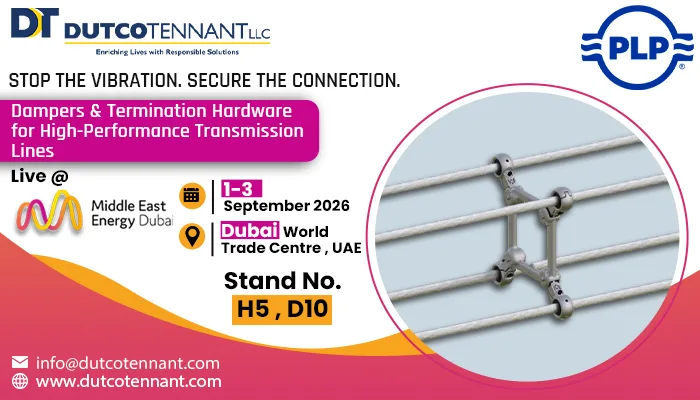
The CUSHION-GRIP® Spacer Damper combines two functions: maintaining the required spacing between subconductors and damping conductor movement. PLP offers configurations for Twin, Tri, Quad and Hex conductor bundles.
Its design uses elastomer damping elements to absorb movement and help reduce stresses associated with conductor motion. This makes the cushion grip spacer damper part of the overall dynamic-control strategy rather than simply a device for maintaining conductor spacing.
For bundled lines, maintaining geometry is important because uncontrolled movement between subconductors can affect mechanical performance and place additional stress on fittings.
The spacer damper therefore works within the span while other hardware manages conductor behaviour at support and termination points.
Damper Placement Is Part of the Design
Selecting the correct spacer damper is only one stage of developing an effective motion-control system.
Placement also matters.
The quantity and positioning of spacer dampers need to reflect the conductor bundle, span characteristics and expected dynamic behaviour. An effective layout is intended to control bundle movement while avoiding unnecessary mechanical stress on the conductors and fittings.
This means overhead line vibration protection should be engineered for the actual line rather than approached as a standard arrangement that can be repeated on every span.
Important considerations can include conductor diameter, subconductor spacing, bundle configuration, operating temperature, span length and local wind conditions.
Correct selection and placement work together to support transmission line stability.
Suspension Hardware Protects Critical Attachment Areas
While spacer dampers work primarily within the span, suspension hardware manages the points where conductors are supported by towers and structures.
These are mechanically important areas because conductor weight, tension and dynamic movement are transferred through the attachment hardware.
PLP's ARMOR-GRIP® Suspension is an example of a conductor-support system designed for overhead-line applications.
Rather than simply gripping the conductor at a single concentrated point, suspension systems need to consider how mechanical forces are distributed around the attachment area.
This is particularly relevant where vibration is present because repeated bending close to a support point can contribute to conductor fatigue.
For this reason, conductor support systems and vibration-control hardware are closely related elements of overhead-line engineering.
Double Suspension for More Demanding Locations
Some transmission structures require additional support arrangements because of line geometry, loading conditions or utility specifications.
The ARMOR-GRIP® Suspension: Double provides a double-suspension configuration for applicable transmission applications.
The decision to use single or double suspension depends on the mechanical requirements of the structure and conductor system.
Rather than treating the double arrangement simply as additional hardware, it should be evaluated as part of the overall support design. Structure configuration, conductor characteristics, line loads and vibration behaviour all influence the final arrangement.
This system-level approach helps ensure that suspension & support products are matched to the operating conditions of the line.
VORTX Vibration Dampers and Aeolian Vibration
Where dedicated aeolian vibration control is required, vibration dampers provide another layer of conductor protection.
PLP's VORTX™ Vibration Damper and Protector Rods are designed for applicable overhead conductor and cable systems.
The damper dissipates energy associated with wind-induced vibration, helping reduce the repeated bending stresses that can otherwise accumulate around conductor attachment areas.
The correct damper arrangement depends on factors such as conductor or cable type, diameter, span length, tension and expected wind exposure.
This is why a vibration control solution should be selected according to actual line characteristics rather than simply by choosing a damper that physically fits the conductor.
Protector rods can also form part of the arrangement where additional protection around the damper attachment area is required.
Spiral Vibration Dampers Provide Another Approach
Not every overhead conductor or cable requires the same damping technology.
PLP's Spiral Vibration Damper provides another method of controlling wind-induced vibration for suitable conductor and cable applications.
The spiral design interacts with cable movement to dissipate vibration energy.
Having different types of dampers available is important because transmission and distribution networks can include phase conductors, shield wires, fibre-optic cables and other overhead elements with different mechanical characteristics.
An effective transmission line hardware solution therefore begins by identifying the cable or conductor and its operating environment before choosing the appropriate motion-control technology.
OPGW Needs Dedicated Suspension and Support
Optical Ground Wire, commonly known as OPGW, combines grounding and communications functions.
Because optical fibres are incorporated within the cable, mechanical protection is particularly important. Damage to OPGW can affect not only the physical line but also the communication and protection systems that rely on the fibre network.
Purpose-designed OPGW suspension support helps manage mechanical forces at attachment points while protecting the cable.
This illustrates why different cables installed on the same transmission structure may need different hardware.
A phase conductor, conventional shield wire and OPGW may experience similar environmental conditions, but their construction and functions are different. Their suspension and vibration-control systems should reflect those differences.
Termination Hardware Completes the Mechanical System
Dampers and suspension hardware primarily manage conductor behaviour along the span and at intermediate support structures.
Eventually, however, the conductor tension needs to be transferred into a termination structure.
This is the role of dead-end hardware.
A transmission dead-end needs to grip the conductor securely while transferring longitudinal tensile loading into the associated insulator and supporting structure.
Correct dead end solutions for transmission lines therefore depend on conductor construction, diameter, mechanical strength, operating temperature and the line's structural design.
PLP's THERMOLIGN® Dead-End is one example of specialised termination hardware for applicable transmission conductor systems.
The important point is that vibration control and termination solve different problems. Dampers control movement, while dead-ends provide a secure mechanical termination. Both contribute to maintaining conductor integrity.
Thimble Clevis and the Complete Dead-End Assembly
Major transmission fittings also depend on smaller connection components.
A Thimble Clevis can provide the mechanical interface between an applicable formed-wire dead-end and associated line hardware.
Although relatively compact, this fitting forms part of the load-transfer path.
This highlights an important principle when selecting conductor termination systems: the complete assembly needs to be considered.
Dead-ends, clevises, insulators and structural connections need compatible mechanical interfaces. Correct selection of the primary dead-end alone is not enough if another part of the connection is unsuitable.
Messenger Terminations in Distribution Networks
Similar mechanical principles apply to spacer cable distribution systems.
In these networks, the messenger provides structural support. Messenger Terminations are used where the messenger needs to be securely terminated at the supporting structure.
The hardware needs to correspond with messenger construction, diameter and expected mechanical load.
Although the application differs from a high-voltage phase-conductor dead-end, the engineering objective is similar: providing a controlled path for transferring mechanical tension from the cable system into the structure.
ACSR Full Tension Splices Restore Mechanical Continuity
Conductors also need to be joined during construction, maintenance or emergency restoration.
A splice on a tensioned overhead conductor must provide more than electrical continuity. It also needs to maintain the required mechanical load path.
The ACSR Full Tension Splice is intended for applicable ACSR conductor applications where a full-tension connection is required.
This is especially important because ACSR combines aluminium outer strands with a steel reinforcing core.
Appropriate overhead line splicing solutions therefore need to account for the conductor's complete construction and mechanical requirements.
A connection that carries electrical current but cannot withstand the required conductor tension would not provide a complete restoration.
Compression Hardware for Permanent Connections
Compression technology provides another method of joining or terminating transmission conductors.
Compression hardware for overhead lines can include dead-ends, splices and terminal connections.
These fittings create their mechanical and electrical interface through controlled compression around the conductor.
Correct installation requires more than selecting the nominal fitting size. The conductor construction, hardware reference, press, die and compression sequence all need to correspond.
Field installation therefore becomes part of the engineering process.
A correctly specified transmission line fitting can only provide its intended performance when the required preparation and installation procedure are followed.
Repair Products Support Long-Term Network Maintenance
Even properly designed overhead networks can experience damage during their operating life.
Vibration, abrasion, external impact and severe environmental conditions can affect conductor strands and associated hardware.
Repair products provide different levels of restoration according to the type and extent of damage.
PLP's transmission repair portfolio includes products such as repair rods, Armor Rods, Line Guards, conductor splices and full-tension splice solutions.
Selecting the correct repair method requires an assessment of the conductor condition.
Damage limited to outer strands may require a different approach from damage affecting the conductor's structural core.
It is also important to investigate why the damage occurred. If vibration or an unsuitable attachment condition contributed to the problem, conductor repair alone may not prevent the issue from returning.
This is another example of how repair, suspension and vibration control are connected within the wider network-maintenance strategy.
Wildlife Protection Adds an Environmental Dimension
Mechanical loading is not the only challenge facing overhead networks.
Bird interactions can also be a concern, particularly on lines crossing migration routes, open landscapes and other areas with significant avian activity.
Products such as the RAPTOR CLAMP™ Diverter are designed to improve the visibility of overhead cables to birds.
Wildlife protection hardware performs a different function from spacer dampers, suspension systems or dead-ends, but it forms part of the broader approach to protecting overhead infrastructure and its surroundings.
Modern transmission and distribution line hardware can therefore address mechanical, operational and environmental requirements across the network.
How Dampers, Suspension and Termination Hardware Work Together
The relationship between these products becomes clearer when an overhead transmission line is viewed as one continuous mechanical system.
Within a bundled-conductor span, spacer dampers can maintain subconductor spacing and control movement.
At intermediate structures, suspension hardware supports the conductor and manages stresses around the attachment point.
Where dedicated aeolian vibration protection is necessary, appropriate dampers dissipate wind-induced energy.
At termination structures, dead-end hardware transfers conductor tension into the structure.
Where conductor sections need to be joined, full-tension or compression splices restore the mechanical and electrical path.
If conductor damage develops during service, suitable repair products can restore affected sections while engineers investigate and correct the underlying cause.
No single component delivers complete line protection. Grid reliability solutions depend on using appropriate hardware at each critical point.
A System-Based Approach to Transmission Line Stability
Effective overhead-line hardware selection begins with the operating conditions rather than individual product categories.
Engineers need to consider factors including conductor construction, diameter, bundle configuration, span length, tension, operating temperature, structure type, terrain and environmental exposure.
These inputs help determine the appropriate combination of damping, suspension, termination and connection hardware.
The objective is not to install as many protective components as possible.
Correct product selection and positioning are more important than quantity alone.
A coordinated approach can also simplify maintenance because utilities have a clearer understanding of how the line's motion-control, support and termination systems interact.
This is particularly important as transmission networks are upgraded to carry higher loads and operate with newer conductor technologies.
Why Coordinated Line Hardware Matters for Grid Reliability
Grid modernisation is often associated with automation, digital monitoring, renewable integration and increased transmission capacity.
The physical network remains just as important.
Conductors must continue operating through years of wind, temperature variation and mechanical loading. Bundled conductors need to maintain their geometry. Suspension points need to manage repeated movement, and termination structures must safely transfer conductor tension.
Splices and compression connections need to preserve continuity, while damaged sections require appropriate restoration.
For this reason, overhead transmission line hardware remains an important part of long-term grid reliability.
Dampers and termination systems are not competing solutions. They address different mechanical conditions along the same conductor.
When these systems are correctly coordinated, they can contribute to better conductor protection and more stable long-term network operation.
Transmission Line Hardware in Focus at Middle East Energy 2026
Developments in transmission, distribution and grid reliability will form part of the wider industry discussions around Middle East Energy 2026, scheduled for 1–3 September 2026 at Dubai World Trade Centre, UAE.
The exhibition brings together utilities, EPC contractors, consultants, engineers, manufacturers and technology suppliers involved in electrical infrastructure development across the Middle East and other international markets.
Dutco Tennant LLC the electrical and utility equipment supplier is scheduled to exhibit at Hall H5, Stand D10, with PLP transmission and distribution technologies forming part of its exhibition portfolio.
The products associated with the showcase include technologies for conductor motion control, suspension and support, termination, splicing, repair and other overhead-line applications. These include the CUSHION-GRIP® Spacer Damper, ARMOR-GRIP® Suspension, ARMOR-GRIP® Suspension: Double, VORTX™ Vibration Damper and Protector Rods, OPGW Suspension & Support, Thimble Clevis, Spiral Vibration Damper, THERMOLIGN® Dead-End, Messenger Terminations, ACSR Full Tension Splice, Repair Products and Compression Hardware.
The event provides a relevant setting for examining how these different types of electrical line hardware contribute to modern transmission infrastructure.
Rather than relying on a single product to address every mechanical challenge, reliable overhead networks depend on hardware selected for specific functions—from controlling vibration within a span to supporting conductors at structures and transferring tensile loads at termination points.
As transmission networks continue to expand and modernise, this coordinated approach to conductor support, vibration protection, splicing and termination will remain an important part of improving transmission line stability and supporting dependable grid performance.