
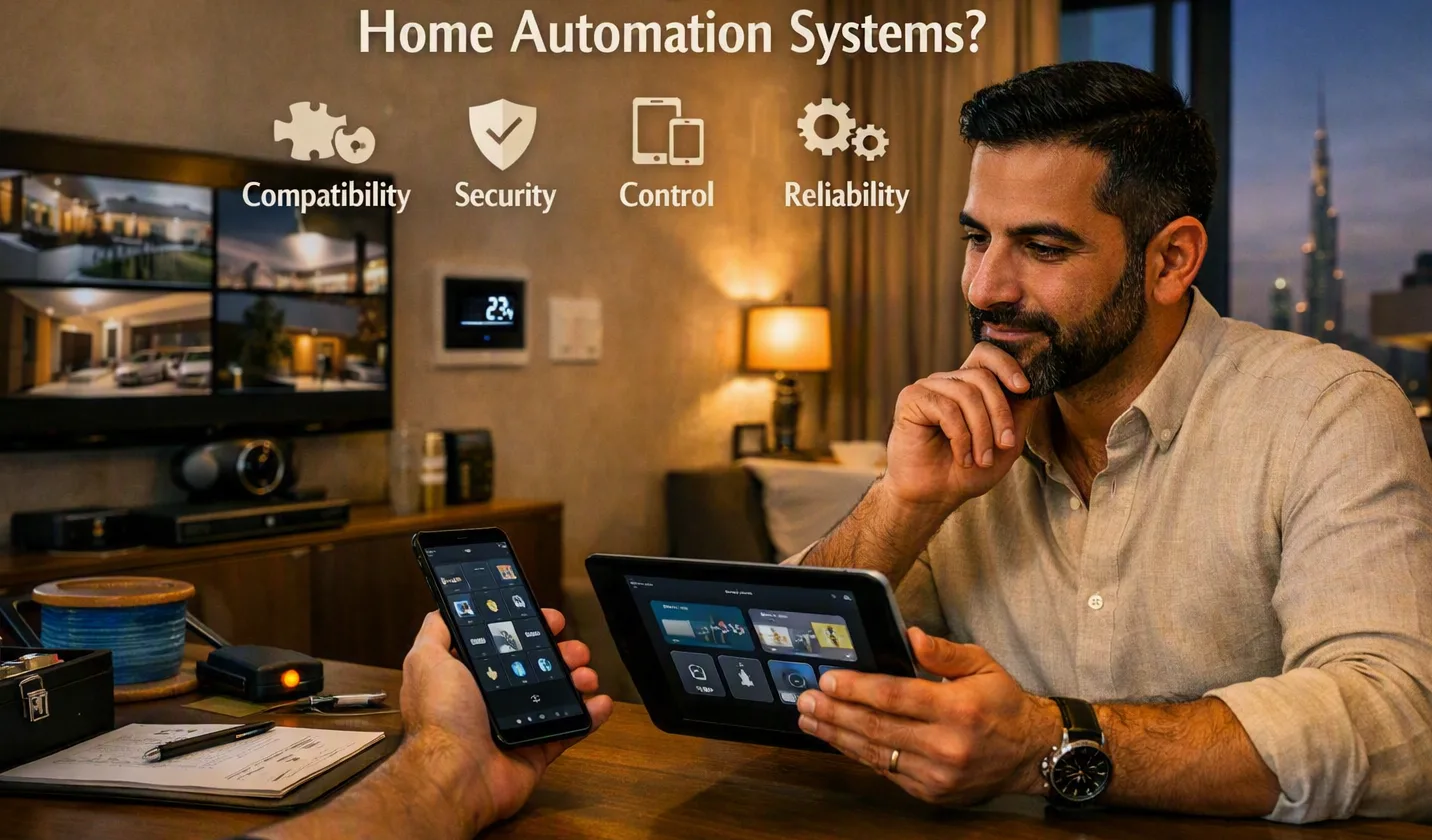
Choosing between different home automation systems can be confusing because each system may offer different features, controls, and levels of compatibility. If you are researching a Home Automation Company in Dubai, it helps to first understand how these systems work and what factors should be compared before making a decision. A good comparison is not only about the number of smart devices supported. It should also consider ease of use, compatibility, security, reliability, and future expansion.
Start With the Main Purpose
The first step is to decide what you want the system to do. Some people mainly want better lighting control, while others may want to manage air conditioning, curtains, entertainment, security, and other parts of the home from one system.
Think about your daily routine. Do you want lights to turn off automatically when you leave a room? Do you want the air conditioning to follow a schedule? Would you like to control several devices from one application? Having clear goals makes it easier to compare systems that match your actual needs.
Check Device Compatibility
Compatibility is one of the most important things to check. A home may contain products from different brands, and not every automation system can communicate with every device.
Before selecting a system, check whether it supports the smart lights, thermostats, cameras, door locks, sensors, speakers, and other devices you already own or plan to purchase.
A system with wider compatibility can make it easier to add new devices later. It can also reduce the need to replace equipment simply because it does not work with the chosen platform.
Compare Control Options
Different systems provide different ways to control connected devices. Common options include mobile applications, wall-mounted controls, touch panels, voice commands, and automatic schedules.
Consider which controls are most comfortable for your household. A mobile app can be useful when you are away from home, while physical controls may be easier for visitors or family members who do not use the app.
Voice control can also be useful for simple tasks, such as changing lights or adjusting the temperature. However, it should be treated as an additional control method rather than the only option.
Look at Automation Features
Automation is what makes a smart home different from simply having connected devices. Compare how easily each system can create schedules, scenes, and automatic actions.
For example, one setting could turn off selected lights, close curtains, and adjust the temperature when you leave home. Another could gradually turn on bedroom lights and adjust the temperature at a set time in the morning.
Look at how simple it is to create and change these settings. A system with many features may not be useful if everyday automation is difficult to configure.
Consider Ease of Use
A system should be easy for everyone in the home to understand. Complicated menus and unclear controls can make even useful features difficult to use.
When comparing systems, look at the layout of the application and control panels. Check whether important functions can be reached quickly and whether automation settings are easy to change.
It is also worth considering how simple the system is for guests. Basic functions should not require extensive technical knowledge.
Check Security and Privacy
Connected home devices can collect information about how a property is used, so security should be part of the comparison.
Check whether the system supports secure user accounts, strong passwords, software updates, and access controls. Cameras, smart locks, and other security-related devices deserve particular attention because they can involve sensitive information.
It is also useful to understand where device data is stored and how accounts are protected. Reading the manufacturer's privacy and security information can help you make a more informed choice.
Compare Wired and Wireless Systems
Home automation can use wired connections, wireless connections, or a combination of both. Wireless systems are often easier to install in existing homes because they may require less physical work.
Wired systems can be suitable for new construction or major renovation projects where cables can be planned from the beginning. They may also provide stable communication between certain devices.
Neither option is automatically better for every property. The building structure, existing wiring, number of devices, and planned features should all be considered.
Think About Future Expansion
A home automation system should not only meet your current needs. You may want to add more devices later.
Check how easily the system can expand and whether additional products can be connected without replacing the main equipment. Also consider whether the manufacturer continues to provide software updates and support.
Planning for future additions can prevent problems when you decide to add new lighting, climate controls, entertainment equipment, or security devices.
Compare Reliability and Support
Reliability is important because home automation often controls everyday functions. A system that frequently loses connection can become frustrating.
Look at the system's communication method, backup options, update process, and technical support. It is also helpful to understand what happens if the internet connection stops working. Some systems can continue basic local functions even when cloud services are unavailable.
Taking these points into account can help you compare systems based on practical use rather than simply choosing the one with the longest feature list. A careful comparison of compatibility, controls, automation, security, reliability, and future expansion can make it easier to choose a system that suits the property and the people using it. These factors are also useful when evaluating a Home Automation Company in Dubai without relying only on sales claims.